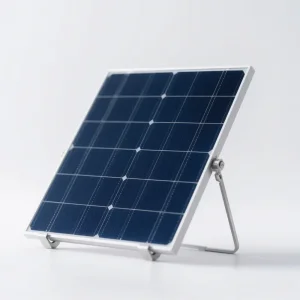
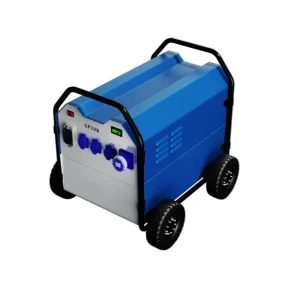
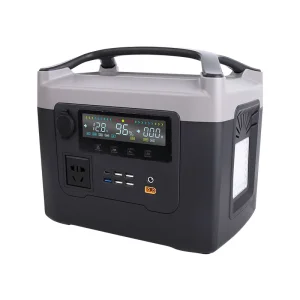
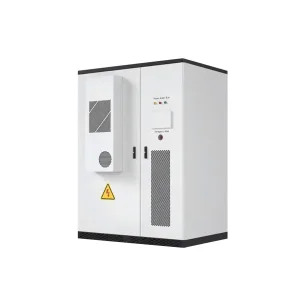
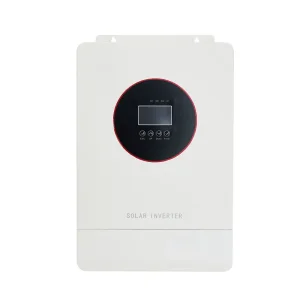
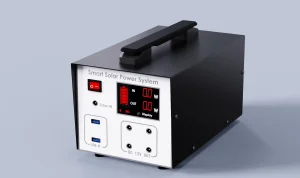
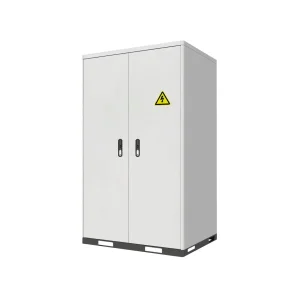
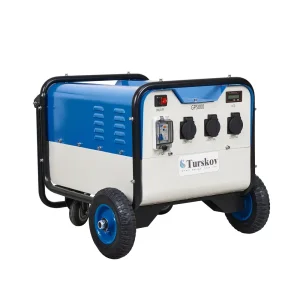
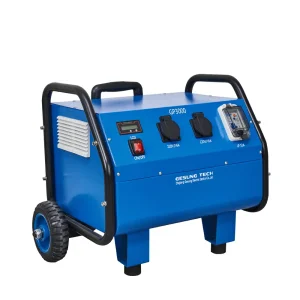
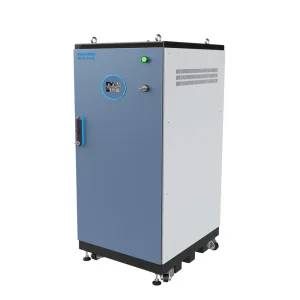
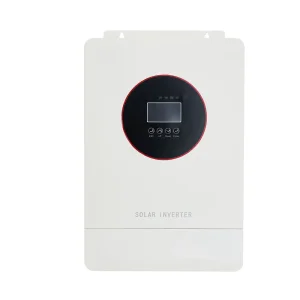
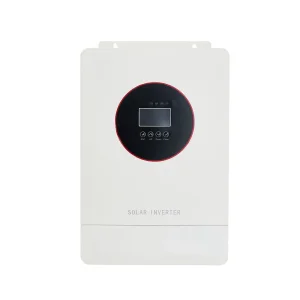
Explore our flagship battery power generators and solar integration technologies designed for critical backup and off-grid performance.
In an era marked by rapid industrialization, severe grid fluctuations, and an aggressive global push towards decarbonization, the traditional internal combustion engine generator is quickly becoming obsolete. Replacing these noisy, emission-heavy legacy systems are advanced lithium-ion and Lithium Iron Phosphate (LiFePO4) battery power generators. As a pivotal hub in this technological transition, Zhejiang Wenzhou New Energy Technology Co., Ltd. has established itself as an authoritative manufacturer and designer of state-of-the-art power solution ecosystems. Headquartered in Wenzhou, China's core incubator for private industrial economy and smart mechanical manufacture, our organization leverages massive domestic supply chains, integrated R&D expertise, and rigorous quality control to deliver highly reliable, customizable, and efficient utility systems to global corporations and consumer brands alike.
Corporate Credibility & Operational Scale: Established in 2020, our state-of-the-art production facility spans over 15,000 square meters. Operating under highly stringently monitored ISO 9001, ISO 14001, and ISO 45001 management protocols, we have built a centralized infrastructure housing CNAS-certified research laboratories and specialized EMC testing centers. This ensures that every battery power generator, hybrid inverter, and smart commercial energy system we engineer undergo complete end-to-end quality validation—from initial cell grouping and chemical composition profiling to high-current load testing and thermal imaging under stress.
Our dedicated team of 200+ technical experts and energy R&D specialists has secured 36 patented technologies, including our proprietary 5th-generation hybrid inverter system that achieves an industry-leading 98.5% conversion efficiency. With an annual manufacturing capacity of 50,000 units, we possess the operational throughput required to support large-scale OEM/ODM projects for Fortune 500 enterprises, including global retail giants such as Walmart and Home Depot.
Understanding the dynamics of the Chinese supply chain is vital for global B2B procurement managers. Wenzhou’s robust ecosystem provides a massive concentration of electronics manufacturing partners, terminal and connector manufacturers, heat-sink casting facilities, and system integration specialists. Because of this dense manufacturing fabric, sourcing raw minerals, assembling advanced battery management systems (BMS), and casting structural alloy shells occur within a minimal geographical radius. This results in incredibly low logistics latency, high manufacturing flexibility, and unprecedented protection against global material shocks.
Furthermore, our manufacturing framework is vertically integrated. Rather than acting as a simple assembly warehouse, Zhejiang Wenzhou New Energy Technology Co., Ltd. controls the core intellectual property of the components. Our R&D department handles the firmware programming for the BMS, configures the precise algorithms of the Maximum Power Point Tracking (MPPT) solar charge controllers, and designs the thermal dissipation architecture of our pure sine wave inverters. This vertical integration allows us to eliminate double margins, maintain stringent oversight of quality anomalies, and quickly adapt our production line to client demands.
Monitors cell-level temperature, state-of-charge (SoC), and state-of-health (SoH). Prevents overcharging, deep discharge, and localized thermal escalation.
Ensures that off-grid solar panels capture up to 30% more energy compared to PWM controllers under shifting cloud cover and low-light winter days.
Converts stored DC to pure sine wave AC. Low harmonic distortion protects sensitive laboratory equipment, microprocessors, and heavy-duty motor coils.
Importing high-capacity lithium batteries and grid-connected infrastructure requires adhering to strict safety standards. Different jurisdictions enforce distinct criteria for electrical, electromagnetic, chemical, and transportation hazards. We provide full compliance documentation for all major target markets:
To maintain high reliability, we implement a blockchain-based traceability database. Each individual lithium cell is assigned a unique cryptographic identifier when it enters our assembly facility. This records raw material batch numbers, internal resistance values, and test cycles. If an overseas client identifies a specific capacity anomaly, our support technicians can check the database to isolate related batches within minutes, resolving 90% of technical inquiries within 2 hours. This transparency provides buyers with high quality control security, mitigating product recall risks.
The demand for battery power generators varies by region. Our product line is designed for specific deployment scenarios to address distinct local challenges:
Designed for residential backup in regions with unstable utility grids or peak pricing schemes. Integrates seamlessly with home solar systems for peak shaving and overnight power.
Tailored 100kW and 215kW commercial energy storage systems protect critical assets like micro-data centers, hospitals, and cold chain storage warehouses from sudden blackouts.
Backpack generators and 3kW mobile units provide reliable power for remote construction sites, outdoor surveying, geological expeditions, and disaster response scenarios.
Zhejiang Wenzhou New Energy Technology Co., Ltd. is committed to environmental sustainability. We are actively optimizing our processes to earn "Net-Zero Factory" certification, aiming to reduce global CO2 emissions by 1 million tons by 2030. Through modern IoT-enabled energy monitoring systems and global partnerships, we help international businesses transition to green energy seamlessly.
Answers to common questions regarding system design, compliance, and sourcing battery power systems.
Complete your deployment with smart controls, off-grid power walls, and customizable backup generators.
 Turskov