Explore our premium components designed for microgrids, grid backup, and remote industrial power infrastructure.
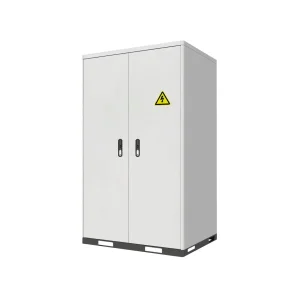
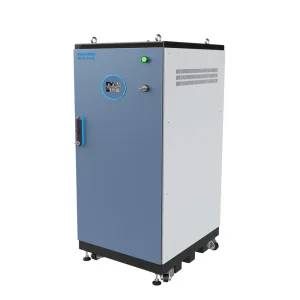
Headquartered in China's private economy hub, Zhejiang Wenzhou New Energy Technology Co., Ltd. has established a footprint across 28+ countries. Our 15,000+ square meter manufacturing campus features state-of-the-art CNAS-certified laboratories, EMC testing facilities, and ISO 9001/14001/45001 operating systems to deliver top-tier commercial energy storage configurations.
Collaborating as OEM/ODM partner for retail giants like Walmart and Home Depot.
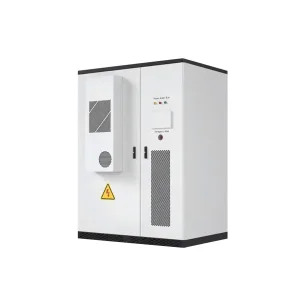
For commercial installations, a 100kW system is not simply scaled-up consumer hardware. It represents the intersection of thermal management engineering, electrical safety, smart grid interfacing, and long-term cell chemistry stability. Understanding this architecture is vital for EPC directors and facility engineers.
At the core of the 100kW storage cabinet lies our Lithium Iron Phosphate (LiFePO4) cell chemistry. LiFePO4 represents the global standard for industrial installations due to its exceptional thermal runaway thresholds (typically above 270°C) and structural resilience under continuous cycling.
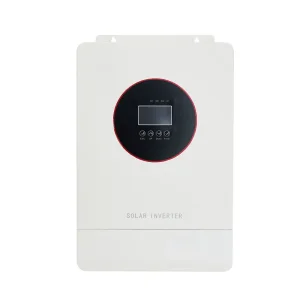
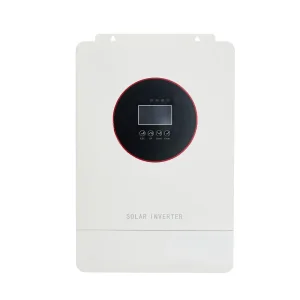
Moving power from cells to the facility's distribution bus requires sophisticated inversion hardware. Our 5th-Gen hybrid inverter technology bridges solar arrays, energy storage, and the local utility connection:
By integrating silicon carbide (SiC) semiconductor switches, our multi-port inverters reduce internal switching losses by 35% compared to legacy IGBT modules. This translates directly to an operational conversion efficiency of 98.5%. Reduced thermal output also minimizes the energy overhead needed for system-wide cooling.
Industrial systems demand multiple layers of containment. Our 100kW configurations implement three containment tiers:
Heavy-duty sheet metal enclosures surround individual battery packs to prevent localized thermal incidents from spreading to adjacent bays.
Engineered pressure relief valves quickly release off-gases, avoiding dangerous pressure accumulation within the main enclosure cabinet.
Thermally activated dry aerosol systems flood the cabinet interior to extinguish open flames within seconds without ruining nearby electronics.
How 100kW energy storage bridges the gap between unreliable distribution grids and demanding commercial facility operations.
High demand charges can account for up to 50% of commercial utility bills. By scheduling the 100kW ESS to discharge during peak facility load events, operators maintain consumption below contract thresholds, preventing steep utility penalty rates.
In regions with weak grids or storm-related outages, our systems transition to off-grid mode within 10ms. This ensures that facility operations, server racks, cold storage, and key production equipment remain online without interruption.
Combine solar generation arrays, EV charging points, and local energy storage into a unified local microgrid. The system absorbs excess midday solar generation and redirects it to EV chargers or discharges it during evening demand windows.
| Parameter Group | Specification Details | Operational Value |
|---|---|---|
| Rated AC Output Power | Nominal capacity delivered at PCC (Point of Common Coupling) | 100 kW (Continuous rating) |
| Battery Energy Capacity | Scalable LiFePO4 rack configuration configurations | 100 kWh to 215 kWh options |
| Round-Trip Efficiency (RTE) | Combined AC-to-AC conversion efficiency through standard charging cycle | ≥ 90.5% (Inverter & batteries combined) |
| Inverter Isolation Method | Protective design isolating DC string arrays from utility grids | High-frequency galvanic isolation transformer |
| Grid Communication | Integration protocols for standard Energy Management Systems | Modbus TCP/IP, CAN bus, DNP3, and optional IoT Cloud API |
| Enclosure Protection | Outdoor environmental deployment protection rating | IP54 / NEMA 3R weather-resistant structural frame |
Operating out of Zhejiang Wenzhou, China's dynamic industrial center, our manufacturing facility operates under highly optimized lean manufacturing protocols. This integration directly benefits international developers and procurement teams.
By locating assembly near regional raw-material suppliers and anode/cathode manufacturing plants, we reduce transit times for battery materials and lower incoming transport emissions. This integration ensures stable pricing even during global market shifts.
Each battery cell is marked with a laser-etched QR code that tracks raw material batch origins, automated assembly steps, initial testing metrics, and quality inspections. This database remains accessible to international clients to verify sourcing and quality standards.
"Our production facility handles assembly from cell matching to enclosure integration. This internal control allows us to support custom project configurations for Walmart, Home Depot, and other major buyers."
As energy storage technology advances, our product engineering pathways continue to align with emerging hardware and software innovations.
While liquid-electrolyte LiFePO4 cells remain the standard for cost-efficiency, we are running pilot tests on semi-solid battery chemistries. This technology offers the potential to increase energy density by 30% and eliminate the risk of electrolyte leakage under thermal stress.
Modern commercial energy storage operates as an active grid participant. Our upcoming software revisions feature cloud APIs that enable automated grid bidding. By connecting multiple 100kW units, operators can participate in frequency regulation and grid balancing programs.
We are working to reduce the carbon footprint of our own production lines. Through facility solar roofs, energy-recovery testing bays, and verified carbon offsets, we aim to achieve full Net-Zero Factory certification, helping us target a 1-million-ton global emissions reduction by 2030.
Deploying a 100kW commercial system requires coordination across international logistics, local fire marshals, and local utility engineers. Our operations structure assists partners throughout each phase of deployment:
Our technical team provides round-the-clock support to quickly resolve integration and troubleshooting inquiries, helping minimize installation delays.
We work directly with engineering partners, providing complete CAD layouts, single-line schematics, Modbus maps, and documentation required for local permitting.
When selecting an industrial energy storage supplier, evaluating system technical specs is only part of the process. Purchasing teams should also review the following commercial factors:
Selecting lower-cost options can lead to higher long-term expenses if degradation rates are high or system efficiency is low. Buyers should calculate LCOS by evaluating total lifetime energy output against initial hardware costs, shipping fees, operational maintenance overhead, and system-wide efficiency losses.
Every facility has unique physical layout constraints and grid connection requirements. Work with a partner that can customize enclosures, input voltages, and communications interfaces rather than relying solely on pre-packaged designs.
Ensure your supplier provides verifiable raw material documentation. This helps commercial project developers meet local environmental regulations, comply with regional supply chain requirements, and qualify for green financing opportunities.
Answers to common design, safety, and performance questions regarding commercial-scale installations.
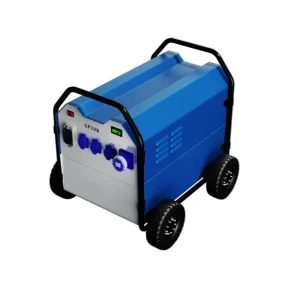
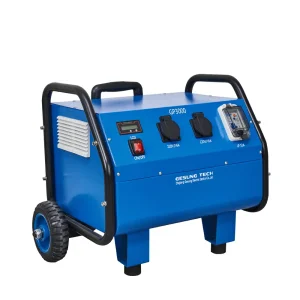
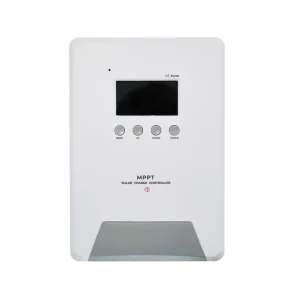
Explore our mobile energy storage options, backup generators, and micro-grid sub-inverter systems.
 Turskov