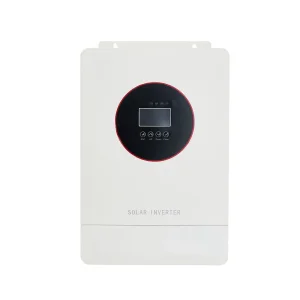
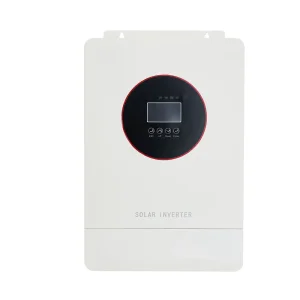
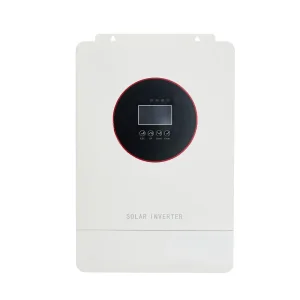
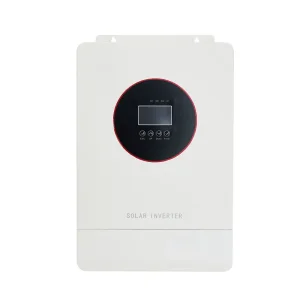
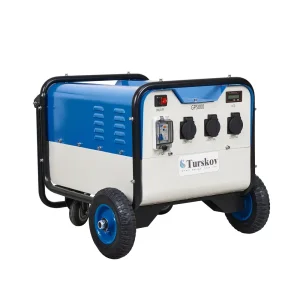
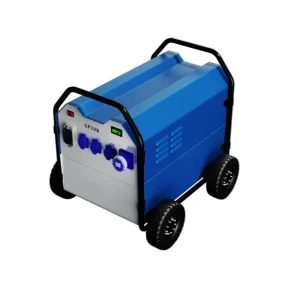
Headquartered in Wenzhou, China's central hub of private economic enterprise, Zhejiang Wenzhou New Energy Technology Co., Ltd. has established itself as an industrial pioneer in renewable energy technology since its inception in 2020. Spanning a state-of-the-art facility of over 15,000 square meters, our factory houses advanced CNAS-certified laboratories, EMC testing facilities, and dedicated research and development zones operating under a stringent integrated ISO 9001/14001/45001 management framework. This infrastructure guarantees complete, end-to-end quality inspection from primary raw material sourcing to final system configurations.
As a prominent manufacturer in the international solar power generation and portable storage sector, we are highly specialized in the custom R&D and precision engineering of intelligent mobile generator units, hybrid off-grid inverters, and utility-scale energy storage products. Powered by 36 proprietary patents, our standard-setting 5th-generation hybrid inverter system achieves a peak conversion efficiency rate of 98.5%. Our products are exported to over 28 countries, supporting reliable energy networks and providing specialized OEM/ODM manufacturing pipelines for leading Fortune 500 retailers including Walmart and Home Depot.
Production Facilities
Conversion Efficiency
Patented Technologies
Annual Unit Output
The global inverter market is experiencing a profound paradigm shift, transitioning from simple DC-to-AC conversion components to complex, system-level energy brain centers. As global decarbonization policies accelerate, the integration of distributed solar configurations, localized battery energy storage systems (BESS), and smart grids is no longer optional. This integration is essential for grid stabilization, peak shaving, and energy independence.
In developing regions, localized microgrids are bypassing traditional centralized utility corridors, adopting robust off-grid MPPT inverters to establish micro-utility networks. Conversely, mature markets in North America and Europe are implementing strict regulatory policies (e.g., NEC 2020 Rapid Shutdown, grid compliance regulations, and localized content standards). These conditions require factories to supply high-reliability, certified products that comply with local grid connection rules.
Technological advancement is driving down the levelized cost of energy (LCOE) for residential and commercial solar installations. Our factory sits at the crossroads of this development, engineering wide bandgap (SiC/GaN) semiconductors into our next-generation architecture to minimize thermal losses, shrink housing footprints, and extend operational lifespans beyond the industry baseline. We continue to scale our output capacity to meet these growing global demands.
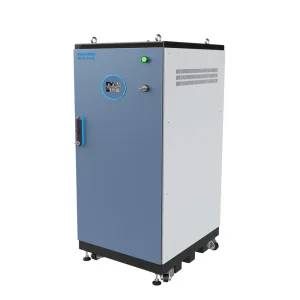
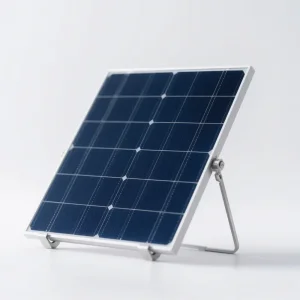
As modern life and industrial processing become increasingly dependent on uninterrupted electricity, utility grid instabilities can cause significant operational interruptions and financial losses. A solar off-grid power system offers a robust, autonomous solution by acting as a dedicated backup utility. This integrated system utilizes high-efficiency monocrystalline solar panels to capture solar radiation, converting it into raw DC power which is regulated by our dynamic MPPT controllers and stored in high-density lithium iron phosphate (LiFePO4) battery modules. During grid outages, the system switches to backup power mode automatically, delivering pure sine wave AC electricity to sustain critical loads.
Harnesses direct solar energy, drastically reducing fossil fuel reliance and grid carbon footprint, aligning installations with global net-zero goals.
Equipped with intelligent, microprocessor-controlled Battery Management Systems (BMS) to optimize thermal profiles, prevent overcharging, and extend cells’ lifespans.
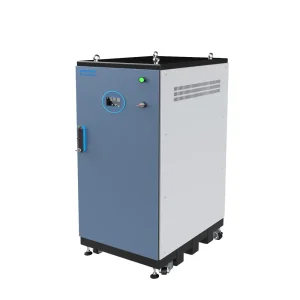
Simplifies on-site deployment, allowing technicians to scale power wall capacities (e.g., 30KWH, 45KWH, 60KWH) by stacking plug-and-play battery enclosures.
Our commitment to E-E-A-T principles is demonstrated through ongoing investment in testing infrastructure and raw materials. By using multi-layer protection grids, high-temperature resistant capacitors, and premium-grade copper wiring, we ensure our conversion modules resist degradation under harsh conditions.
Our CNAS-certified testing labs perform rigorous environmental stress screenings, including temperature chamber cycling (-40°C to +85°C), high-humidity ingress testing, and simulated vibration profiles. Our state-of-the-art EMC testing facility ensures all exported off-grid MPPT inverters comply with CE, FCC, and regional grid standards, minimizing electromagnetic interference.
We are integrating blockchain trace codes into our factory logistics to ensure component-level transparency. From cell sourcing to final assembly testing, every step is logged securely. This traceability supports swift maintenance workflows and strengthens trust with our global partners.
 Turskov