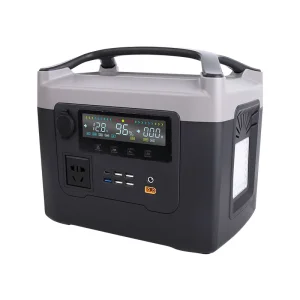
As decarbonization mandates tighten across international markets, the reliance on legacy diesel-fueled auxiliary generators has become a regulatory liability and an operational cost center.
Modern grid-scale, industrial, and commercial operations demand uninterrupted power supply (UPS) characterized by instant ramp times, high conversion efficiency, and absolute emission compliance. This has triggered an exponential global migration toward Lithium Iron Phosphate (LiFePO4) and Lithium Nickel Manganese Cobalt Oxide (NMC) generator architectures.
In North America and the European Union, grid instability caused by severe weather patterns and the integration of volatile wind and solar power has driven commercial enterprises to invest heavily in decentralized backup power networks. Concurrently, strict local emissions controls and diesel noise regulations have banned combustion engines in dense urban centers, zero-emission film sets, hospitals, and warehouse distribution centers.
This shift has created a dual requirement for global sourcing teams: generators must be highly mobile yet possess sufficient capacity (ranging from 3kW portable units for construction crews up to 100kW+ systems for industrial facilities) to sustain operation without continuous grid dependency.
Zhejiang Wenzhou New Energy Technology Co., Ltd. represents the absolute vanguard of clean energy engineering in China's most active private economy corridor. Our operational matrix is designed to optimize supply chain velocity, unit safety, and cost structure.
Operating out of a state-of-the-art 15,000+ square meter campus, our facility houses full CNAS-certified inspection laboratories, dedicated Electromagnetic Compatibility (EMC) testing modules, and environmental chambers. This vertical integration allows us to execute real-time QA/QC protocols under strict ISO 9001, ISO 14001, and ISO 45001 frameworks.
By leveraging localized supply chains in Wenzhou—famous for precision electronics and advanced metallurgical components—our factory yields an unmatched capacity of 50,000 units annually. This ecosystem ensures direct access to raw high-purity battery compounds, minimizing logistical friction and shielding our global partners from downstream price volatility.
Our design core is defined by 36 active utility patents. Among them is our 5th-generation hybrid inverter architecture, which utilizes silicon carbide (SiC) MOSFETs to achieve a peak conversion efficiency of 98.5%—drastically outperforming traditional silicon-based architectures.
To guarantee accountability for Fortune 500 retail chains (such as Walmart and Home Depot), we deploy a proprietary blockchain-enabled battery cell tracing module. This trace records individual cell chemical batching, production dates, testing anomalies, and compliance history from factory gate to deployment site. Furthermore, we are actively tracking towards Net-Zero Factory certification, with a dedicated roadmap to mitigate 1 million tons of global carbon emissions by 2030.
Our engineering design relies strictly on high-purity LiFePO4 cells to ensure optimal performance, thermal safety, and long lifecycle standards.
Unlike standard Lithium Cobalt Oxide (LCO) or NMC compounds, LiFePO4 chemistry has a high thermal runaway threshold (600°C). This removes the risk of explosive fires or off-gassing even under physical puncture or electrical overcharge conditions.
Our battery packs are engineered to achieve more than 6,000 full charge/discharge cycles at 80% Depth of Discharge (DoD). This provides a reliable lifespan of over 10 years, even when cycled daily in off-grid environments.
Each custom generator features an integrated, automotive-grade Battery Management System (BMS) with active balancing. The BMS continuously monitors voltage, temperature, and current across all cells, dynamically routing energy to prevent cell degradation.
Our lithium battery generators are designed to provide consistent, reliable performance across demanding industrial and environmental settings.
During grid instability, unexpected blackouts, or rolling brownouts, households rely on our off-grid solar power systems to run refrigerators, telemetry, medical equipment, and security systems. The automated transfer switch detects grid loss within milliseconds, ensuring critical home electronics keep running without interruption.
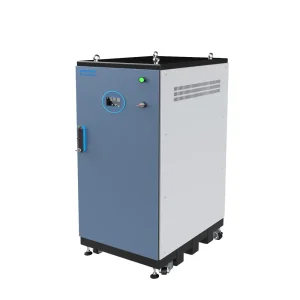
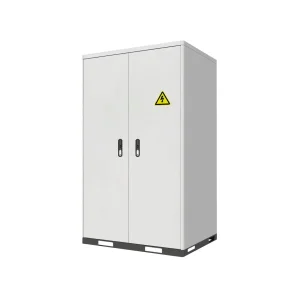
Off-grid industrial sites, rural microgrids, and remote cellular base stations utilize our 100kW energy storage systems to maintain round-the-clock uptime. By coupling these storage walls with local solar arrays, operations eliminate the high logistics costs and regular maintenance required by standard diesel generators.
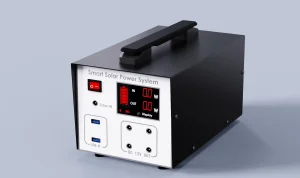
For surveyors, geological teams, first responders, and film crews, weight is a critical factor. Our lightweight, 600W life-grade portable power stations with built-in backpack form factors enable rapid foot-transport of stable energy. These units power critical field equipment, satellite terminals, and communications gear in challenging conditions.
We recognize that deploying industrial equipment globally requires strict compliance with international safety, certification, and shipping regulations.
Every lithium generator we ship carries comprehensive certifications verified by recognized third-party test labs. This certification process ensures trouble-free import clearance, simplified installation permitting, and compatibility with local utility rules.
Our standard export builds are certified to comply with UL 1973 and UL 9540A (battery safety standards), IEC 62619 (industrial applications), CE (European conformity), FCC Part 15 (electromagnetic emissions), and RoHS (hazardous materials). Additionally, for lithium transportation safety, all packs undergo rigorous UN38.3 testing protocols, guaranteeing safety during ocean, rail, or air transit.
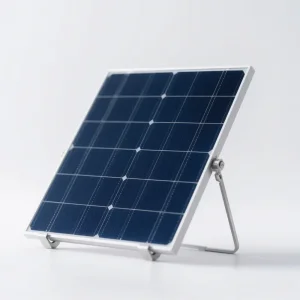
As modern life becomes increasingly dependent on electricity, power outages can cause significant inconvenience for households. The solar off-grid power system offers a reliable solution by providing backup energy for homes. This system uses high-efficiency solar panels to capture sunlight during the day, converting it into electricity that is stored in advanced lithium iron phosphate batteries. Even during power grid failures, it can deliver steady energy supply to household devices.
The inverter then converts direct current into alternating current to charge electric vehicles or other devices. Additionally, its intelligent control system adjusts charging power based on battery status and real-time demand to enhance efficiency.
Get expert technical insights regarding our lithium battery generators, manufacturing tolerances, certification requirements, and installation specifications.
Our premium grade-A Lithium Iron Phosphate (LiFePO4) cells are rated for ≥ 6,000 complete charge/discharge cycles at 80% Depth of Discharge (DoD) before capacity drops to 80% of its nominal value. Cycle life is maximized by operating within our recommended temperature range of 0°C to 45°C for charging and -20°C to 55°C for discharging. Keeping charging rates to 1C or lower and preventing deep discharges below 10% SoC will extend the pack's overall service life.
Our smart Battery Management System (BMS) employs dynamic passive and active balancing to ensure uniform voltage across all cell strings during charging. The system features multiple safety safeguards: Over-voltage protection (OVP), Under-voltage protection (UVP), Over-current protection (OCP), Short-circuit protection (SCP), and dual-channel thermal sensors. If safe operating limits are exceeded, the BMS disconnects the solid-state circuit breaker to isolate the pack and prevent thermal damage.
Our lithium generators are certified for international markets. We carry certifications for UL 1973 (battery safety), UL 9540A (large-scale fire testing), IEC 62619 (industrial standard safety), CE (European LVD/EMC directives), RoHS (restriction of hazardous substances), and FCC Part 15 Class B (electromagnetic compatibility). Additionally, all designs are certified under UN 38.3 standards for safe lithium battery transport.
Yes, our system architecture supports scaling. Depending on the model, systems can be expanded using parallel connections to scale storage capacity while keeping operating voltage consistent. For example, our 30KWH Solar Power Wall can be scaled in parallel up to 15 modules, achieving a total capacity of 450KWH. We recommend matching battery modules from the same manufacturing batch and cell version for balanced performance.
For standard customized configurations (such as custom outlet plates, paint colors, and logo placement), lead time is typically 15 to 25 working days. For custom OEM/ODM projects requiring structural redesigns, specific BMS programming, or specialized certification submissions, the cycle ranges from 45 to 60 days. This timeline includes engineering verification, rapid prototyping, and dynamic performance testing.
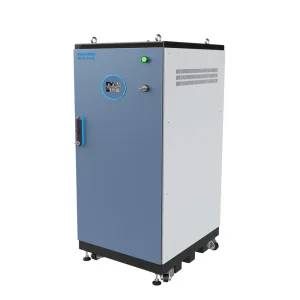
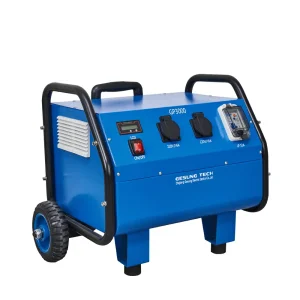
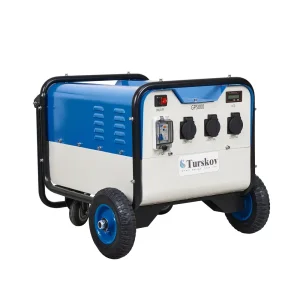
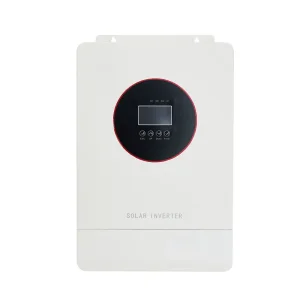
Our ongoing R&D coordinates with international power grid transitions to deliver complete, balance-of-system integration. Through partnerships, we offer an expansive array of standard hardware and structural mounting modules designed to support seamless field deployment:
Customize any type of scene support and mounting hardware to your specific site needs, ensuring long-term structural integrity under wind and snow loads.
From 2KW pure sine wave models up to multi-in-one MPPT 13.2KW modules, our conversion systems provide clean power with minimal distortion.
Deploying 100kw to 215kw heavy-duty configurations for peak shaving, load leveling, and facility backup systems.
 Turskov