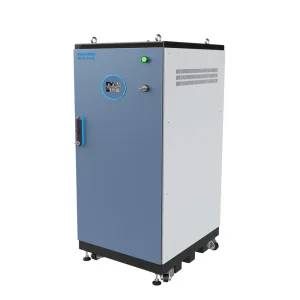
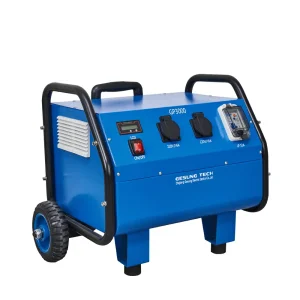
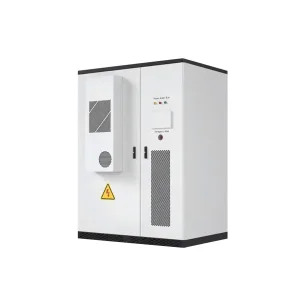
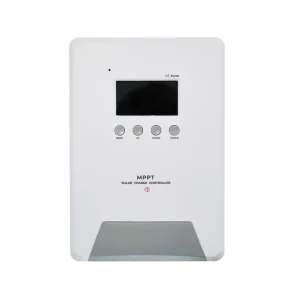
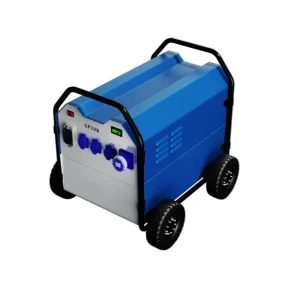
The transition toward decarbonized power grids has shifted energy storage from an alternative luxury to a critical infrastructure imperative. Globally, regulatory mandates such as the European Union’s Net-Zero Industry Act and the United States’ Inflation Reduction Act (IRA) are driving enterprises to decouple their operations from unstable traditional grids. User-friendly power storage generators have emerged as a pivotal mechanism, allowing commercial entities, agricultural facilities, and critical services to guarantee uptime while minimizing Levelized Cost of Energy (LCOE).
Commercial and industrial (C&I) installations face distinct challenges: extreme load fluctuations, volatile peak tariff pricing (time-of-use charges), and the constant threat of grid dropouts. By integrating smart battery energy storage systems (BESS), modern enterprises can perform peak-shaving, load-shifting, and micro-grid stabilization. Implementing localized generation combined with dynamic high-capacity battery units represents a resilient strategy, ensuring that critical data pipelines, temperature-controlled facilities, and automated production runs remain online regardless of grid events.
Zhejiang Wenzhou New Energy Technology Co., Ltd. (suggested full name), headquartered in Wenzhou, China's hub of private economy, has been a pioneer in renewable energy solutions since its establishment in 2020. Spanning 15,000+ square meters, our facility houses CNAS-certified laboratories, EMC testing centers, and specialized R&D zones operating under ISO 9001/14001/45001 management systems, ensuring end-to-end quality control from raw materials to finished products.
Wenzhou's unique industrial cluster provides an unparalleled advantage in supply chain velocity. From raw copper and precision semiconductor switch components to mechanical enclosures and advanced thermal pads, 95% of our component supply chain is sourced within a 100-kilometer radius. This geographic configuration eliminates lead-time friction, enabling rapid custom configurations (OEM/ODM tooling) for global clients, and supports a highly competitive cost-to-performance ratio for complex systems ranging from 3kW portable units up to 215kW grid-scale modules.
Energy storage is not a one-size-fits-all market. Each application requires specific power density, charge-discharge dynamics, and ambient thermal management.
We implement 7×24 multilingual customer support backed by a blockchain-enabled traceability system that resolves 90% of issues within 2 hours. Committed to sustainability, we are pursuing Net-Zero Factory certification with a roadmap to reduce global carbon emissions by 1 million tons by 2030. Through intelligent IoT-enabled energy ecosystems and cross-border partnerships, we empower businesses worldwide to transition toward greener operations seamlessly.
Combines power generation, storage, and inversion in one unit, reducing system complexity, minimizing power loss, and ensuring stable microgrid operations.
Utilizes ultra-stable Lithium Iron Phosphate battery modules that endure over 6000 charging cycles while actively mitigating thermal runaway risks.
Real-time analytics monitor temperature patterns, charging speeds, state of charge (SoC), and system health metrics via secure API interfaces.
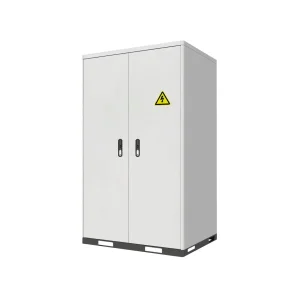
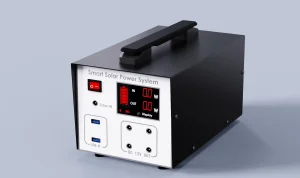
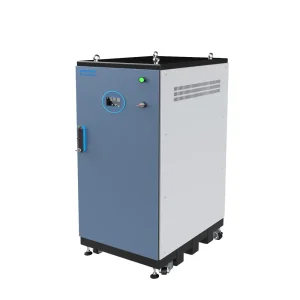
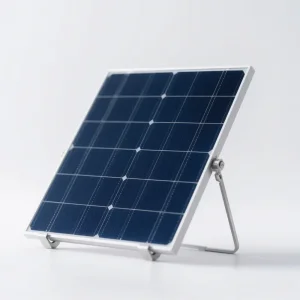
As modern life becomes increasingly dependent on electricity, power outages can cause significant inconvenience for households. The solar off-grid power system offers a reliable solution by providing backup energy for homes. This system uses high-efficiency solar panels to capture sunlight during the day, converting it into electricity that is stored in advanced lithium iron phosphate batteries. Even during power grid failures, it can deliver steady energy supply to household devices.
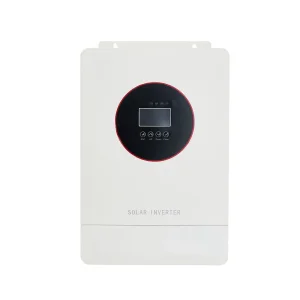
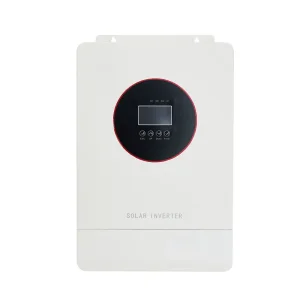
The solar-powered portable charging station with integrated inverter combines power generation storage and inversion functions into one system. It collects energy through solar panels, converts it into electricity and stores it in built-in batteries. The inverter then converts direct current into alternating current to charge electric vehicles or other devices. Additionally, its intelligent control system adjusts charging power based on battery status and real-time demand to enhance efficiency.
| Parameter / Feature | Residential Power Walls (30-60kWh) | C&I Storage Systems (100-215kW) |
|---|---|---|
| Battery Chemistry | Prismatic LiFePO4 (LFP) | Liquid-Cooled Megawatt LFP Cells |
| Inverter Topology | Single/Three-Phase Hybrid Off-Grid | Bi-directional PCS with STS Modules |
| Switching Time (UPS) | < 15 ms (seamless domestic) | < 10 ms (computer-room grade) |
| Thermal Protection | Passive Airflow & Solid State BMS | HVAC Active Liquid Chilling Loop |
 Turskov