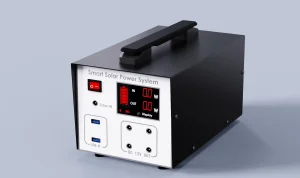
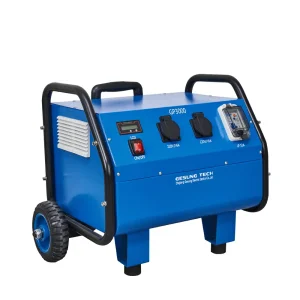
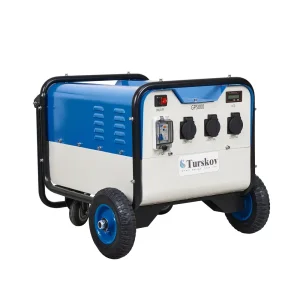
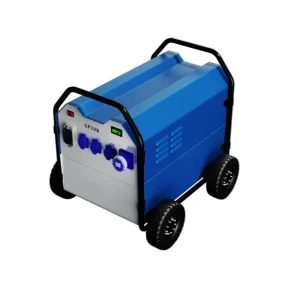
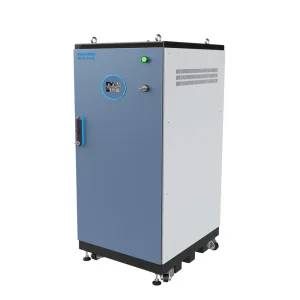
Explore our high-efficiency solar walls, portable power generators, and industrial commercial storage units.
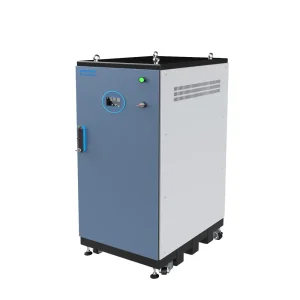
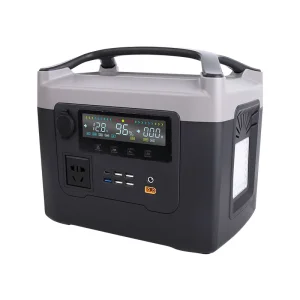
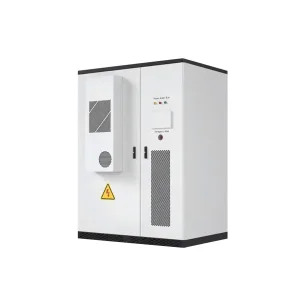
Established in 2020, Zhejiang Wenzhou New Energy Technology Co., Ltd. has rapidly emerged as a pioneer in the global renewable energy ecosystem. Headquartered in Wenzhou, the historical heart of China’s dynamic private economy, our state-of-the-art manufacturing infrastructure spans 15,000+ square meters. We operate advanced CNAS-certified laboratories, dedicated electromagnetic compatibility (EMC) testing facilities, and specialized R&D zones designed to satisfy rigid Western certification standards. All activities run under integrated ISO 9001, ISO 14001, and ISO 45001 management protocols, ensuring total transparency and absolute quality assurance from incoming raw chemical assays to finalized dynamic testing cycles.
As a recognized global leader in solar off-grid solutions and smart portable power products, our engineering team has secured 36 patented technologies. Notable among these is our proprietary 5th-generation hybrid off-grid inverter architecture, which realizes an industry-leading 98.5% conversion efficiency rate. We pride ourselves on executing scalable OEM and ODM solutions for Fortune 500 enterprises like Walmart and Home Depot, leveraging a specialized workforce of over 200 technical experts and a annual production output surpassing 50,000 units.
Our mission extends beyond simply delivering storage hardware. We implement an intelligent, Web3-ready, blockchain-enabled product traceability system, permitting clients to track their systems' components from individual battery cell manufacturing dates through final factory stress assays. Under our dedicated customer success framework, our multilingual technical team offers 7x24 global support, achieving a audited 90% issue resolution rate within 2 hours.
Driven by a commitment to environmental sustainability, our Wenzhou facility is actively pursuing official Net-Zero Factory certification. By reducing line losses, improving power factor management across our automation lines, and expanding our internal solar roofs, we have established a concrete sustainability roadmap aimed at preventing 1 million tons of global carbon dioxide emissions by 2030.
Production Facility (SQM)
Inverter Conversion Efficiency
Patented Technologies
Exporting Countries & Regions
Analyzing the strategic demands and pain points of C&I buyers, global supply chain managers, and energy system integrators.
Large-scale energy projects rely heavily on Levelized Cost of Storage (LCOS). Buyers look for long cycle life batteries (such as LiFePO4 cells with 6000+ cycles at 80% DOD) and high-efficiency power electronics to maximize returns and shorten payback periods.
Navigating varying localized standards like UL 1973, UL 9540A, CE, IEC 62619, and IEEE 1547. Enterprises prioritize manufacturers who provide certified compliance to prevent regulatory gridlock and guarantee workplace safety.
With tightening ESG regulations, global buyers require verifiable supply chain tracking. Our blockchain-enabled component traceability mitigates geopolitical risks and validates ethical raw material procurement.
By bypassing third-party intermediaries and contracting directly with Wenzhou New Energy Technology, procurement managers ensure direct engineering support, custom firmware tailoring, flexible packaging, and optimized logistics that reduce total lead times by up to 35% compared to standard trade agencies.
How we address the complex challenges of decentralized microgrids, peak-shaving, and off-grid reliability.
Off-grid systems are evolving beyond stand-alone backup devices; they are shifting toward interconnected micro-utilities. Our technical roadmap focuses on the integration of Wide Bandgap (WBG) semiconductors like Silicon Carbide (SiC) and Gallium Nitride (GaN) into our high-power MPPT charge controllers and hybrid inverters. This advancement allows for higher switching frequencies, smaller passive component footprints, and lower thermal generation.
In parallel, we are designing our next-generation battery management systems (BMS) to support AI-driven predictive diagnostic models. By tracking state-of-health (SOH) and temperature profiles in real time via cloud algorithms, the system can dynamically balance cell degradation, mitigating the risk of thermal runaway and extending operational lifespans by up to 25%.
For large commercial installations, our software suite supports intelligent Peak-Shaving and Peak-Load Shifting. The system automatically monitors localized tariff rates and shifts power consumption from the grid to the battery reserve during peak hours, significantly reducing industrial demand charges and lowering monthly utility overheads.
Understanding the system mechanics behind integrated generation, storage, and inversion.
A modern solar off-grid power system functions as a miniature utility. The framework integrates high-efficiency photovoltaic (PV) generation, dynamic battery chemical storage, and power conversion (inversion) electronics into a single, cohesive unit. This integration reduces system complexity, mitigates common configuration errors, and ensures optimal performance.
During daylight hours, the solar panels collect solar radiation. This DC electrical current passes through a Maximum Power Point Tracking (MPPT) charge controller, which dynamically monitors the voltage-current curves of the PV array to extract the maximum available power. This energy is then directed to the battery bank, storing it in chemically stable Lithium Iron Phosphate (LiFePO4) cells.
When demand arises from household appliances or industrial machines, the integrated pure sine wave inverter draws DC energy from the battery bank, converting it into clean, low-distortion AC power. The system's intelligent control platform continuously monitors load profiles, grid stability (where applicable), and state-of-charge (SOC) metrics. This ensures continuous operation through automated backup transitions, protecting sensitive electronics during unforeseen outages.
By housing the solar MPPT controller, battery system, and pure sine wave inverter in a single unit, line resistance is decreased and overall reliability is enhanced.
Relying on clean solar energy allows users to decrease carbon emissions, align with environmental goals, and lower their dependency on traditional utility grids.
Features compact, modular layouts that make installation, expansion, and routine maintenance straightforward in remote, residential, or emergency environments.
Utilizes advanced charge-discharge algorithms that adjust charging rates based on battery cell health, load requirements, and ambient temperatures.
Allows users to minimize energy expenditures over time. A single up-front investment delivers years of clean power, free from unpredictable fuel or utility cost increases.
Provides critical backup power during severe weather events, grid overloads, or equipment failures, ensuring essential operations continue uninterrupted.
Ensuring compliance with localized technical, legal, and environmental frameworks worldwide.
Entering global energy markets requires adherence to diverse local standards. At Zhejiang Wenzhou New Energy Technology Co., Ltd., we prioritize compliance by engineering our systems to meet regional guidelines. We maintain comprehensive certifications including CE (LVD/EMC), IEC 62619, UL 1973, and UL 9540A, which are verified by independent laboratories to meet the safety and performance standards of North American and European markets.
For systems integrated with local utility grids (hybrid systems), our inverters comply with localized grid interconnection standards such as IEEE 1547 (United States) and VDE-AR-N 4105 (Germany). This guarantees that our equipment will disconnect safely during grid anomalies, preventing hazardous backfeeding and protecting utility repair workers.
We also offer localization options for our physical products. This includes localized UI translations on system control screens, country-specific AC socket panels (Type B, Type G, Type F, etc.), and custom technical manuals.
Furthermore, we support importing partners with comprehensive customs paperwork, declarations of conformity, and dangerous goods (UN38.3) shipping certifications for our lithium-ion components. This support helps streamline transit processes and prevents clearance delays at destination ports.
Find answers to common technical queries about off-grid solar design, manufacturing capabilities, and battery safety.
Browse our complete list of mobile storage systems, backpack power banks, and smart control accessories.
 Turskov