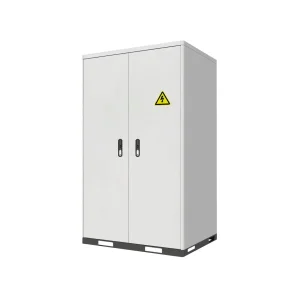
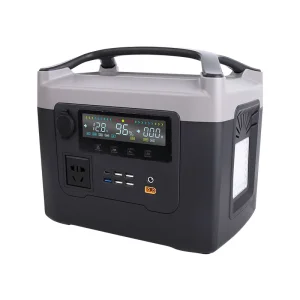
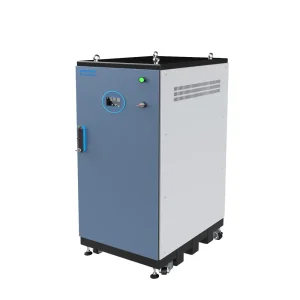
Engineered to exact OEM specifications, our grid-forming power walls and multi-in-one smart backup banks ensure seamless efficiency.
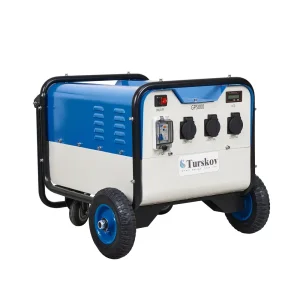
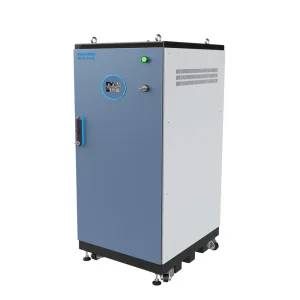
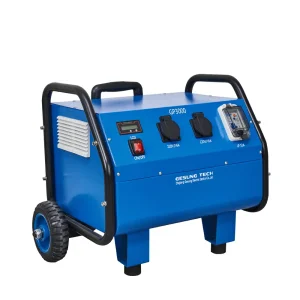
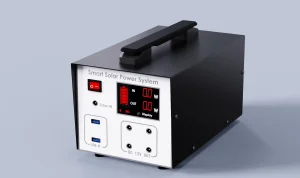
Zhejiang Wenzhou New Energy Technology Co., Ltd. is headquartered in Wenzhou, China's hub of private economy, and has been a pioneer in renewable energy solutions since its establishment in 2020. Spanning over 15,000+ square meters, our facility houses CNAS-certified laboratories, EMC testing centers, and specialized R&D zones operating under ISO 9001/14001/45001 management systems, ensuring end-to-end quality control from raw materials to finished products.
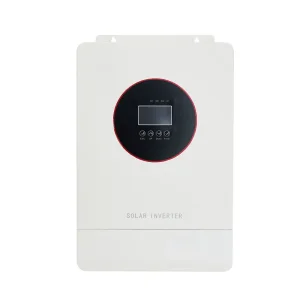
As a global leader in solar power generation systems and portable energy solutions, we specialize in R&D and manufacturing of mobile generators, solar inverters, and hybrid energy storage products. With 36 patented technologies, including our 5th-gen hybrid inverter achieving 98.5% conversion efficiency, we export to 28+ countries and provide OEM/ODM services for Fortune 500 clients like Walmart and Home Depot. Our 200+ technical experts and 50,000-unit annual production capacity enable rapid customization for diverse energy needs.
We implement a 7×24 multilingual customer support system backed by a blockchain-enabled traceability system that resolves 90% of issues within 2 hours. Committed to sustainability, we are actively pursuing Net-Zero Factory certification with a roadmap to reduce global carbon emissions by 1 million tons by 2030. Through intelligent IoT-enabled energy ecosystems and cross-border partnerships, we empower businesses worldwide to transition toward greener operations seamlessly.
On-site EMC validation and precision load transient simulations ensure international compatibility.
Automotive-grade semiconductors and premium LFP chemistries yield 10+ year operational life cycles.
As global commercial and industrial (C&I) sectors accelerate carbon neutrality initiatives, the demand for clean power conversion has evolved from a backup utility to a core structural asset. Pure sine wave inverters are fundamental to this shift. Unlike modified sine wave units that output choppy, square-wave electrical currents, a pure sine wave inverter replicates the smooth, continuous wave of utility-provided grid electricity.
From a thermal dynamics perspective, total harmonic distortion (THD) is the primary benchmark. High THD values in modified sine wave units cause excessive heat buildup in electromagnetic coils, risking damage to precision motors and diagnostic equipment. Industrial systems, medical imaging machinery, telecommunication hubs, and microchip manufacturing plants demand inverters with a THD of < 3% to ensure stable operation and extend equipment lifespan.
Dynamic dual-mains bypass paths drop transfer times to < 4 milliseconds, avoiding critical logic board reboots.
Independent heat-dissipation tunnels with micro-processor controlled fan speed profiling protect internal elements.
Over-temperature, short-circuit, ground-fault, and peak load safety lines isolate delicate components instantly.
The core differentiator between standard inverters and our premium OEM platforms lies in semiconductor integration. The industry is currently transitioning from standard Silicon insulated-gate bipolar transistors (IGBTs) to Silicon Carbide (SiC) and Gallium Nitride (GaN) metal-oxide-semiconductor field-effect transistors (MOSFETs).
This transition addresses several key challenges:
As power networks adapt to decentralized renewable generation and bidirectionality, our R&D initiatives focus on three primary technological horizons:
Transitioning from grid-following (requiring grid synchronization signals) to grid-forming inverters. These units establish voltage and frequency reference frames independently, enabling stable microgrids in areas with weak external grid support.
Integrating real-time cloud diagnostic telemetry with edge AI computing. Edge nodes predict component failure rates based on temperature rises and dynamic loads, facilitating proactive preventative maintenance schedules.
Replacing bulky low-frequency steel transformers with high-frequency solid-state equivalents. This configuration reduces footprint profiles by up to 75% and enables seamless dual-direction energy routing.
OEM solutions require tailored configurations based on localized standards. In North America (split-phase 120V/240V grids), residential systems require precise phase-balancing controls to prevent voltage imbalances. In Europe and Asia (single-phase 230V and three-phase 400V grids), heavy industrial setups demand active harmonic compensation to maintain compliance with strict utility regulations.
In remote, mountainous agricultural regions, grid access can be unstable. We deployed a modular off-grid system combining high-efficiency solar panels with our multi-in-one MPPT inverters and lithium iron phosphate battery walls. The integration of dynamic MPPT charging ensures system stability during low-sunlight periods, providing reliable, continuous power for farming operations.
An regional network center required a stable power backup solution. By deploying our 100kW commercial energy storage systems with high-speed transfer switches, the facility achieved zero system restarts during grid disruptions. Harmonic distortion levels were maintained under 2.5%, protecting sensitive storage hardware.
Detailed technical insights into pure sine wave design, battery safety, and industrial system configuration.
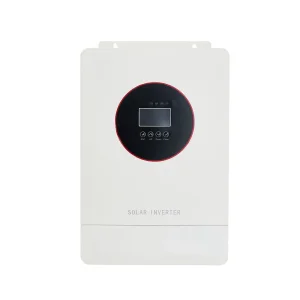
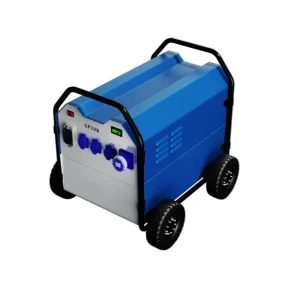
Engineered for continuous operation, our commercial MPPT inverters and heavy-duty emergency generators ensure reliable energy backup.
 Turskov