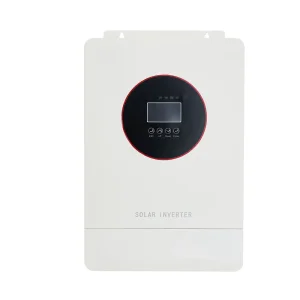
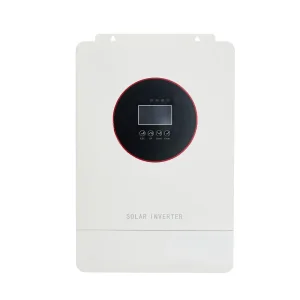
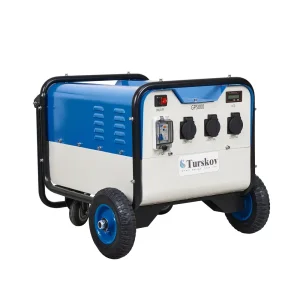
Explore our flagship catalog of high-efficiency modular hardware built to sustain critical operations in dynamic industrial, commercial, and residential applications.
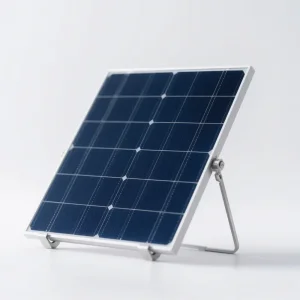
Empowering commercial systems with robust architecture, certified compliance, and verifiable production trace-tracking.
Headquartered in Wenzhou, China's core manufacturing ecosystem, Zhejiang Wenzhou New Energy Technology Co., Ltd. has established itself as an innovative developer of high-reliability off-grid electrical infrastructures since its foundation in 2020. Our operational facilities spans 15,000+ square meters, housing CNAS-certified laboratories, EMC testing centers, and isolated R&D divisions operating in complete compliance with ISO 9001, ISO 14001, and ISO 45001 quality, environmental, and occupational safety frameworks.
We supply utility-scale developers and retail enterprises alike, functioning as an approved OEM/ODM partner for global Fortune 500 chains including Walmart and Home Depot. Our product design utilizes a blockchain-backed manufacturing traceability platform. By tracking raw materials to final functional QA audits, we guarantee that every deployed component performs to specifications, resolving over 90% of user technical support tickets within two hours via our 24/7 technical hotline.
Understand the supply chain structures, component integration, and cost benefits that drive our high-performance off-grid systems.
Wenzhou's mature electric supply chain allows direct access to high-grade silicon, lithium-iron-phosphate (LFP) cells, and power semiconductor matrices. This reduces logistical overhead and ensures component compatibility.
Before leaving the factory, all components undergo continuous thermal profiling, vibration tests, and high-voltage isolation analysis under simulated environmental extremes. This maintains low failure rates in remote applications.
Our off-grid systems feature integrated IoT monitoring. Real-time telemetry data regarding cell voltage, load patterns, and PV yields are visualized via customizable dashboards, reducing on-site maintenance costs.
Deploying an industrial-grade off-grid solar infrastructure requires careful balancing of power generation, system conversion, and energy storage. System topology generally utilizes either an AC-coupled configuration or a DC-coupled configuration. Understanding the specific advantages of each is critical for optimizing Levelized Cost of Energy (LCOE) and system lifetime.
In off-grid configurations, our custom MPPT modules track dynamic weather profiles, operating with up to 99.8% static tracking efficiency. These systems balance input voltage mismatches from solar arrays, ensuring optimal power transfer to the battery storage banks during low-light conditions.
Sensitive loads in telecommunications, field hospitals, and data centers demand clean input power. Our high-power pure sine wave inverters feature Total Harmonic Distortion (THD) levels below 2.5%, preventing electromagnetic interference and reducing thermal stress in induction motors and server power supplies.
We utilize Automotive-Grade Lithium Iron Phosphate (LiFePO4) chemistry for our energy storage designs. This configuration provides over 6,000 charge cycles at 80% Depth of Discharge (DoD), managed by a dual-processor BMS that protects cells against over-current, voltage drift, and thermal runaway.
Our custom hardware configurations are optimized for specific operational requirements, ensuring continuous operation under severe grid conditions.
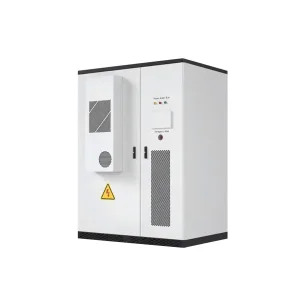
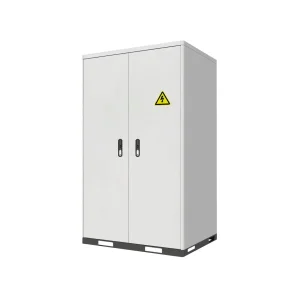
Ensuring constant uptime for remote base stations and automated industrial lines. Integrating our high-capacity 215kW industrial batteries with central power panels provides reliable backup capacity, eliminating micro-outages and voltage fluctuations.
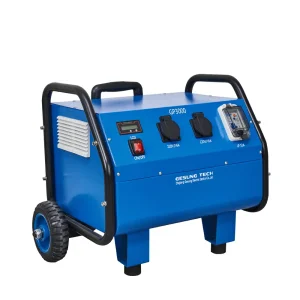
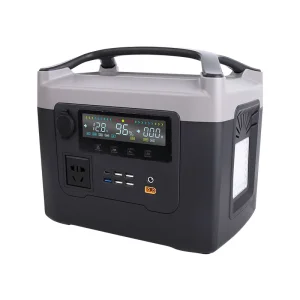
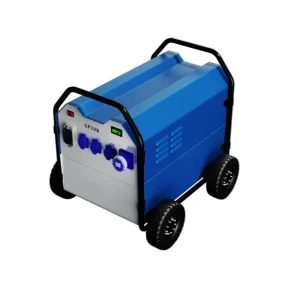
Providing portable, high-power systems for emergency services, disaster recovery, and utilities. Mobile generation containers (from 3kW up to 10kW mobile energy storage units) offer quick deployment options, generating active power for critical tools in off-grid situations.
Detailed technical advice from our engineering division regarding system deployment, manufacturing standards, and customized integration.
Select from our targeted systems designed to provide stable backup, peak shaving, and energy security under all load conditions.
 Turskov