High-capacity energy reserves, hybrid off-grid systems, and micro-grid integration solutions ready for global distribution.
Global Standard Engineering, State-of-the-Art Production Facility
Zhejiang Wenzhou New Energy Technology Co., Ltd., headquartered in Wenzhou, China's historic private economic engine, has led global energy storage innovations since 2020. Our expansive 15,000+ square meter state-of-the-art facility integrates CNAS-certified laboratories and specialized EMC testing centers under rigorous ISO 9001, ISO 14001, and ISO 45001 management protocols.
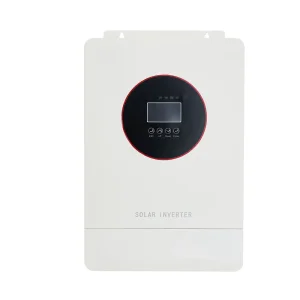
We act as an elite manufacturing partner for solar power generators, high-efficiency hybrid inverters, and utility scale battery energy storage systems (BESS). With 36 national patents, including our 5th-generation hybrid inverter that achieves a remarkable 98.5% conversion efficiency, we deploy systems to over 28 countries, partnering with Fortune 500 corporations such as Walmart and Home Depot.
Supported by over 200 technical specialists and a robust annual output capacity of 50,000 units, we design customized solutions for dynamic regional demands. Every product undergoes strict validation backed by our blockchain-enabled components traceability software, allowing 90% of field query resolutions in under 2 hours, and aligning with our Net-Zero factory roadmap to mitigate 1 million tons of global carbon by 2030.
Navigating the challenges of variable renewable grid penetration with advanced utility-scale BESS.
As the global community accelerates its transition from fossil fuels to variable renewable energy sources like wind and solar, electric grids encounter unprecedented load matching challenges. Modern grids were engineered for stable, centralized, baseline thermal generation. The introduction of highly volatile solar arrays and wind farms creates rapid fluctuations, dynamic power quality drops, and extreme duck curves where utility demand surges while local generation drops. Advanced wholesale energy storage generators serve as the core stabilization architecture to bridge these dynamic load curves.
Our solutions target three key grid stabilization mechanisms: frequency regulation, voltage support, and peak capacity deferral. During high-solar production windows, high-capacity commercial energy storage devices capture surplus power. Conversely, during grid shortages or peak demand intervals, these systems discharge energy within milliseconds, ensuring reliable baseline services without deploying carbon-heavy fossil fuel peaker plants. Through intelligent micro-grid coordination and virtual power plants (VPPs), commercial energy developers can aggregate decentralized storage assets, generating arbitrage opportunities while enhancing local electrical grid resiliency.
| Storage Scenario | Core System Type | Nominal Power Band | LCOS Optimization Index | Ideal Application |
|---|---|---|---|---|
| C&I Peak Shaving | Smart Off-Grid Power Wall | 30kWh - 60kWh | 0.08 USD/kWh | Commercial facility load shifting & PV load profiling |
| Telecommunications & Remote Power | High-Capacity Storage Systems | 5kW - 15kW | 0.09 USD/kWh | Base transceiver stations, rural microgrids, mountainous sites |
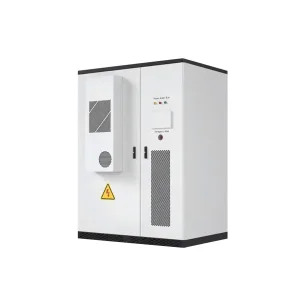
| Enterprise Data Centers | Industrial BESS Cabinets | 100kW - 215kW+ | 0.07 USD/kWh | Uninterruptible backup power, peak demand limit management |
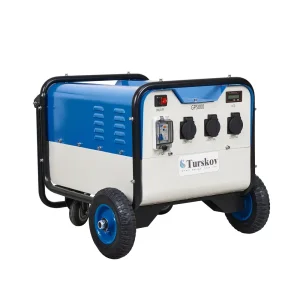
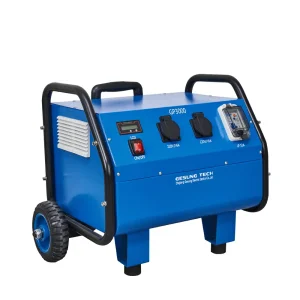
| Emergency Field Dispatch | Mobile Power Generators | 600W - 3kW | 0.12 USD/kWh | First responders, medical field deployments, construction zones |
Exploring regional frameworks, legislative support, and operational cost mitigation.
The business case for investing in commercial and industrial energy storage systems is shaped by shifting global legislative incentives. In North America, the Inflation Reduction Act (IRA) offers generous investment tax credits (ITC) for standalone storage systems, significantly accelerating return on investment (ROI). In the European Union, stringent CBAM (Carbon Border Adjustment Mechanism) tariffs place carbon-intensive supply chains at a competitive disadvantage, forcing manufacturers to deploy behind-the-meter battery systems to lower their operational carbon footprint.
Beyond compliance, operational cost reduction remains a primary commercial driver. Industrial facilities face steep utility billing composed of peak demand charges, where a few minutes of high usage dictates costs for the entire billing period. By installing advanced energy storage walls, companies deploy peak shaving: discharging battery power during localized spikes to flatten their billing demand profile. Furthermore, the incorporation of high-efficiency solar off-grid setups secures operations against brownouts, shielding automated assembly lines, logistics facilities, and manufacturing infrastructure from expensive downtime.
Monitors commercial loads in real-time, discharging stored energy automatically during localized spikes to minimize expensive utility tariff bands.
Utilizes advanced EMS software algorithms to charge during cheap off-peak utility periods and discharge when spot prices surge.
Delivers uninterruptible power supply (UPS) within milliseconds to prevent server loss, raw material spoilage, or system damage.
Ensuring cross-border certification compliance and providing localized warranty infrastructure.
Exporting energy storage solutions globally requires adhering to strict safety and compliance certifications. Different jurisdictions present distinct safety standards. Our manufacturing processes conform strictly to these dynamic global regulations, ensuring friction-free imports and installations:
To support global distributors, EPC partners, and installers, Zhejiang Wenzhou New Energy Technology Co., Ltd. provides localized engineering services and robust warranty support. Our blockchain-enabled tracing guarantees that parts, batch histories, and cell chemistry testing records are cataloged securely. Our 24/7 multilingual remote technical response system resolves installation issues quickly, backed by regional replacement hubs in key logistics corridors to minimize field repair intervals.
Pioneering tomorrow's solid-state chemistry, liquid cooling loops, and intelligent EMS systems.
Our power walls and commercial battery systems utilize premium Lithium Iron Phosphate (LFP) chemistry. LFP delivers safety profiles, high thermal thresholds, and long lifespans exceeding 6,000 cycles at 80% DOD, outperforming standard cobalt-based alternatives.
Our heavy industrial cabinets deploy liquid cooling loops, maintaining uniform cell-level temperatures within ±2°C. For residential designs, we use heat dissipation architecture and passive cooling panels to maximize reliability without external fans.
Our 2030 roadmap introduces AI-driven predictive control. By integrating cloud data, local load forecasting, and grid pricing variables, the system dynamically schedules charging cycles to maximize economy and lifespan.
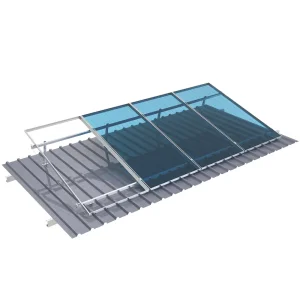
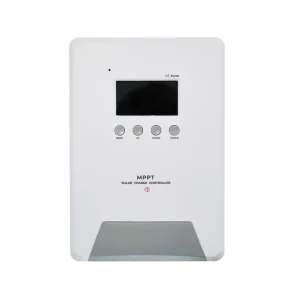
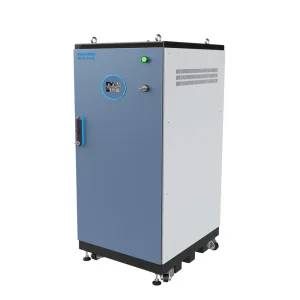
Utility scale storage cabinets, off-grid power walls, and auxiliary PV accessories.
Understanding the integration of power generation, energy storage, and inversion.
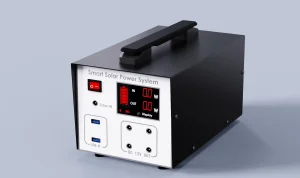
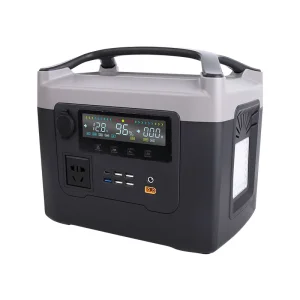
A solar-powered portable charging station with an integrated inverter combines power generation, energy storage, and inversion into a single, cohesive system. The process operates in three distinct phases:
Additionally, the integrated intelligent management system automatically adjusts charging rates based on battery chemistry status, temperature parameters, and real-time demand curves, maximizing system efficiency and safety.
Combines power generation, storage, and inversion into a single unit, reducing complex cabling requirements, streamlining transport, and ensuring stable off-grid operation.
Uses solar energy to reduce dependency on traditional utility grids, lowering carbon emissions and aligning operations with global ESG guidelines.
Compact form factor simplifies setup, transport, and site configuration, making the systems highly suitable for temporary setups, medical camps, and residential backup.
Incorporates smart management systems that dynamically adjust charging rates to extend cell lifespan and prevent thermal stress.
Provides a solid return on investment by reducing peak demand charges and offering free solar electricity, particularly in regions with high utility tariffs.
Functions as an automated emergency backup system during grid outages, keeping critical devices, servers, and cooling systems operational.
Direct answers from our engineering team regarding specifications, integration, and international shipping.
 Turskov