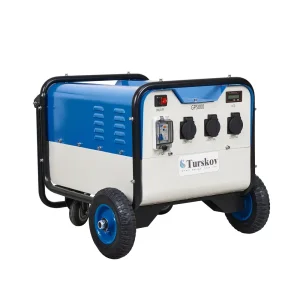
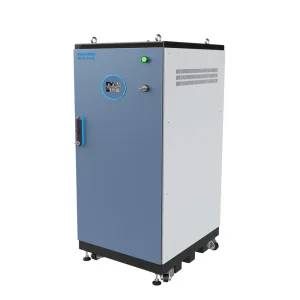
Explore our leading commercial energy storage units, utility-scale power systems, and premium portable solar generators designed for mission-critical operations.
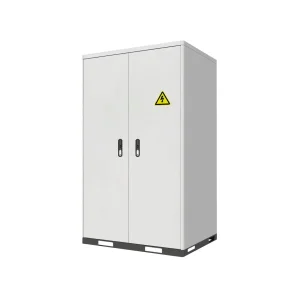
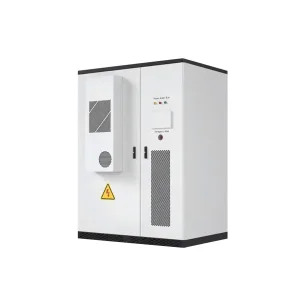
Headquartered in Wenzhou, China's central hub of private economic enterprise and industrial technology, Zhejiang Wenzhou New Energy Technology Co., Ltd. has been a pioneer in advanced renewable energy solutions since its establishment in 2020. Our state-of-the-art facility spans over 15,000 square meters and houses CNAS-certified laboratories, advanced electromagnetic compatibility (EMC) testing centers, and specialized R&D zones.
All our manufacturing workflows operate under strict ISO 9001, ISO 14001, and ISO 45001 management systems, assuring comprehensive quality control from the arrival of chemical-grade raw materials to the shipment of final packaged assemblies. Our global leadership in solar power generation and battery energy storage products is backed by massive manufacturing capacity and Fortune 500 strategic partnerships.
Patented Solar Technologies
Exporting Destinations
Hybrid Conversion Efficiency
Blockchain Traceability SLA
Addressing the shifting landscape of global grids, commercial resilience, and distributed energy resources.
The global energy transition is moving away from centralized carbon-intensive grids toward intelligent, decentralized, and resilient storage networks. As volatile weather patterns, infrastructure bottlenecks, and carbon tax penalties increase operating costs for multinational companies, the implementation of Solar Off-Grid Energy Walls has transformed from an environmental goal to a financial necessity.
Industrial and commercial facilities consume over 50% of the world's generated electricity. In highly industrialized regions, grid instability and peak-demand surcharges threaten operational margins. By utilizing integrated lithium iron phosphate (LFP) energy storage, organizations can achieve true energetic independence. Our off-grid energy walls allow companies to peak-shave high utility pricing, establish microgrids in areas without electrical infrastructure, and assure absolute uptime for critical databases, automated assembly lines, and cold storage units.
Charge the LFP battery array during low-cost utility periods and discharge it during peak demand hours, immediately slashing commercial electricity expenses.
Align corporate initiatives with Net-Zero emissions roadmaps. Replace traditional backup diesel generators with clean, silent solar storage configurations.
Link multiple off-grid energy walls to build a localized energy web, providing continuous 240V/400V power to remote mining, construction, or agricultural operations.
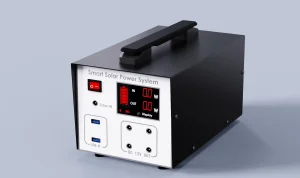
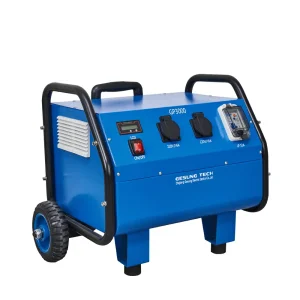
At the heart of the modern off-grid energy revolution is the seamless integration of generation, inversion, protection, and storage. The solar-powered portable charging station with integrated inverter combines power generation storage and inversion functions into one system. It collects energy through solar panels, converts it into electricity, and stores it in built-in batteries.
The system's high-frequency pure sine wave inverter then converts direct current (DC) into alternating current (AC) to charge electric vehicles, sensitive computer nodes, or high-power industrial machinery. Additionally, its intelligent control system adjusts charging power based on battery status and real-time demand to enhance efficiency, extend cell lifecycle (up to 6,000 cycles at 80% DoD), and guarantee safe operation under extreme thermal conditions (-20°C to 60°C).
Built for reliability, safety, and scalability. Discover why global enterprise clients rely on our technology.
Combines power generation, storage, and inversion in one unit, reducing system complexity and ensuring stable operation. Avoids multi-device wiring errors and dramatically reduces installation time from days to hours.
Primarily uses solar energy, reducing dependency on the grid and lowering carbon emissions, consistent with sustainability goals. Perfect for remote and environmentally sensitive areas where noise and exhaust are strictly prohibited.
Compact and easy to carry and install, making it ideal for home, outdoor, and emergency scenarios. Stackable design allows direct capacity expansions from 30kWh to 180kWh without requiring specialized lifting equipment.
Supports demand-based charging, automatically optimizing strategies for efficient energy use. Smart algorithms predict solar yield based on weather patterns and dynamic local utility tariffs.
Offers long-term benefits with a one-time investment, reducing electricity costs, especially suitable for users without fixed charging infrastructure. Protects businesses from unstable peak grid tariffs.
Serves as a reliable backup power source during grid failure, ensuring continued operation of essential devices. Instant transfer time (<10ms) guarantees that servers and medical machinery keep running during outages.
Ensuring absolute compliance with municipal grid requirements and global safety regulations.
Deploying high-voltage energy storage systems requires compliance with global safety standards. Our manufacturing processes and solar products strictly comply with international safety criteria. We have acquired testing and safety certifications including CE, IEC 62619, UL 1973, UN38.3, and FCC, guaranteeing seamless integration with local public grids.
With localized technical support teams situated across major markets in North America, the European Union, and Australia, we provide rapid pre-sales grid analysis, permit application support, and on-site commissioning services. Our blockchain-enabled traceability system tracks every LFP cell from its chemical origin to its physical serial number, allowing our remote engineers to resolve 90% of firmware issues within 2 hours.
From high-capacity residential backups to remote microgrids, our off-grid solutions fit seamlessly into diverse environments.
As modern life becomes increasingly dependent on electricity, power outages can cause significant inconvenience for households. The solar off-grid power system offers a reliable solution by providing backup energy for homes. This system uses high-efficiency solar panels to capture sunlight during the day, converting it into electricity that is stored in advanced lithium iron phosphate batteries. Even during power grid failures, it can deliver a steady energy supply to household devices.
For regions outside utility coverage—including rural farming operations, high-altitude research structures, telecommunication towers, and temporary construction hubs—traditional grid installations are cost-prohibitive. Our off-grid system functions as an independent powerhouse.
Our commitment to continuous innovation, solid-state chemistry, and IoT-enabled digital ecosystems.
Integrating early solid-state batteries to increase energetic density to over 280 Wh/kg, ensuring high thermal stability and elimination of liquid electrolytes.
Integrating advanced machine learning engines directly into cloud-based energy management portals, enabling autonomous prediction of power load behaviors.
Transitioning our entire manufacturing network to fully verified Net-Zero Factory operations, aiming to cut emissions by 1 million tons globally.
Expert answers addressing system design, ordering, integration, and battery configurations.
A: Capacity scaling directly corresponds to runtime and load demands. A 30kWh unit is optimal for typical residential backup configurations (supporting essential lighting, refrigeration, and electronics for up to 48 hours). The 45kWh configuration handles larger multi-family units or light commercial installations. The 60kWh energy wall is designed for industrial microgrids, medical storage facilities, and telecom hubs requiring continuous backup for critical machinery.
A: The integrated modular inverter utilizes multi-channel MPPT solar tracking to gather energy from solar PV arrays. The system combines power generation, storage, and inversion functions in one system. It converts solar DC energy into stable DC current to charge the battery cells. When alternating current (AC) is demanded by load devices, the pure sine wave inverter performs the inversion step with up to 98.5% conversion efficiency.
A: Yes. We use Grade-A LiFePO4 cells, which are chemically stable and have high thermal runaway thresholds compared to cobalt-based lithium chemistries. The integrated smart Battery Management System (BMS) continuously monitors voltage, current, and temperature across each individual cell to protect against overcharging, over-discharging, short circuits, and thermal shifts.
A: Absolutely. Our off-grid energy walls feature built-in parallel communication modules (CANbus and RS485). Users can scale energy storage capacity by linking up to 6 energy walls in parallel, expanding total storage capacity to meet high commercial or industrial power demands.
A: Yes, OEM and ODM manufacturing is a core part of our business. Supported by our 15,000+ square meter factory, 36 patented technologies, and experienced R&D team, we customize dimensions, power outputs, sheet metal enclosures, and software communication protocols to match the specific market demands of our global partners.
A: Our complete product line complies with international grid-connection and safety guidelines. Depending on the product, certifications include CE, IEC 62619, UL 1973, UN38.3 (for safe transportation), and FCC. Testing is conducted within our CNAS-accredited laboratory and EMC testing facilities.
A: Our blockchain system records the production path, raw material batch, testing log, and logistics history of every energy wall. In the rare event of a performance drop, our technical support team can trace the cell's history via the blockchain, allowing our support team to resolve 90% of issues within 2 hours.
A: Under standard operating parameters (+25°C, 0.5C charge/discharge, 80% Depth of Discharge), our systems deliver over 6,000 complete operational cycles before capacity drops to 80%. We offer a standard 5-to-10-year warranty, backed by continuous post-warranty technical support.
A: Our enclosures feature IP65 ingress protection to exclude dust, water, and humidity. For temperature management, the system features active thermal management with integrated heating and ventilation. This allows the system to work reliably in temperatures ranging from -20°C up to +60°C.
A: With an annual capacity of 50,000 units, standard systems are ready for shipment in 25 to 30 days. Custom OEM/ODM orders requiring enclosure changes or firmware integration generally take 45 to 60 days, depending on configuration complexity and certification requirements.
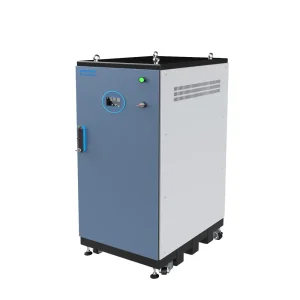
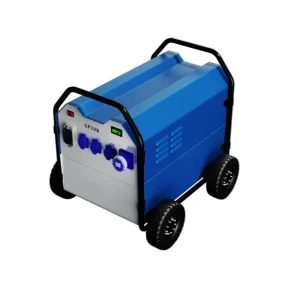
Premium energy wall systems, industrial high-capacity storage banks, and portable power stations.
 Turskov