High-efficiency power walls, portable stations, and emergency generators engineered for robust global operations.
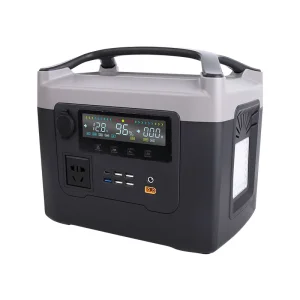
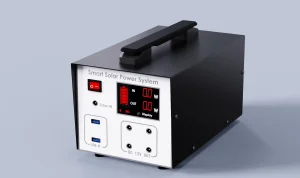
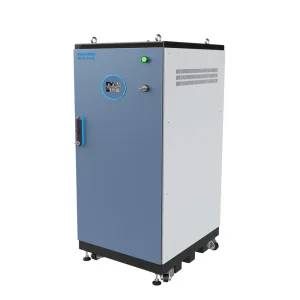
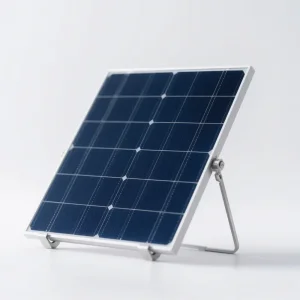
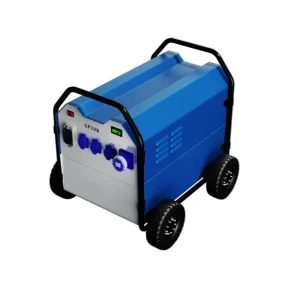
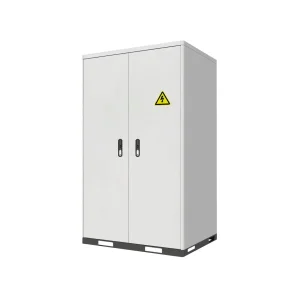
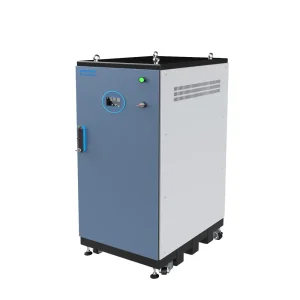
A global benchmark in intelligent energy ecosystems, integrating advanced LFP chemistry with blockchain-enabled asset lifecycle validation, operating under stringent global quality benchmarks.
As grid instability increases globally and utility pricing reaches unprecedented peaks, the deployment of decentralized, commercial-grade energy storage systems has transitioned from an environmental ideal to a operational necessity. A modern solar off-grid power wall represents the synthesis of energy storage, conversion efficiency, and edge automation. Zhejiang Wenzhou New Energy Technology Co., Ltd. has established itself as an institutional leader in Wenzhou, China's dynamic private economy district, engineered to execute high-volume production for international markets.
The core technology centers on safe Lithium Iron Phosphate (LiFePO4) cell topologies integrated with our 5th-generation hybrid inverter architectures, which deliver a conversion efficiency of 98.5%. With a capacity baseline scaling from compact residential power walls up to multi-megawatt containerized configurations, our technologies ensure uninterrupted power quality in any environment.
A solar off-grid system functions by converting volatile photovoltaic input into flat, highly regulated utility power. The optimization of this pathway depends on structural integration:
We deploy high-cycle prismatic LFP cells. The thermal runaway threshold is 600°C, providing safety profile advantages over traditional ternary NMC chemistries.
Our fifth-generation MPPT controllers utilize tracking algorithms to capture maximum panel output during low-light conditions, operating at 98.5% efficiency.
Real-time analytics monitor state-of-health (SoH) and state-of-charge (SoC), enabling preventive failure diagnostics through integrated IoT gateways.
Operating a 15,000+ square meter high-throughput facility in Wenzhou requires deep automation. Our Factory 4.0 approach incorporates robotic assembly, laser welding, and automated cell matching systems. The manufacturing cycle utilizes a blockchain-enabled tracking framework that records validation parameters for every unit, ensuring transparency from raw mineral components to final product delivery.
| Manufacturing Stage | Core Metric Tested | Automation Level | Standards Complied |
|---|---|---|---|
| Cell Grading & Matching | Internal Resistance < 0.5mΩ, Capacity Deviation < 1% | 98% Robotic Automated sorting | UN38.3, IEC 62619 |
| Module Laser Welding | Tensile strength > 800N, Junction impedance < 15μΩ | 100% CNC Precision CNC Laser | ISO 9001 Quality Gate |
| BMS Commissioning | Over-voltage, thermal protection calibration limits | Semi-automated functional rigs | EMC Directive, UL 1973 |
| System Thermal Burn-In | Continuous 72-hour full-load discharge profile | 100% Smart Grid Regeneration | CE, FCC Part 15 Class B |
This automated framework translates to a standard capacity of over 50,000 units per annum. Supply chain integration is managed directly through localized component ecosystems, insulating global supply contracts from fluctuating mineral pricing and global shipping bottlenecks.
Industrial applications present unique demands that standard off-grid systems cannot resolve. We design and deliver custom platforms for a broad range of infrastructure requirements:
Critical cell towers and edge datacenters require continuous power systems. Our solar off-grid solutions operate alongside existing grid setups, using custom battery modules to provide stable DC and AC power, minimizing grid dependence and reducing diesel backup runtimes by up to 90%.
Modern localized farming requires reliable energy to operate automated irrigation, cooling centers, and climate-controlled storage. By pairing large-scale solar arrays with our modular 100kW to 215kW energy storage solutions, agricultural enterprises can operate independently from unreliable localized electrical distribution grids.
As the energy industry develops, our R&D team is engineering next-generation technologies to meet emerging industrial challenges:
We are engineering prototypes incorporating solid-state electrolytes, targeting a nominal volumetric energy density exceeding 380 Wh/kg by 2026.
Integrating adaptive machine learning models directly into edge microcontrollers to run real-time battery degradation predictions based on local environments.
Developing bidirectional power walls that allow EV integration, letting vehicle batteries serve as supplementary storage components.
Safety is the primary metric in large-scale energy integration projects. Our product designs are engineered and certified to meet international standards:
To support global partners, we operate 7x24 multilingual customer service desks. Over 90% of field diagnostic inquiries are resolved within 2 hours through remote analysis, backed by strategically located service centers in key import countries.
Explore our high-capacity commercial modules, mobile generators, and customized inverter solutions.
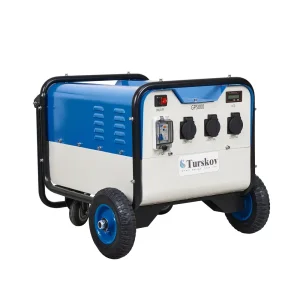
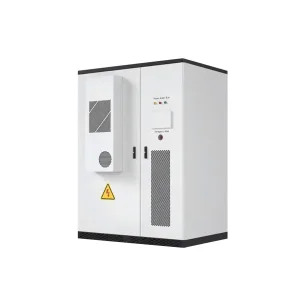
Technical clarifications on system design, safety parameters, integration, and supply configurations.
Our integrated inverter design combines generation, storage, and DC-to-AC conversion into a single, pre-calibrated system. By eliminating external cabling and optimizing the direct link between the BMS and the inverter circuitry, the system reduces routing resistance losses, prevents electromagnetic interference (EMC), and improves overall conversion efficiency to 98.5%.
We utilize high-grade prismatic LiFePO4 cells engineered to exceed 6,000 complete charge/discharge cycles at 80% Depth of Discharge (DoD) at a standard temperature of 25°C. This translates to an operational lifespan of over 10-15 years in typical residential and commercial environments before the nominal capacity transitions to 80% of its initial baseline.
Each manufactured energy storage module is assigned a unique cryptographic identifier registered on our secure ledger. This entry logs testing metrics (e.g., initial internal cell resistance, laser weld quality metrics, capacity tests, and BMS burn-in profiles) along with battery material sources. Wholesale buyers can verify this history, facilitating compliance checks and asset management.
We provide full-spectrum structural, electrical, and firmware customization. This includes custom capacity scaling (ranging from 5kWh modules to megawatt container configurations), specialized battery management configurations (BMS communication with proprietary SCADA networks via CANbus, Modbus, or RS485), visual customization, and target certification compliance for specific regional grid requirements.
Our safety engineering incorporates multi-level prevention systems. This includes high-stability LiFePO4 cell chemistry, structural ceramic layers between cells to prevent thermal propagation, localized pressure relief valves, and BMS monitoring that will isolate a battery pack if voltage, current, or temperature deviations exceed safe limits.
 Turskov