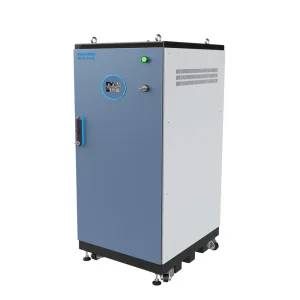
Tailored modular designs and utility-grade grid-scale storage units optimized for the Swiss alpine climate and regulatory standards.
Switzerland is executing its ambitious Energy Strategy 2050 (Energiestrategie 2050), aiming to substitute nuclear output with decentralized renewables. However, the resulting volatility of alpine solar arrays and winter wind fluctuations presents unique challenges to commercial operations. The Swiss Federal Office of Energy (SFOE) highlights the critical importance of self-consumption (Eigenverbrauch) and local buffer systems to maintain grid stability.
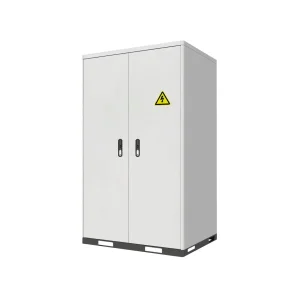
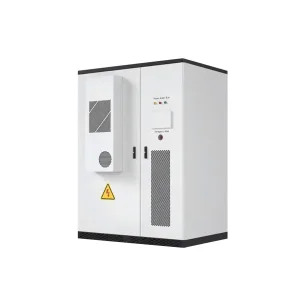
For Swiss SMEs, peak power tariffs ("Netznutzungstarife") are major operational expenses. Network operators charge businesses not only for total kilowatt-hour consumption but also heavily on their single highest 15-minute load peak registered during billing cycles. Implementing a **100kW Commercial & Industrial (C&I) Energy Storage System** enables businesses in regions like Zurich, Aargau, Ticino, and Vaud to shave these peaks dynamically, ensuring predictability in utility bills while lowering their carbon footprint.
During the winter months, Switzerland becomes a net importer of electricity. High-capacity commercial storage serves as a vital safeguard, letting precision manufacturing plants, pharmaceutical lines, and logistics hubs transition to self-sustained microgrids during localized blackouts or grid strain.
A balanced 100kW energy storage solution typically integrates lithium iron phosphate (LiFePO4) chemistry to ensure maximum thermal runaway protection. Coupled with multi-level Battery Management Systems (BMS), these modular blocks interface directly with local building automation, solar PV installations, and EV fleet chargers.
| System Parameter | Specification Detail | Compliance Standard |
|---|---|---|
| Nominal Active Power | 100 kW AC output continuous | EN 50549-1, VSE Grid Code |
| Battery Capacity Range | 100 kWh to 200 kWh (Scalable) | IEC 62619 (Cells / System) |
| Inverter Efficiency | 98.5% peak performance | CE, EMC Directive |
| Cooling Infrastructure | Liquid cooling / Smart HVAC control | IP54 Outdoor Rated |
| Grid Interface Integration | Three-phase grid connected, dynamic VPP | Swissgrid Ancillary Services |
Global procurement directors looking at Switzerland or wider European markets prioritize traceabilities, certifications, and compliance credentials. Industrial facilities cannot compromise on battery cell chemistry or safety architecture. Our production and assembly lines operate under rigorous ISO 9001, ISO 14001, and ISO 45001 environmental and workplace management standards. Additionally, the development and performance verification processes are executed inside CNAS-certified laboratories and specialized EMC testing centers, yielding high reliability for complex environments.
Our supply chains are backed by a blockchain-enabled traceability system, ensuring that raw mineral sources, pack configuration details, and final assembly quality data remain immutable and accessible. This provides peace of mind for Fortune 500 partners and domestic Swiss utilities alike.
Deploying stationary battery storage arrays in Swiss properties demands strict adherence to local directives. The Swiss Association for Heavy Current Installations (ESTI) and the Association of Swiss Cantonal Fire Insurance (VKF / AICAA) outline safety guidelines for indoor and outdoor battery layouts:
The C&I energy storage industry is rapidly shifting toward high-voltage architectures (up to 1500V DC link), reducing conversion losses and optimizing footprint size. Concurrently, advanced AI-driven Energy Management Systems (EMS) forecast daily load profiles, local weather patterns, and real-time electricity market pricing. By automatically choosing between spot-market arbitrage, peak shaving, or self-consumption maximization, the system ROI can be compressed by 18-24 months compared to static setups.
Established in 2020 and headquartered in Wenzhou, China's hub of private economy, our state-of-the-art facility covers over 15,000 square meters. Operating CNAS-certified laboratories and EMC testing centers under ISO 9001/14001/45001 frameworks, we offer end-to-end quality assurance. Supported by 36 patented technologies—including our 5th-gen hybrid inverter achieving 98.5% conversion efficiency—our 200+ technical experts deliver reliable solutions to 28+ countries.
Explore our comprehensive industrial portfolio, engineered for versatility, durability, and absolute grid-independence.
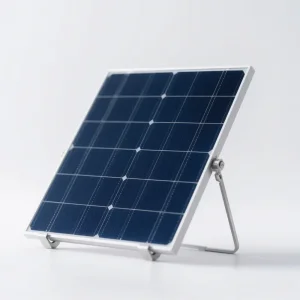
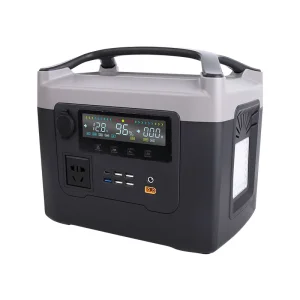
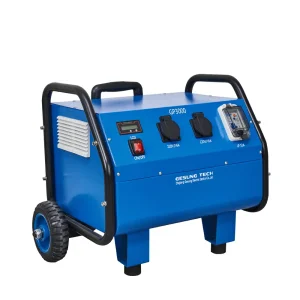
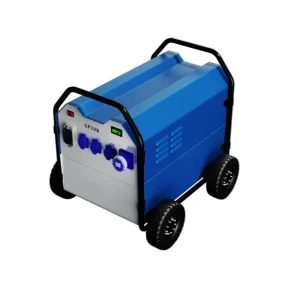
The solar-powered portable charging station with integrated inverter combines power generation storage and inversion functions into one system. It collects energy through solar panels, converts it into electricity and stores it in built-in batteries. The inverter then converts direct current into alternating current to charge electric vehicles or other devices. Additionally, its intelligent control system adjusts charging power based on battery status and real-time demand to enhance efficiency.
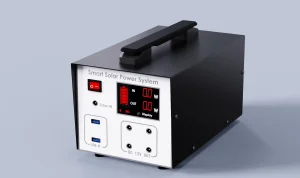
As modern life becomes increasingly dependent on electricity, power outages can cause significant inconvenience for households and businesses alike. The solar off-grid power system offers a reliable solution by providing backup energy. The system uses high-efficiency solar panels to capture sunlight during the day, converting it into electricity that is stored in advanced lithium iron phosphate (LiFePO4) batteries. Even during power grid failures, it delivers a steady energy supply to critical devices.
Essential technical, financial, and regulatory questions answered by our system engineering team.
What is the typical payback period for a 100kW C&I ESS installation in Switzerland?
Depending on local peak network tariffs and self-consumption optimization percentages, typical payback periods for Swiss enterprises range between 5 and 7 years. With local subventions, dynamic tariff pricing optimization, and peak-shaving savings, this period can be shortened.
Does the system meet Swiss ESTI and VKF fire protection regulations?
Yes, our industrial units are equipped with certified LiFePO4 cells compliant with IEC 62619. The enclosures can be configured to comply with EI90 structural fire safety demands. Integrated aerosol fire-suppression systems and automated temperature sensors protect against thermal runaway hazards.
How does the system perform under extreme alpine winter temperatures?
Our battery storage units are housed within climate-controlled IP54 outdoor or indoor enclosures. The thermal management system maintains the internal battery cell temperature within the optimal range of 15°C to 25°C, ensuring efficiency and battery lifespan even when external alpine ambient temperatures plunge below -20°C.
Can the 100kW ESS be integrated with virtual power plants (VPPs)?
Absolutely. The integrated EMS system natively supports Modbus TCP, CAN, and standard open communication protocols (such as OpenADR). This allows aggregation into local Swiss VPP pools for participation in frequency regulation (FCR / aFRR markets) governed by Swissgrid.
 Turskov