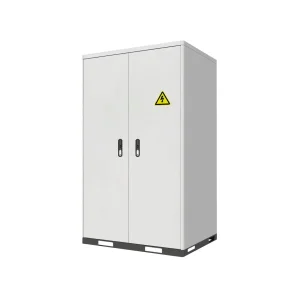
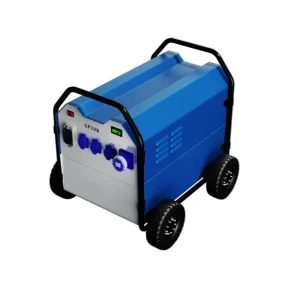
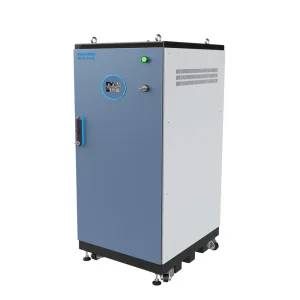
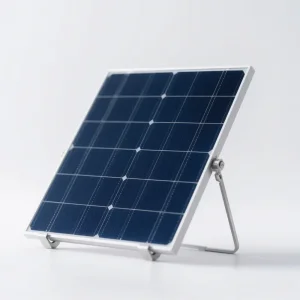
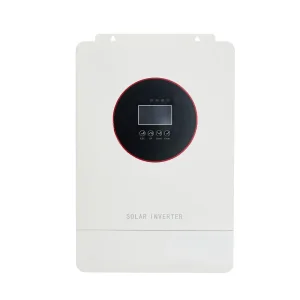
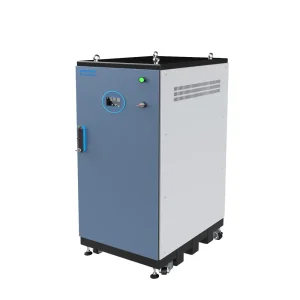
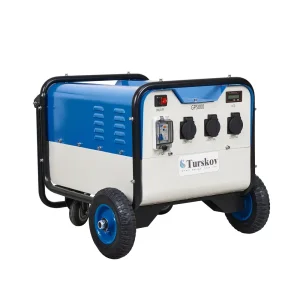
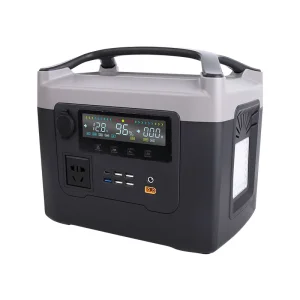
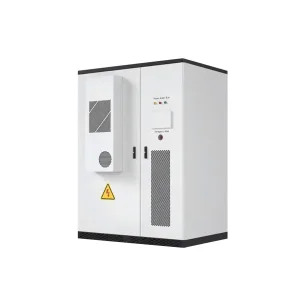
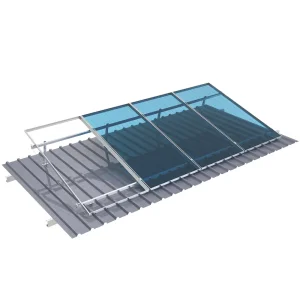
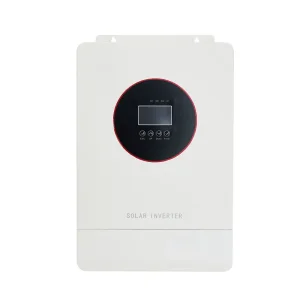
Engineered to comply with local utility standards and Massachusetts carbon mitigation initiatives, these core models provide highly reliable localized energy balancing.
The city of Boston, and the broader Massachusetts market, stands as a prime example of an urban economy caught between aggressive climate mandates and a rapidly aging grid. The municipal Building Energy Reduction and Disclosure Ordinance (BERDO 2.0) requires large buildings to dramatically curtail their operational carbon profiles, targeting net-zero emissions by 2050. Concurrently, utility rate structure parameters under Eversource Energy levy heavy demand charges on local commercial and industrial (C&I) properties. For businesses operating offices in the Financial District, research institutions in Cambridge, or manufacturing warehouses in Chelsea, electricity costs are no longer just operating expenses; they represent a significant financial vulnerability.
This is where 100kW Industrial and Commercial Energy Storage Systems (BESS) have evolved from a novelty to a capital requirement. A standard 100kW configuration (paired with either 200kWh or 400kWh of capacity) acts as a flexible buffer. It shaves peak demand charges during hours of maximum system strain, provides emergency backup to maintain operation during winter storms or micro-grid outages, and serves as the bridge for onsite photovoltaic (PV) generation. To successfully integrate a 100kW BESS in Boston, developers must design within the limits of Massachusetts Department of Energy Resources (DOER) requirements, specifically aligned with the SMART (Solar Massachusetts Renewable Target) program incentive structures.
At its core, a 100kW energy storage system uses advanced lithium iron phosphate (LiFePO4) cell chemistry, widely recognized for high thermal stability, safety, and cycle longevity. These systems include a high-precision battery management system (BMS), a bidirectional Power Conversion System (PCS) or inverter, and an intelligent Energy Management System (EMS). When utility grid demand spikes, the EMS triggers discharge within milliseconds, insulating the facility from high demand tariffs.
For industrial manufacturing complexes and data centers, these units are designed to withstand severe thermal shifts. Advanced cooling loops, both liquid-based and direct air-cooling architectures, maintain the cell temperature at optimal operating ranges. This thermal balance keeps degradation slow and guarantees that the system achieves over 6,000 charge cycles before dropping below 80% state-of-health (SoH).
While the implementation and installation of energy storage must be local, the hardware supply chain is inherently global. Building cost-competitive BESS solutions requires deep integration with top-tier components. Operating out of Wenzhou, China's economic and high-tech electrical hub, Zhejiang Wenzhou New Energy Technology Co., Ltd. bridge this gap by bringing automated assembly, strict quality testing, and advanced materials engineering to global energy storage markets.
With a manufacturing facility exceeding 15,000 square meters, our operations feature CNAS-certified laboratories and dedicated EMC testing chambers. Maintaining these internal standards means we control the process from raw materials to final functional testing, operating under a rigorous ISO 9001/14001/45001 framework. Our engineering team developed a 5th-generation hybrid inverter that achieves 98.5% conversion efficiency. This ensures that every kilowatt-hour stored has minimal loss during conversion, maximizing the return on investment for end-users across the globe.
Furthermore, our large-scale output (50,000 units annually) lets us source components at lower baseline costs, passing these savings on to project developers in high-cost regions like Boston. We back our products with 7x24 multilingual engineering support and a blockchain-based product traceability system, resolving 90% of technical support issues within 2 hours. This provides reliable quality to buyers globally, including retail and industrial partners like Walmart and Home Depot.
In biotechnology clusters like Kendall Square, Cambridge, and the Seaport District, research operations require uninterrupted power. A utility grid fluctuation of just a few milliseconds can ruin months of sensitive biological cultures. By installing a 100kW BESS, lab operators gain an active backup system that acts as a bridge to backup diesel generators. This keeps cleanroom HVAC systems, medical-grade freezers, and spectrophotometers running during grid dropouts.
Under Boston's Eversource tariff, demand charges can make up over 40% of a commercial building's total electric bill. A 100kW energy storage system uses peak shaving algorithms to monitor the building's usage in real-time. When demand climbs past a preset threshold—often from elevator usage, ventilation spikes, or EV charging stations—the batteries discharge to keep the building's draw from the grid flat. This can save thousands of dollars every month.
University campuses in the Boston area are building microgrids to meet their institutional decarbonization targets. Integrating 100kW storage systems with existing rooftop solar arrays allows campus grids to run on clean energy even during cloudy weather or overnight.
Commercial and industrial energy storage is growing rapidly. Industry analysts expect installations to expand five-fold by 2030, driven by grid instability, falling battery pack prices, and strong government support. In the United States, the Inflation Reduction Act (IRA) offers a base 30% Investment Tax Credit (ITC) for standalone commercial storage installations, which helps accelerate investment returns.
When sourcing a 100kW energy storage system, procurement managers should follow this quality checklist:
From modular battery banks to high-performance smart inverters, we build the underlying technology for modern off-grid, mobile, and backup power grids.
Technical and regulatory answers regarding the planning, installation, and deployment of 100kW BESS configurations.
Utilities measure demand charges based on the peak 15-minute load window during the billing cycle. The BESS monitors this draw continuously. When the facility's power demand approaches a set limit, the storage system discharges power to support the load locally. This limits grid draw and lowers peak demand charges.
Installation projects must meet NFPA 855 standards and secure approval from the Boston Fire Department (BFD). Core equipment must carry UL 9540 (for complete systems) and UL 1973 (for battery packs) certifications, and complete UL 9540A thermal runaway testing.
The Solar Massachusetts Renewable Target (SMART) program provides a financial incentive adder for solar energy storage installations. Qualifying systems receive additional compensation per kWh, helping to shorten payback periods and improve overall project returns.
High-grade Lithium Iron Phosphate (LiFePO4) systems typically deliver 6,000 complete charge cycles before capacity drops to 80% of its original rating. Under standard commercial operation, this translates to an operational lifespan of 12 to 15 years.
Zhejiang Wenzhou New Energy Technology Co., Ltd. tests products in CNAS-certified labs and EMC testing facilities. Our factories operate under strict ISO management systems and feature blockchain-enabled parts tracking, backed by a 24/7 technical support team.
 Turskov