High-performance energy solutions designed to optimize operational efficiency, enhance grid resilience, and reduce peak electricity tariffs across Czech business ecosystems.
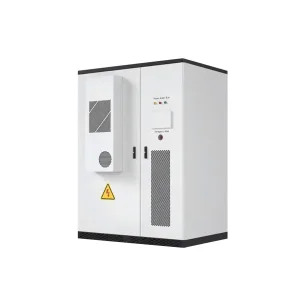
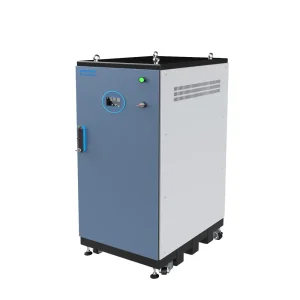
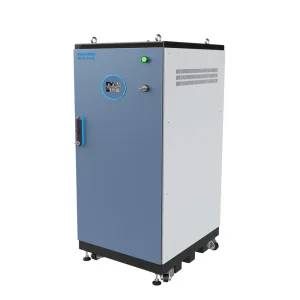
As a heavily industrialized member of the European Union, the Czech Republic faces critical demands for modernization under the EU Green Deal. The country's dependency on traditional coal-fired power plants is rapidly transitioning toward decentralized solar photovoltaics (PV) and high-density battery storage technologies. This transition is highly driven by the National Energy and Climate Plan (NAPE) and national subsidy programs like the Modernisation Fund (Modernizační fond) and Nová zelená úsporám (NZÚ), which support capital investments in renewable infrastructure.
For Czech commercial enterprises, agricultural plants, and industrial complexes in hubs like Prague, Brno, Ostrava, and Pilsen, peak electricity costs and grid instability represent operational risks. The installation of a local 215kW Battery Energy Storage System (BESS) serves as an optimal strategic buffer. It mitigates high peak-demand network fees (kapacitní platby) charged by distributors (EG.D, ČEZ Distribuce, and PREdistribuce) while securing uninterrupted backup power.
Globally, Commercial and Industrial (C&I) energy storage installations are projected to grow at a CAGR of 27.5% through 2030. This surge is propelled by the necessity of integrating volatile renewable energy, the transition to electric vehicle (EV) fleets, and corporate commitments to ESG metrics.
Leading global manufacturers are shifting exclusively to Lithium Iron Phosphate (LiFePO4) chemistry due to its superior safety profile, longer cycle life, and thermal stability in demanding heavy-industrial deployments. The incorporation of intelligent cloud-based energy management systems (EMS) enables automated energy arbitrage, turning a standard backup unit into an active revenue-generating asset through Virtual Power Plant (VPP) services.
Empowering international grids with reliable, certified, and cutting-edge energy storage systems manufactured to withstand rigorous commercial environments.
Developing a secure and optimized C&I energy storage installation requires deep integration of mechanical, electrical, and software engineering. Our 215kW BESS platform integrates liquid-cooling thermal management, multi-level active fire protection, and utility-grade power conversion systems (PCS).
Our 215kW cabinet utilizes intelligent liquid cooling instead of standard air cooling. This design maintains temperature variations across cells to under 2.5°C, expanding overall battery cycle life by up to 25% and ensuring safety under hot summer conditions in Czech industrial parks.
Compliant with European fire protection norms and NFPA 855, the cabinet features multi-sensor gas detection (detecting CO, H2, and smoke) alongside an automated Novec 1230 fire suppression system, safeguarding your physical assets.
Featuring standard Modbus TCP / IEC 60870-5-104 communication protocols, the system integrates into utility management platforms. This allows real-time grid monitoring and enables participation in frequency containment reserve (FCR) markets.
How the 215kW/430kWh BESS configuration provides direct financial and operational benefits across Czech Republic's diverse industrial sectors.
Industrial machinery and production lines consume high amounts of starting current, resulting in massive peak demand charges. By deploying the 215kW storage system, factory operators can program the EMS to discharge stored energy when site load exceeds pre-defined thresholds. This shaves peak demand metrics and saves thousands of Euros annually in network distribution fees.
Large rooftops on logistics centers are ideal for commercial PV arrays. However, grid operators often restrict the export of excess solar generation. The 215kW/430kWh system acts as a local buffer, storing surplus day generation for utilization during evening logistics operations or heavy forklift charging cycles.
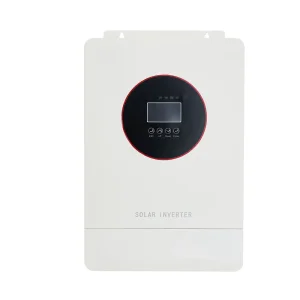
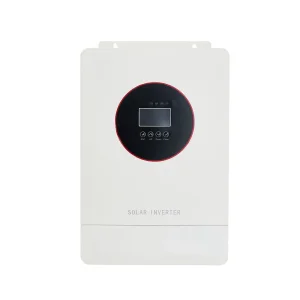
Data facilities require reliable power stability. Combined with our industrial-grade hybrid inverters, our battery system switches to island mode within 10 milliseconds of a grid failure. This provides a continuous power bridge until auxiliary backup generators come online.
Remote farming hubs often face issues with voltage sags. Installing a decentralized solar-and-storage microgrid ensures consistent voltage profiles, powers processing machinery, and helps prevent crop storage cooling failures during power outages.
Our engineering projects span beyond basic hardware components to deliver fully integrated macro-energy ecosystems. As global regulations demand deep decarbonization, corporate properties must transition from passive consumers to active microgrid nodes. We provide end-to-end system design, simulation models, commissioning, and grid interconnect certification globally.
Our smart energy solutions integrate commercial EV fast-charging stations (DC Charger infrastructures) with on-site PV and BESS. The centralized EMS dynamically allocates power profiles based on local building consumption patterns, spot-market electricity pricing forecasts, and real-time battery status.
Technical insights regarding our 215kW battery energy storage solutions for the Czech and European markets.
All commercial battery energy storage systems connected to the Czech distribution network must comply with grid code requirements defined by local distributors (ČEZ, EG.D, PRE) and European standard EN 50549-1. Our solutions feature pre-certified utility-interactive inverters that meet dynamic grid support functionalities, active/reactive power control, under-voltage/over-voltage ride-through (LVRT/HVRT), and protective decoupling systems.
LiFePO4 (Lithium Iron Phosphate) offers major advantages for commercial environments: safety and cycle life. LFP cells have a thermal runaway threshold of around 270°C, compared to 210°C for NMC chemistry. They do not release oxygen during structural degradation, reducing fire hazards. Additionally, LFP delivers over 6,000 charge cycles at 80% Depth of Discharge (DoD), ensuring an operational life of 10–15 years for high-cycle industrial applications.
Our integrated commercial EMS system is pre-programmed for multiple energy management modes: Peak Shaving (reducing peak charges based on threshold algorithms), Solar Self-Consumption optimization, Energy Arbitrage (charging during low-tariff off-peak periods and discharging during peak rates), Backup Mode for power cut scenarios, and external control capability for Virtual Power Plant (VPP) demand-response aggregation.
Yes, Czech businesses can secure financial subsidies through the Modernisation Fund (RES+ program) or local regional operation grants. These subsidies can cover up to 30% to 50% of eligible investment costs for BESS integrated with commercial PV networks.
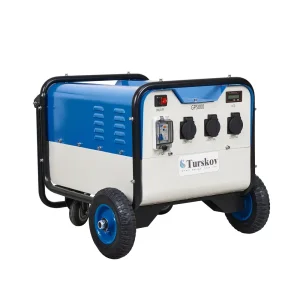
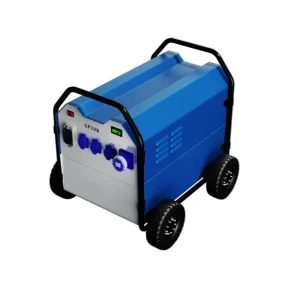
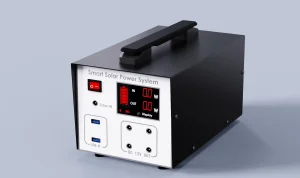
Explore our full range of manufactured components, from mobile emergency backup generators to industrial-grade modular power solutions.
Consult with our engineering directors to calculate your dynamic ROI, establish local distribution grid compliance, and develop a customized system configuration.
Send Inquiry Now Turskov