As the Capital Metropolitan Area transitions to smart microgrids, explore our leading localized products designed for high-density commercial centers, outdoor industrial zones, and grid backup applications.
The Seoul Metropolitan Government’s ambitious mandate, including the comprehensive "One Less Nuclear Power Plant" initiative, has catalyzed a profound energy paradigm shift. As one of the world's most densely populated capital zones, Seoul faces critical grid stability challenges. High-tech manufacturing corridors in Gasan and Digital Media City, combined with vast commercial infrastructure in Gangnam and Yeouido, have created an unprecedented baseload electricity demand profile. This demand is increasingly met with intelligent, decentralized Battery Energy Storage Systems (BESS).
This massive urban environment cannot rely solely on long-distance transmission lines from remote coastal nuclear or coal plants. Rapid urban expansion demands local load balancing, peak shaving, and high-performance battery banks. International buyers and municipal procurement agents in South Korea are rapidly shifting toward scalable commercial solutions that mitigate power fluctuations, integrate seamlessly with rooftop solar photovoltaic (PV) setups, and provide micro-grid autonomy during emergency outages.
Entering the South Korean renewable energy supply chain requires navigating stringent local compliance protocols. To achieve absolute system safety, factories must secure appropriate certification frameworks:
| Compliance Metric | Standard Reference | Scope & Relevance for Seoul Buyers |
|---|---|---|
| Battery System Safety | KBIA-RT-10102-01 / KS C IEC 62619 | Ensures industrial LiFePO4 cells resist thermal shock, drop stress, and overcharge conditions. |
| Inverter Grid Synergy | KS C 8564 / KEPCO Grid Code | Ensures compliance with local power quality limits, phase alignment, and anti-islanding regulations. |
| EMC Performance | KN 32 / KN 35 (KC Mark) | Guarantees minimal radio frequency interference in metropolitan corporate data offices. |
Headquartered in Wenzhou, China's dynamic private economy hub, Zhejiang Wenzhou New Energy Technology Co., Ltd. (suggested full name) represents the pinnacle of modern renewable energy production. Our state-of-the-art facility exceeds 15,000 square meters, housing premium CNAS-certified safety testing centers, advanced EMC diagnostic chambers, and climate-controlled assembly lines. Our complete operational processes are audited under ISO 9001, ISO 14001, and ISO 45001 management protocols to guarantee absolute reliability.
For Korean procurers, this creates an ideal commercial bridge. South Korea excels at chemical formulation and premium battery integration. However, China's raw material dominance, particularly in lithium iron phosphate (LiFePO4) chemistry and structural system enclosure scaling, allows us to offer unmatched cost-efficiencies. Our 5th-generation hybrid smart inverters achieve an industry-leading 98.5% conversion rate, ensuring local commercial operators maximize every kilowatt-hour generated or peak-shaved.
Whether optimizing data center backup, powering temporary construction projects, or providing portable gear for high-mountain cellular stations, we streamline cross-border shipping, logistics, and localized customs clearance directly to Seoul and surrounding metropolitan areas.
Several shifts are currently shaping commercial clean-tech adoption in the Seoul capital region:
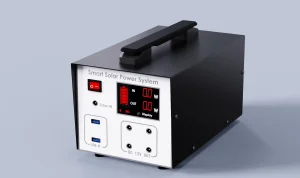
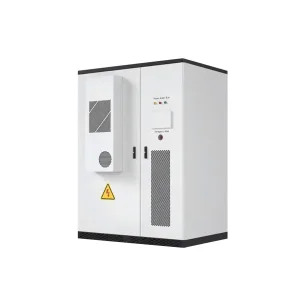
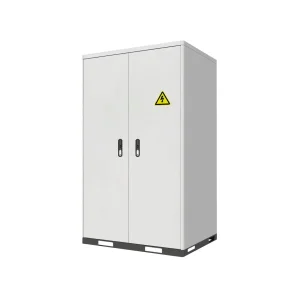
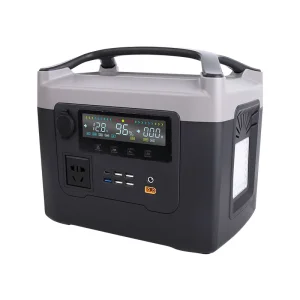
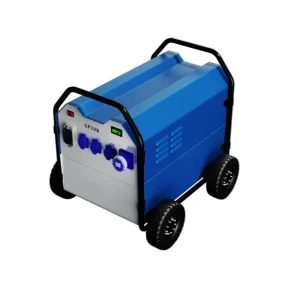
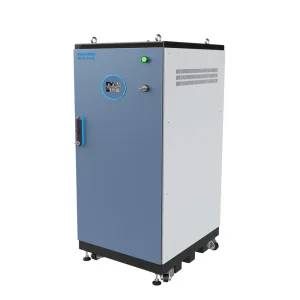
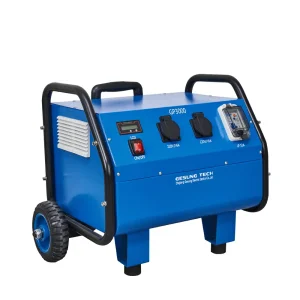
Our versatile portfolio spans containerized off-grid generation systems, high-efficiency hybrid inverters, and heavy-duty portable power modules optimized for industrial procurement.
Our solar-powered portable charging station with an integrated inverter combines power generation, storage, and inversion functions into a single system. It collects energy through solar panels, converts it into electricity, and stores it in built-in batteries. The inverter then converts direct current into alternating current to charge electric vehicles or other devices. Additionally, its intelligent control system adjusts charging power based on battery status and real-time demand to enhance efficiency.
Key Advantages & Feature Sets:
Seoul Residential & Rural Backup Scenarios:
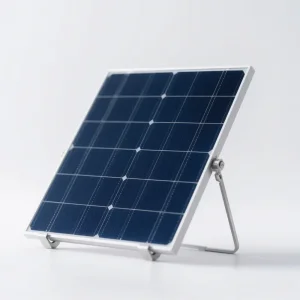
As modern life becomes increasingly dependent on electricity, power outages can cause significant inconvenience for households. The solar off-grid power system offers a reliable solution by providing backup energy for homes. This system uses high-efficiency solar panels to capture sunlight during the day, converting it into electricity that is stored in advanced lithium iron phosphate batteries. Even during power grid failures, it can deliver a steady energy supply to household devices.
Clear, technical answers regarding localization, safety clearances, efficiency, and supply chain logistics for South Korean procurement projects.
A: We work directly with licensed South Korean testing laboratories to pre-evaluate our systems. For large-scale industrial projects (100kW+ / 215kW+), our design engineers can optimize cell layout and BMS architectures to align with local KS safety standards prior to shipment, facilitating smooth local inspections.
A: Our inverter uses advanced high-frequency switching technology with internal climate controls. This maintains a peak efficiency of 98.5% even during sub-zero winter temperatures in Seoul. The integrated BMS actively manages LiFePO4 cell pre-heating to prevent low-temperature charging degradation.
A: For standard configurations, engineering and assembly require 4 to 6 weeks. Ocean shipping from Ningbo or Shanghai Port to Busan/Incheon Port generally takes only 3 to 5 days, making the total turnaround highly competitive compared to localized assembly options.
A: Yes. All our industrial batteries utilize high-grade LiFePO4 cells certified under international standards (such as UN38.3 and IEC 62619). The system enclosures feature partition walls and active suppression systems (such as aerosol or gas deluge systems) to meet metropolitan building fire safety rules.
A: Absolutely. Our communications interface supports standard Modbus TCP/RTU protocol frameworks and CAN-bus networks. We provide open API interfaces that let local system integrators link our storage assets directly with Korean VPP software platforms.
Contact our senior engineers for a tailored quotation, complete with compliance documentation and structural engineering support.
Contact Our Engineering Office Turskov