Explore our core engineering products designed for complete energy self-sufficiency and high-conversion stability under extreme workloads.
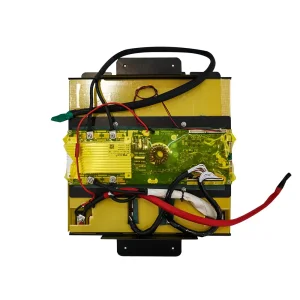
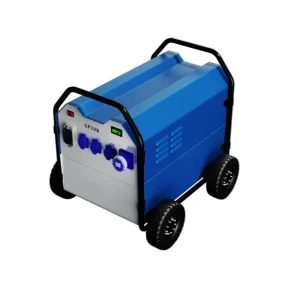
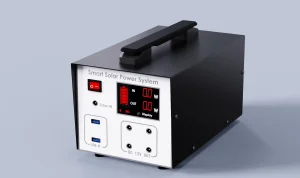
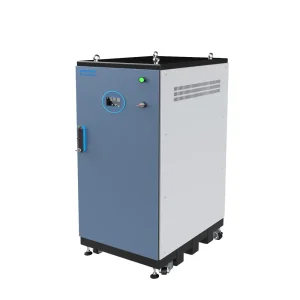
Analyzing the macro-economic and geographical drivers behind off-grid adoption in modern industrial scenarios.
Across the globe, the transition towards decentralization in utility networks has shifted from a voluntary sustainable choice to a critical resilience mandate. Commercial and Industrial (C&I) sectors are facing unprecedented challenges due to grid instability, escalating peak-demand surcharges, and regulatory compliance pressures. A robust Solar Off-Grid Power System addresses these challenges directly. It operates independently of standard electricity networks, offering a self-sustaining power architecture for manufacturing sites, corporate campuses, remote mine facilities, and telecommunication hubs.
In developing regions, particularly in Sub-Saharan Africa and Southeast Asia, off-grid systems act as the primary catalyst for economic development. Meanwhile, in advanced markets like North America and the European Union, off-grid configurations serve a dual purpose: providing emergency backup power during grid failures and optimizing operational expenses through peak shaving and load-shifting algorithms. The inclusion of high-density Lithium Iron Phosphate (LiFePO4) battery arrays ensures long lifecycle viability, mitigating the high operational expenditures traditionally associated with diesel generator dependence.
Intelligently discharge accumulated solar power during peak utility pricing hours. This optimization helps enterprises bypass high demand charges and drastically reduces overall utility expenses.
By decoupling critical infrastructure from volatile centralized grids, enterprises ensure continuous operations during grid dropouts, brownouts, or rolling blackouts.
Decarbonize production facilities by replacing base-load fossil energy generation with direct solar conversion, aligning corporate operations with Net-Zero standards.
Headquartered in Wenzhou, the epicenter of China's private economic innovation, we have pioneered off-grid technology since our establishment in 2020. Our expansive 15,000+ square meter state-of-the-art facility represents the intersection of digital manufacturing and green energy production. We operate under stringent ISO 9001, ISO 14001, and ISO 45001 management protocols to guarantee absolute safety, environmental compliance, and structural integrity in every component.
Our internal infrastructure includes premium CNAS-certified laboratories and fully equipped Electromagnetic Compatibility (EMC) testing centers. Our testing capabilities allow our R&D departments to evaluate and refine conversion efficiency, thermal dissipation, and short-circuit protection profiles down to microsecond response rates. Driven by a dedicated team of over 200 technical experts, we sustain an annual production volume exceeding 50,000 off-grid systems, catering to domestic microgrid developers and Fortune 500 partners alike.
With a firm commitment to product transparency, we have implemented a blockchain-enabled product traceability network. This system logs performance benchmarks and component batches, allowing our technical support team to resolve up to 90% of field queries within 2 hours. We are currently actively pursuing our Net-Zero Factory Certification, with a strategic roadmap aimed at mitigating global carbon emissions by 1 million tons by 2030.
Our patented hybrid inverter technology achieves a peak conversion efficiency of 98.5%, significantly reducing thermal losses in high-load scenarios.
Integrated Energy Management System with predictive load scheduling and IoT control, optimizing power distribution dynamically.
Employing strict EV-grade lithium iron phosphate chemistry to deliver up to 6000 operating cycles at 80% Depth of Discharge (DoD).
A rigorous side-by-side analysis of various off-grid operational models optimized for diverse deployment scenarios.
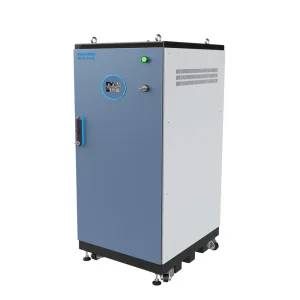
| System Type | Core Application | Storage Capacity Range | Conversion Efficiency | Cooling Design | Communications Interface |
|---|---|---|---|---|---|
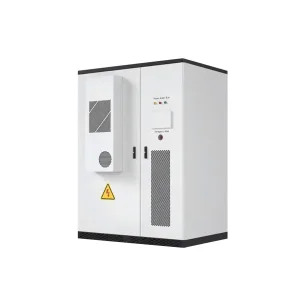
| Industrial Microgrid System | Commercial Facilities & Factories | 100kW – 215kW+ | 98.5% (5th-Gen Hybrid) | Liquid Cooling / Intelligent Air | RS485, CAN, Modbus TCP, IoT Cloud |
| Residential Power Wall | Household Backup & Peak Shaving | 30kWh – 60kWh | 97.6% (Sine Wave Inverter) | Passive Convection (No Noise) | Wi-Fi, Bluetooth, Mobile App |
| Emergency Mobile Station | Field Operations & Disaster Recovery | 5kW – 10kW (Mobile Generator) | 96.8% | Forced Air Cooling | Direct LCD Interface / IoT telemetry |
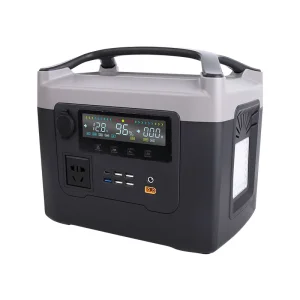
| Backpack Portable Station | Outdoor Recreation & Light Operations | 120W – 600W (Pocket Power) | 95.5% (DC-DC Direct Output) | Smart-controlled Mini-fan | USB-C PD, DC, AC Interface |
How our engineering solutions translate into real-world efficiency, safety, and economic value.
Our off-grid solar systems integrate generation, storage, and inversion into a singular, highly optimized unit. By bypassing complex multi-vendor components, we eliminate typical configuration losses, reduce physical footprint requirements, and guarantee stable operational interfaces.
By leveraging clean solar irradiance as the primary power source, these systems reduce grid dependency and eliminate local carbon emissions. This transition helps enterprises bypass potential fuel spill hazards and clean air penalties associated with traditional diesel generators.
Engineered with physical mobility in mind, our system designs prioritize compact footprint profiles. The modular configurations facilitate straightforward field assembly and simplified maintenance procedures. This versatility makes them highly suited for dynamic residential settings, field exploration, and temporary emergency camps.
Equipped with smart power algorithms that automatically adjust solar energy intake based on real-time load profiles and historical weather telemetry. The software dynamically matches charger outputs to current battery conditions, prolonging the operational lifespan of the storage array.
A single deployment yields multi-decade fuel savings, lower maintenance overheads, and insulation against electricity rate fluctuations. It provides an immediate return on investment in off-grid geographic zones or areas where extending standard utility infrastructure is financially impractical.
When the central grid fails, the system transitions to battery power in milliseconds. This automatic switch protects sensitive equipment like medical units, laboratory storage, and industrial servers, preventing costly downtime and data loss.
A projection of upcoming technological changes in the off-grid sector, designed to guide system planners.
Transitioning from standard liquid-electrolyte lithium cells to semi-solid and solid-state variants. This shift promises to double energy density parameters while reducing thermal runway risks under heavy workloads.
Implementing Edge-AI microchips directly into our inverter topologies. These systems will analyze real-time grid conditions, load patterns, and historical weather databases to adjust energy consumption strategies autonomously.
Integrating bidirectional Vehicle-to-Grid (V2G) standardizations, allowing electric vehicle fleets to serve as additional active energy nodes within localized off-grid grids during long periods of low sunlight.
Our engineers address common technical queries from system designers, contractors, and procurement departments.
The solar-powered portable charging station with an integrated inverter combines power generation, storage, and inversion functions into a single system. It collects energy through solar panels, converts it into electricity, and stores it in built-in batteries. The inverter then converts direct current (DC) into alternating current (AC) to charge electric vehicles or power other devices. Integrating these phases within one enclosure minimizes resistance losses, eliminates external cabling, and protects the system from environmental interference.
LiFePO4 displays superior chemical and structural stability. It features a thermal runaway threshold exceeding 270°C, making it highly safe under elevated operational temperatures. Furthermore, it delivers up to 6000 charging cycles at 80% Depth of Discharge, offering a longer operational lifespan compared to conventional cobalt-based lithium chemistries or lead-acid setups.
Our intelligent control system monitors battery parameters, input levels, and real-time load demand. By employing rapid microprocessors, it dynamically adjusts the output distribution. For instance, when high-draw industrial machinery initiates, the system can parallel battery and solar outputs to manage the startup current, switching back to charging mode once loads stabilize.
Yes. Our product lineup scales from portable pocket power stations to high-capacity commercial configurations, such as our 215kW energy storage system. These units can be configured in parallel to scale up power output and capacity, enabling developers to build custom microgrids for factories and remote commercial campuses.
Our complete manufacturing pipeline complies with ISO 9001, ISO 14001, and ISO 45001 standards. Every product batch undergoes rigorous analysis in CNAS-certified testing facilities and EMC verification centers. This testing ensures compliance with international grid connection and safety standards, including CE, UN38.3, and IEC 62619.
Select from our range of portable field stations, robust power walls, and large-scale industrial battery configurations.
 Turskov