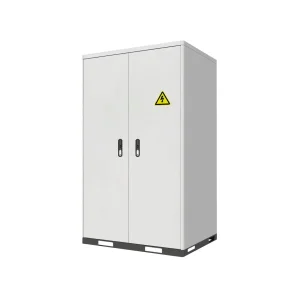
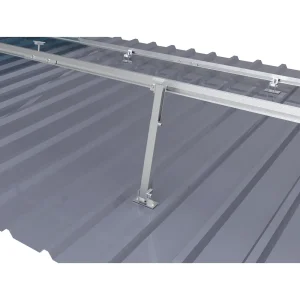
Direct supply from industrial-tier manufacturing lines in China. Fully customized OEM/ODM power walls and generators for dynamic global needs.
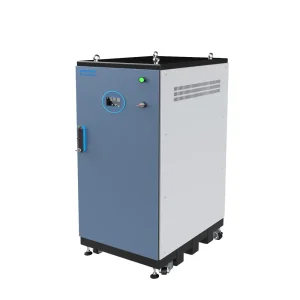
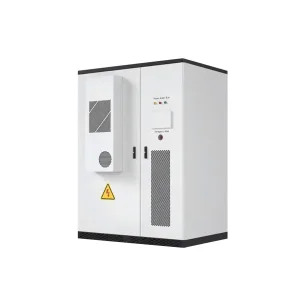
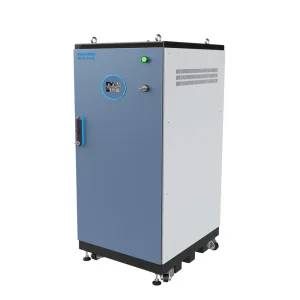
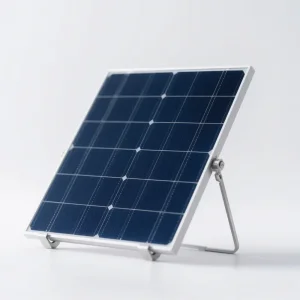
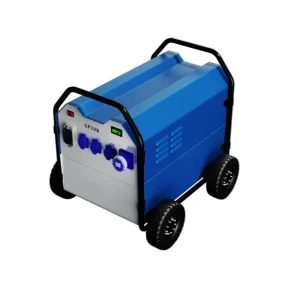
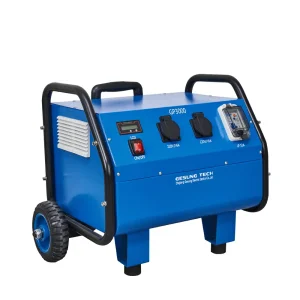
Analyzing technical frameworks, manufacturing logistics in China, procurement dynamics, and localized execution scenarios for 2025–2030.
Modern energy grids are experiencing unprecedented stress due to extreme weather, geopolitical volatility, and escalating consumption curves. Residential off-grid solar-storage solutions are transitioning from niche environmental alternatives into critical utility-grade backstop systems. A standard off-grid solar system utilizes advanced photovoltaic panels to harvest solar irradiance, converting solar photons into direct current (DC). This current is managed by Maximum Power Point Tracking (MPPT) charge controllers and stored in highly stable Lithium Iron Phosphate (LiFePO4) battery arrays. When required, integrated power electronics convert this energy back into standard sinusoidal Alternating Current (AC).
From a semantic and structural standpoint, off-grid architectures must deliver high operational resilience, rapid switchover times (typical of UPS performance), and modular scalability. This is achieved by combining three core layers: energy capture (PV array), energy storage (BMS-controlled LFP blocks), and energy distribution (multidirectional hybrid inverters).
By housing energy capture, battery thermal monitoring, and pure sine wave inversion under a single modular enclosure, modern systems reduce field-wiring requirements, eliminate compatibility mismatches, and improve aggregate round-trip system efficiency (RTE) up to 92%.
China remains the undisputed epicenter of the lithium-ion and photovoltaic supply chain. The structural advantages offered by manufacturing bases such as Wenzhou, Zhejiang, are critical to understanding how global partners secure cost-to-performance superiority.
First, the vertical supply chain integration in local clusters drastically minimizes bill-of-materials (BOM) cost variances. Direct access to raw materials, including refined lithium salts, active cathode precursors, structural copper and aluminum, and micro-engineered copper busbars, allows factories to insulate international buyers from global price volatility. Wenzhou’s private economy hub provides immediate local sourcing for high-grade electrical switchgear, advanced injection-molded components, and custom metal alloy chassis.
Furthermore, advanced automation technologies in testing and assembly ensure cell-to-cell consistency. Modern facilities utilize Automated Optical Inspection (AOI), Laser Welding modules, and automated cyclers to execute 100% capacity matching on cells before pack assembly. This rigorous cell sorting ensures thermal uniformity and extends pack life cycles past 6,000 charge/discharge steps (at 80% Depth of Discharge).
Zhejiang Wenzhou New Energy Technology Co., Ltd. (suggested full name), established in 2020, operates from a state-of-the-art 15,000+ square meter manufacturing campus. Engineered from the ground up for energy storage systems, the facility incorporates dedicated CNAS-certified laboratories, advanced EMC (Electromagnetic Compatibility) testing centers, and isolated R&D testing zones running under stringent ISO 9001, ISO 14001, and ISO 45001 environmental and quality management systems.
With 36 proprietary patents, our core engineering focus is high-efficiency power conversion. Our 5th-generation hybrid inverter achieves a peak efficiency of 98.5%. This technological foundation supports our extensive OEM/ODM export services to over 28 countries, catering to prominent global retailers such as Walmart and Home Depot. Our technical personnel, comprising over 200 industry experts, maintain an annual production throughput of 50,000 units, facilitating accelerated lead times for complex off-grid configurations.
To maintain our quality standard, we implement a blockchain-enabled product traceability system. Every battery cell, printed circuit board assembly (PCBA), and power semiconductor module is logged onto an immutable digital ledger. If a performance anomaly is detected, technicians can pinpoint the exact batch of origin, resolving up to 90% of field anomalies within a 2-hour window. This is supported by our 7×24 multilingual customer service. Committed to global carbon neutral targets, we are aggressively executing our Net-Zero Factory certification framework, targeting a reduction of global carbon emissions by 1 million tons by 2030.
Analyzing how different global regions apply and customize off-grid microgrids to solve structural electricity issues.
As modern life becomes increasingly dependent on electricity, power outages can cause significant inconvenience for households. The solar off-grid power system offers a reliable solution by providing backup energy for homes. This system uses high-efficiency solar panels to capture sunlight during the day, converting it into electricity that is stored in advanced lithium iron phosphate batteries. Even during power grid failures, it can deliver steady energy supply to household devices.
Key Advantages:
Applications:
When executing large-volume B2B sourcing, procurement directors evaluate three primary risks: engineering compliance, supply-chain sustainability, and financial scalability. As a Tier-1 manufacturer, we address these concerns directly through our structural design and manufacturing processes.
Our customization engineering covers every level of our hardware stack. We support custom cell selections, matching thermal management requirements to specific deployment locations. Our inverters can be configured for target national standards, supporting single-phase or three-phase setups, split-phase outputs for North American networks, and varying grid frequencies (50Hz/60Hz).
For system-level security, our integrated Battery Management Systems (BMS) utilize dual-layer hardware protection. This architecture couples thermal fuses with digital sensors to detect over-voltage, under-voltage, over-current, and short-circuit conditions, initiating automatic protection switches before damage occurs.
Deep-dive technical answers addressing key considerations for engineers and procurement managers.
Key Features and Advantages include:
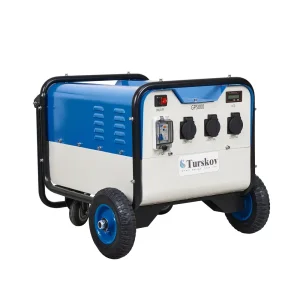
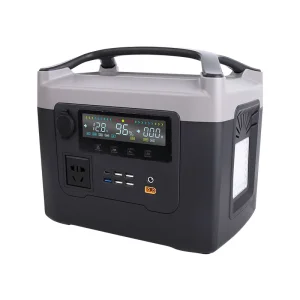
Complete product range supporting rapid deployment in commercial facilities, remote job sites, and domestic backup applications.
 Turskov