Explore our tier-one certified emergency energy products manufactured with next-gen efficiency, integrated smart MPPT systems, and industrial-grade reliability.
Headquartered in Wenzhou, China's core engine of private economic enterprise and manufacturing innovation, Zhejiang Wenzhou New Energy Technology Co., Ltd. has established itself as an authoritative pioneer in global renewable energy solutions since its foundation in 2020. Our expansive 15,000+ square meter state-of-the-art facility integrates advanced robotics, cleanroom assembly lines, and high-precision testing infrastructures designed for high-density battery architectures and sophisticated smart power conditioning systems.
Our commitment to engineering integrity is backed by world-class infrastructure, including our certified CNAS Laboratories and dedicated EMC Testing Centers. Operating strictly under global quality protocols—including ISO 9001 for quality systems management, ISO 14001 for environmental management systems, and ISO 45001 for occupational health and safety—we achieve absolute traceability and standardized performance metrics from raw component level to final factory-acceptance tests (FAT).
How our integrated battery energy storage systems (BESS) address grid instability, carbon taxes, and extreme weather events.
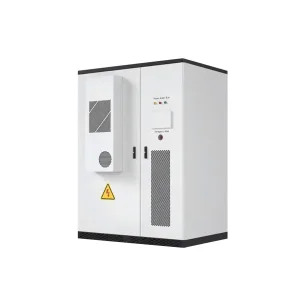
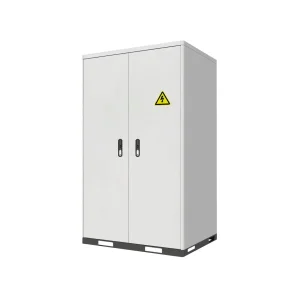
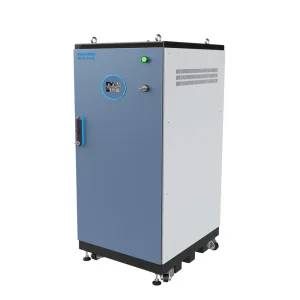
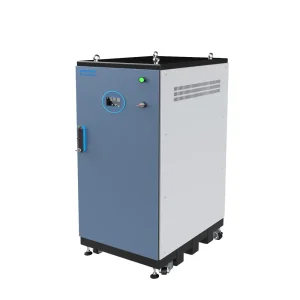
Commercial and Industrial (C&I) operations are subject to soaring demand charges and vulnerable municipal grids. Our 215kW Industrial Storage Systems enable automatic peak shaving, discharging power during high-rate peak periods to reduce utility costs, while serving as instant seamless reserve power to prevent costly downtime.
For critical digital infrastructure, even a millisecond's drop in voltage can result in catastrophic data losses. Through clean-power hybrid storage systems and rapid transfer times, our equipment guarantees uninterrupted operations for server halls, cooling loops, and networking hubs without relying solely on polluting diesel generators.
We are actively driving a Net-Zero Manufacturing facility roadmap, aiming to reduce global carbon emissions by 1 million tons by 2030. Integrating blockchain-based carbon tracking systems on our production floors ensures every wholesale reserve generator we supply carries a verifiable green footprint.
Deconstructing the structural synergy between photovoltaic capture, battery chemistry, and high-efficiency inverter translation.
As modern life becomes increasingly dependent on electricity, power outages can cause significant inconvenience for households. The solar off-grid power system offers a reliable solution by providing backup energy for homes. This system uses high-efficiency solar panels to capture sunlight during the day, converting it into electricity that is stored in advanced lithium iron phosphate batteries. Even during power grid failures, it can deliver steady energy supply to household devices.
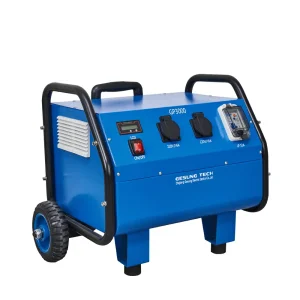
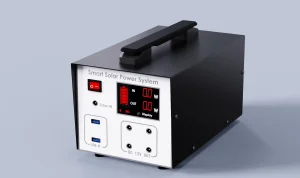
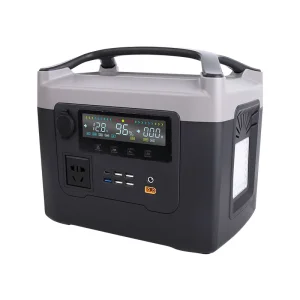
The solar-powered portable charging station with integrated inverter combines power generation storage and inversion functions into one system. It collects energy through solar panels converts it into electricity and stores it in built-in batteries. The inverter then converts direct current into alternating current to charge electric vehicles or other devices. Additionally its intelligent control system adjusts charging power based on battery status and real-time demand to enhance efficiency.
Combines power generation storage and inversion in one unit reducing system complexity and ensuring stable operation.
Primarily uses solar energy reducing dependency on the grid and lowering carbon emissions consistent with sustainability goals.
Compact and easy to carry and install making it ideal for home outdoor and emergency scenarios.
Supports demand-based charging automatically optimizing strategies for efficient energy use.
Offers long-term benefits with one-time investment reducing electricity costs especially suitable for users without fixed charging infrastructure.
Serves as a reliable backup power source during grid failure ensuring continued operation of essential devices.
How Wenzhou New Energy mitigates regulatory risk and satisfies strict regional grid interconnection policies globally.
To support compliance across the US and Canada, our equipment aligns with UL 9540 (energy storage systems) and UL 1741 SA/SB grid interaction regulations, guaranteeing code-compliant integration under NEC Article 706 standards for regional electrical inspections.
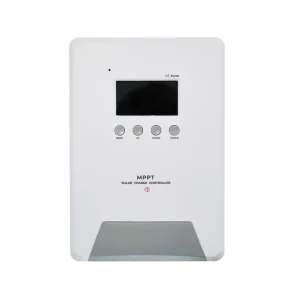
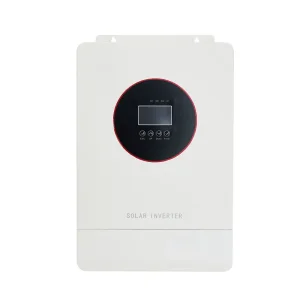
All high-power systems and multi-in-one MPPT inverters hold complete CE certification and conform to regional grid interconnection standard EN 50549. This ensures secure low-voltage grid coupling and fault-ride-through (FRT) mechanisms critical for European operators.
Transportation safety is key for lithium-based backup power arrays. Our stackable battery systems pass rigorous UN 38.3 test protocols, including extreme vibration, crush, thermal stress, and overcharge thresholds, providing smooth customs clearance and secure transport.
Our structured evolution plan for scaling storage efficiency, bidirectional interfaces, and AI power-flow allocation.
Integrating standard CHAdeMO and CCS protocol support directly into our solar hybrid systems to allow EV fleet batteries to double as home or factory emergency backup buffers.
Deploying low-cost, ultra-safe sodium-ion cell lines alongside existing LiFePO4 configurations, maintaining optimal performance thresholds under sub-zero climates down to -30°C.
Utilizing decentralized blockchain accounting frameworks and real-time IoT controls, allowing distributed commercial BESS systems to dynamically bid storage space back to local utility grids.
Discover our highly configurable micro-generation equipment, multi-output portable stations, and structurally certified solar supports.
Expert technical clarity addressing safety, electrochemical stability, system dimensioning, and ROI for C&I applications.
 Turskov