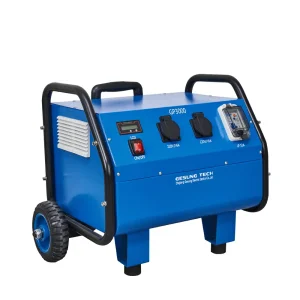
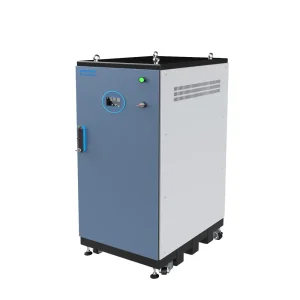
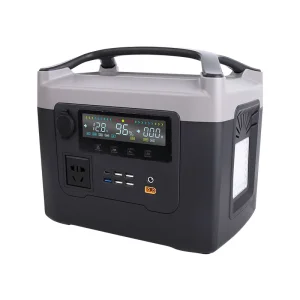
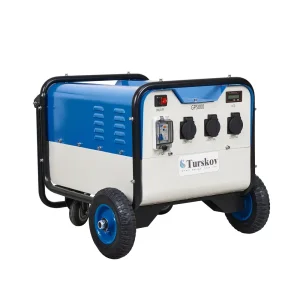
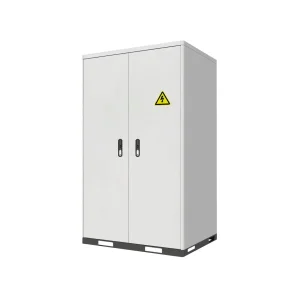
The global energy paradigm is shifting rapidly from centralized carbon-intensive utility grids toward decentralized, resilient, and zero-emission micro-grids. Within this clean-tech transition, High-Portability Power Storage Generators (also referred to as Portable Power Stations - PPS) have evolved from recreational outdoor lifestyle products into critical commercial, industrial, and residential energy infrastructure. Extreme weather anomalies, grid vulnerability, and aggressive global carbon-neutral mandates are pushing commercial entities, telecom providers, agricultural sectors, and medical facilities to source reliable, high-capacity portable generators.
Today's B2B procurement officers and engineering leads demand energy equipment that offers a modular balance between mobility and high storage capacity. Factories and industrial manufacturers must scale their operations to support custom voltages, robust battery management systems (BMS), and hybrid charging interfaces (solar MPPT, alternating current, and wind inputs). From mobile command units and emergency responders to construction zones and commercial logistics, portable generators offer immediate operational continuity without the maintenance overhead, high emissions, and acoustic disturbances of traditional combustion-based diesel gensets.
To capture growth in the distributed energy space, manufacturers are focusing heavily on research and development in three core technology domains:
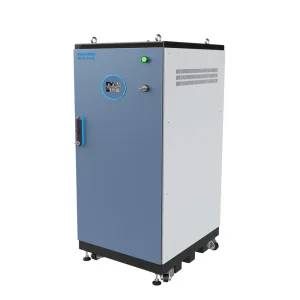
Traditional ternary lithium formulations are being replaced by ultra-stable Lithium Iron Phosphate (LiFePO4) battery packs. These packs provide over 4,000 charge-discharge cycles at 80% Depth of Discharge (DoD), outstanding thermal runaway thresholds, and an eco-friendly lifecycle profile.
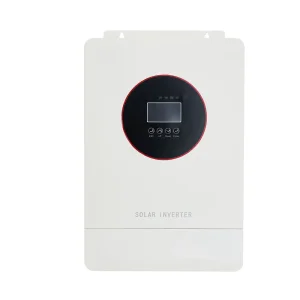
Integrating bidirectional multi-in-one high-frequency pure sine wave inverters directly cuts down conversion losses. High-frequency topologies enable smaller footprints, allowing generators with capacities up to 5kW to remain highly portable and easily maneuverable.
Modern commercial portable storage devices operate as smart nodes. Cloud-based fleet management enables administrators to monitor state-of-charge (SoC), operational health, and load distributions in real-time, supported by blockchain-enabled tracking to verify trace origin carbon reduction indexes.
Established in 2020 and headquartered in Wenzhou, China's dynamic private economy hub, Zhejiang Wenzhou New Energy Technology Co., Ltd. (suggested full name) has established itself as an innovative force in custom renewable energy storage manufacturing. Spanning a state-of-the-art 15,000+ square meter production footprint, our facility houses CNAS-certified testing laboratories, advanced Electromagnetic Compatibility (EMC) testing centers, and specialized R&D zones operating under strict ISO 9001, ISO 14001, and ISO 45001 management protocols.
Our technological baseline is supported by 36 proprietary patents. Crucially, our 5th-gen hybrid inverter technology achieves an industry-leading 98.5% conversion efficiency, minimizing energy dissipation during power transformation. We are committed to achieving a Net-Zero Factory certification, with a company-wide operational directive to offset over 1 million tons of global carbon emissions by 2030 through highly efficient distributed generation products.
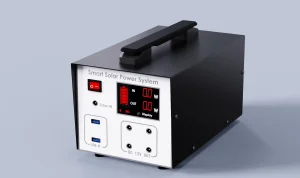
A solar-powered portable charging station with an integrated inverter combines three critical steps of the off-grid energy loop into a single, cohesive modular system: Power Generation, Storage, and Inversion.
Our systems collect green electricity from high-efficiency solar panel configurations, utilizing dynamic Maximum Power Point Tracking (MPPT) logic to optimize solar intake across fluctuating light levels. This captured electrical energy is directed to the built-in Lithium Iron Phosphate (LiFePO4) storage banks. The integrated bidirectional pure sine wave inverter then converts direct current (DC) into alternating current (AC) to charge electric vehicles, run high-draw power tools, or supply energy to critical building appliances. Our smart control software continuously monitors battery health parameters, dynamically allocating power throughput to optimize overall system longevity.
| System Module | Technological Standard | Operational Benefit |
|---|---|---|
| Battery Assembly | Automotive-grade LiFePO4 cells (3000+ cycles at 100% DoD) | High thermal stability, enhanced safety profiles, and decadal product lifespans. |
| Inversion Stage | High-frequency pure sine wave (98.5% peak conversion) | Negligible harmonic distortion; safe operation for complex electronics. |
| Solar Controller | Advanced MPPT tracking with wide input range | Maximize solar power harvesting efficiency under low-light or overcast conditions. |
| Thermal Regulation | Smart active cooling with multi-stage sensor arrays | Mitigates heat buildup, prevents cell degradation, and ensures high safety. |
Our manufacturing engineering roadmap is focused on continuously pushing the limits of energy density and integration. By 2026, we aim to transition our mid-tier portable generators to solid-state electrolyte architectures. This transition will yield a 30% reduction in system weight and volume while significantly increasing safety.
We are also advancing our smart energy management software (EMS) by integrating predictive load-balancing and AI-driven grid interaction capabilities. Under this model, future energy storage systems will function as intelligent distributed assets. They can automatically charge during off-peak periods when solar generation is abundant and discharge back into local micro-grids during peak rate windows, maximizing financial returns for commercial operators.
 Turskov