Engineered to deliver high conversion efficiency, robust lifecycle performance, and seamless off-grid integration.
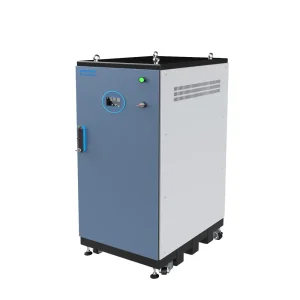
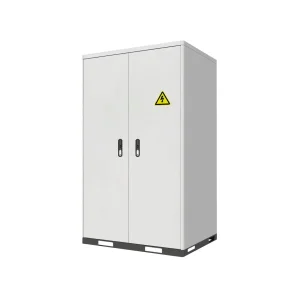
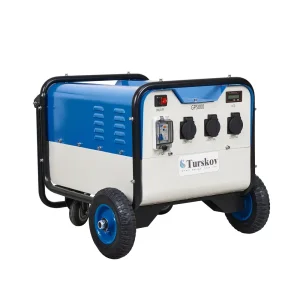
Headquartered in Wenzhou, China's dynamic hub of technological innovation and private economic enterprise, Zhejiang Wenzhou New Energy Technology Co., Ltd. has established itself as an authoritative global manufacturer of high-voltage and low-voltage battery energy storage systems (BESS). Since our strategic incorporation in 2020, we have scaled our production facilities to exceed 15,000+ square meters of state-of-the-art manufacturing space.
We believe that industrial reliability is achieved through rigorous engineering verification. Our advanced production campus houses fully accredited CNAS-certified laboratories, dedicated electromagnetic compatibility (EMC) testing centers, and isolated high-power system simulation R&D fields. Operating seamlessly under strict ISO 9001:2015, ISO 14001:2015, and ISO 45001:2018 management systems, we enforce uncompromising quality control gates at every phase—from incoming raw cell material inspection to final dynamic load thermal profiling of finished power walls.
As a global Tier-1 partner, we deliver customized original design manufacturer (ODM) and original equipment manufacturer (OEM) services for global infrastructure leaders, including Fortune 500 retail networks such as Walmart and Home Depot. Managed by an expert core of 200+ technical engineers, our manufacturing pipelines support an annual output capacity of over 50,000 units, ensuring reliable delivery schedules even amid changing supply chain landscapes.
The global transition from centralized thermal generation toward decentralized renewable microgrids has highlighted the importance of behind-the-meter (BTM) storage systems. Industry and commercial operators face a triple challenge: fluctuating grid tariffs, peak demand penalties, and power quality degradation. High-capacity smart solar off-grid power walls (ranging from 30kWh residential systems to 100kW/215kW commercial arrays) offer a viable solution by providing energy independence, cost management, and carbon mitigation.
Rapid deployment of commercial energy storage systems is driven by economic factors and policy support. Legislative frameworks such as the Inflation Reduction Act (IRA) in the US and the REPowerEU directive in Europe incentivize long-duration storage technologies. Commercial facilities utilize these systems for peak shaving (reducing peak demand charges) and load shifting (charging during low-tariff periods and discharging during peak rates).
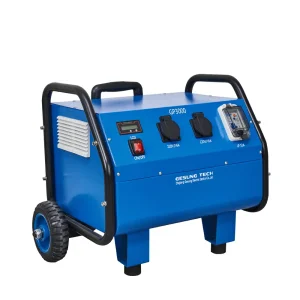
Our off-grid power walls feature high-performance LFP (Lithium Iron Phosphate) cells paired with smart Energy Management Systems (EMS). This hardware-software integration allows businesses to maintain operations during grid outages, securing critical supply chains and computational facilities.
Modern battery storage relies on precise chemical engineering and advanced system integration. Wenzhou New Energy's smart off-grid power wall platforms utilize automotive-grade Lithium Iron Phosphate (LiFePO4) chemistry. LiFePO4 offers distinct safety advantages over NMC chemistries, exhibiting high thermal runaway thresholds, minimal oxygen release under stress, and robust performance across high-frequency cycling.
The core of our power wall architecture is our proprietary Battery Management System (BMS). Utilizing multi-point sensing topologies, the BMS continuously monitors cell voltages, thermal gradients, and internal resistance. Integrated passive and active balancing circuits prevent cell mismatch, extending the operational life of the battery pack.
| System Capacity (Nominal) | Cell Chemistry | Standard Charge/Discharge C-Rate | Round-Trip Efficiency (DC-DC) | Integrated Inverter Mode Conversion Efficiency | Cycle Life (90% DoD, 25°C) |
|---|---|---|---|---|---|
| 5 kWh / 48V Power Bank | LiFePO4 (Grade A prismatic) | 0.5C / 1.0C Max | > 95% | Up to 98.2% | 6,000 Cycles |
| 30 kWh Power Wall | LiFePO4 (Grade A prismatic) | 0.5C / 1.0C Max | > 96% | Up to 98.5% (5th Gen) | 6,500 Cycles |
| 45 kWh Power Wall | LiFePO4 (Grade A prismatic) | 0.5C / 0.8C Max | > 96% | Up to 98.5% (5th Gen) | 6,500 Cycles |
| 100 kW C&I Cabinet | LiFePO4 Liquid Cooled Option | 0.5C / 1.0C Standard | > 95% | 98.5% Converter Integration | 8,000 Cycles |
| 215 kW Industrial Unit | LiFePO4 Liquid Cooled Array | 1.0C / 1.0C Dual Mode | > 94% (AC-to-AC system) | 98.5% Converter Integration | 8,000 Cycles |
Our 5th-Generation Hybrid Inverter technology achieves conversion efficiencies up to 98.5%. By using wide-bandgap silicon carbide (SiC) semiconductors, we minimize thermal switching losses, enabling reliable performance under high ambient temperatures and peak-load demand.
Energy storage requirements vary significantly across different geographic regions and operational scales. Our product portfolio is designed to address these distinct requirements through flexible, modular configurations.
In regions with aging grid infrastructure or high frequency of extreme weather events, our residential systems (5kW, 30kWh, and 45kWh configurations) ensure continuous household power. The system automatically isolates the home circuit during a grid failure to protect appliances like refrigerators, HVAC systems, and medical devices.
For factories, warehouses, and commercial developments, demand charges can account for a significant portion of monthly utility bills. Our 100kW and 215kW systems monitor incoming current feeds to discharge battery power during peak usage periods, helping to reduce electricity bills.
Modern telecommunications hubs and data centers require uninterrupted power. Our 215kW industrial units function as dynamic UPS systems, buffering grid disturbances and voltage sags. These systems interface with existing site EMS networks using standard protocols (Modbus TCP, CAN, and SNMP), providing facility operators with complete control over system status, cell temperatures, and diagnostic logs.
Engineered for commercial integration, critical backup scenarios, and modular scale installations.
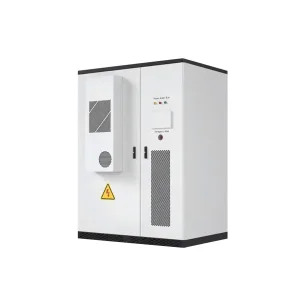
Wenzhou New Energy is developing technology for the next generation of smart energy systems. Our R&D roadmap is focused on three primary areas: solid-state battery cell safety, high-density power electronic integration, and cloud-coordinated virtual power plants (VPPs).
Our commitment to sustainability is reflected in our plans to achieve Net-Zero Factory certification. By utilizing rooftop solar arrays, zero-carbon production methods, and closed-loop waste heat recovery, we aim to reduce global CO2 emissions by 1 million tons by 2030.
We have integrated a blockchain-based traceability system into our production process. Each cell is tagged with a unique cryptographic ledger entry, recording raw material sourcing, manufacturing variables, quality test results, and operational performance. This system facilitates battery recycling and repurposing (second-life batteries) and allows our support team to resolve 90% of field issues within 2 hours by accessing full manufacturing histories.
In addition, our next-generation EMS software integrates predictive artificial intelligence. By analyzing weather patterns, utility rates, and usage habits, the system optimizes charging and discharging cycles to maximize levelized cost of storage (LCOS) efficiency.
Providing detailed technical answers to help engineering, procurement, and facility managers make informed decisions.
LiFePO4 (Lithium Iron Phosphate) offers higher thermal stability, safety, and cycle life than standard NMC (Nickel Manganese Cobalt) cells. Our cells support over 6,000 cycles at 90% Depth of Discharge (DoD) before capacity drops to 80% of its original rating. They also feature a thermal runaway threshold exceeding 270°C and do not release oxygen during thermal degradation, reducing safety risks.
Our 5th-generation hybrid inverter uses wide-bandgap Silicon Carbide (SiC) semiconductor switches instead of traditional silicon IGBTs. SiC semiconductors reduce switching and conduction losses, allowing the inverter to maintain flat efficiency curves across different loading scenarios. This technology minimizes heat generation and reduces cooling energy requirements.
Yes. Our 100kW and 215kW commercial and industrial (C&I) cabinets are designed for behind-the-meter applications. The integrated EMS monitors real-time building demand and discharges the batteries when consumption approaches preset thresholds, helping to reduce peak demand charges from the utility company.
Our Wenzhou production facilities are certified under ISO 9001, ISO 14001, and ISO 45001. We maintain in-house CNAS-accredited testing laboratories and EMC chambers. Our systems are engineered to meet CE, IEC 62619, UL 1973, and UN 38.3 standards, helping to ensure compliance across regional markets.
Each power wall and integrated cell cluster is assigned a unique ledger ID tracking its manufacturing parameters, cell batch, weld profiles, and factory test history. If a field issue occurs, our support team can trace the cell's history to identify the root cause, enabling rapid diagnosis and resolution of system anomalies.
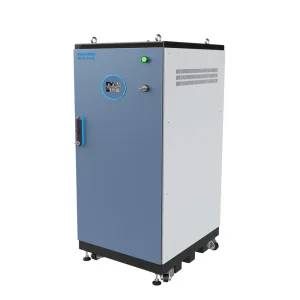
For high-availability scenarios, we provide the ODM 215kW system configuration. This system features liquid-cooling thermal management to maintain optimal cell temperatures under high discharge rates. It interfaces with commercial facility management software using Modbus TCP and CAN protocols, enabling automated grid-to-island switching within 10 milliseconds to safeguard critical digital equipment.
Global Industrial Park: Wenzhou Technology Corridor, Zhejiang Province, China
CNAS Lab Certificate ID: CNAS-L00392A | ISO Certified Facility | R&D Patent Portfolio 2020-2026
 Turskov