Egypt is witnessing an unprecedented economic and industrial modernization program, particularly visible along the Suez Canal Economic Zone (SCZONE), 10th of Ramadan City, and 6th of October City. However, the nation's ambitious industrial expansion faces complex power infrastructure hurdles. Frequent grid instability, scheduled load shedding, and rising electricity tariffs for high-voltage commercial consumers present persistent operating constraints. As business operating costs climb, the necessity for robust local energy backup systems becomes paramount.
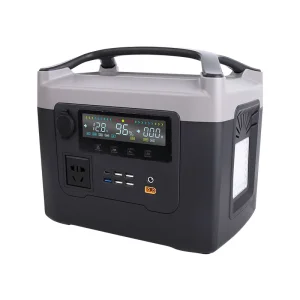
In light of Egypt's Integrated Sustainable Energy Strategy (ISES) 2035—aiming to secure 42% of its energy mix from renewable sources—factories, cold chain warehouses, agricultural estates, and logistics centers are increasingly deploying localized Battery Energy Storage Systems (BESS). The 100kW energy storage unit serves as a critical sweet spot. It provides sufficient peak-shaving capacity for small-to-medium enterprises (SMEs) while offering high scalable modularity for larger heavy industries looking to build hybrid solar-storage microgrids in isolated regions such as East Oweinat and Toshka.
"For Egyptian industries, an energy storage facility is no longer just a backup luxury; it is a structural mechanism for cost stabilization. By storing cheap solar electricity during peak solar hours and discharging it during high-tariff evening periods, factories can capture significant arbitrage savings while shielding heavy machinery from voltage spikes."
Meters Manufacturing Facility
Inverter Conversion Efficiency
Patented Technologies
Units Annual Capacity
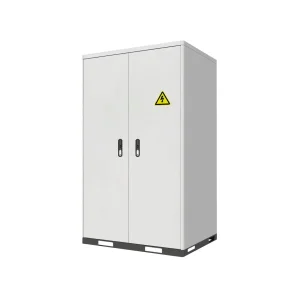
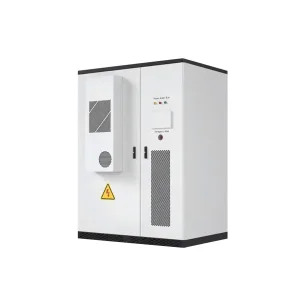
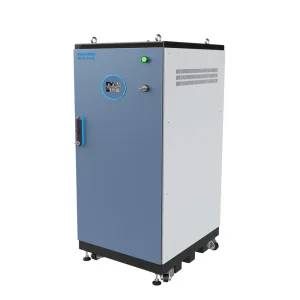
The 100kW / 215kWh (kilowatt-hour) energy storage configuration represents the foundational unit for commercial deployment. Built upon safe Lithium Iron Phosphate (LiFePO4) cell chemistry, our system is engineered to handle deep-discharge daily cycles under harsh environmental conditions common to Egypt, where temperatures regularly exceed 45°C. By implementing smart thermal management alongside an advanced active-balancing Battery Management System (BMS), the platform guarantees system longevity surpassing 6,000 cycles at 80% Depth of Discharge (DoD).
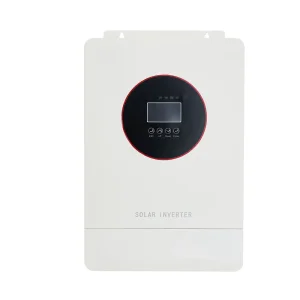
Our system integrates our proprietary 5th-generation hybrid inverter system. Designed with precision wide-bandgap semiconductors, the inverter achieves a peak conversion efficiency of 98.5%, significantly minimizing system losses during power transformation. The system boasts dual MPPT inputs, allowing direct integration of local PV arrays without requiring extra solar charge controllers. The dynamic grid-forming capabilities enable seamless transitions between grid-interactive and microgrid off-grid operation modes in under 10 milliseconds, ensuring critical facilities like IT servers and refrigeration chambers run uninterrupted.
| System Parameter | Specification Details (Egypt-Grade) |
|---|---|
| Rated Active Output Power | 100 kW (Continuous Discharge) |
| Battery Chemistry / Cell Grade | Prismatic LiFePO4 (Grade A, EVE/CATL platforms) |
| Nominal Storage Capacity | 215 kWh (Modular expansion up to 1.2 MWh) |
| Inverter Peak Efficiency | 98.5% (Wide-bandgap semiconductor topology) |
| Switchover Response Time | < 10 ms (UPS-grade transition protection) |
| Thermal Regulation Mechanism | Liquid Cooling / Intelligent Forced-Air with HVAC integration |
| Environmental Safety Enclosure | IP55 / NEMA 3R outdoor corrosion-resistant cabinet |
| Fire Suppression Protocol | Integrated Aerosol (Stat-X) & Novec 1230 gas system |
Purchasing energy storage equipment is a major investment, and its financial logic is closely tied to operational margins. For Egyptian factories, deploying a 100kW BESS targets three primary economic drivers:
Under the billing structure implemented by the Egyptian Electricity Holding Company (EEHC), commercial and industrial accounts are charged a heavy premium based on their highest peak power draw (measured in kVA). By configuring the BESS to discharge during startup spikes or peak production windows, operations can keep their grid demand level, resulting in immediate billing reductions.
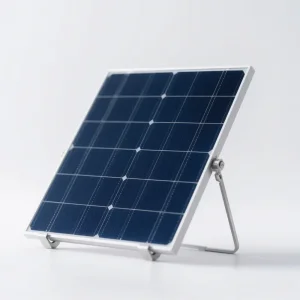
While solar power generation is abundant across Cairo, Alexandria, and the Red Sea provinces, exporting surplus energy back to the grid is often restricted or financially unfavorable due to shifting feed-in tariffs. Our 100kW energy storage solution enables factories to retain 100% of their generated green energy on-site. By storing energy generated during optimal daylight hours and discharging it after sunset, businesses optimize their levelized cost of storage (LCOS).
In rural developments, mining locations, and agricultural schemes away from the national network, generators run constantly on expensive, logistically complex diesel fuel. Introducing our smart BESS into a generator loop allows the generator to run only at its peak efficiency load. The battery absorbs excess production and feeds the load during lower-demand periods, cutting fuel consumption by up to 40% and significantly reducing mechanical maintenance cycles.
Exporting high-voltage equipment to the North African market requires rigorous compliance with safety standards and domestic regulations. Zhejiang Wenzhou New Energy Technology Co., Ltd. builds systems strictly in accordance with international criteria, simplifying domestic permitting with the Egyptian Electricity Regulatory Agency (ERA) and civil defense authorities.
The 100kW BESS cabinets are constructed to comply with IEC 62619 safety criteria for stationary lithium applications, along with IEC 62477-1 safety requirements for power electronic converter systems. Inverter electronics carry CE certifications and comply with regional grid interconnection requirements. Our enclosures undergo stringent structural tests, ensuring operational integrity up to IP55 to survive fine Saharan dust and seasonal humidity. Every system is fully qualified at our ISO 9001/14001/45001 certified, CNAS-accredited laboratory facility prior to international dispatch, and comes with full testing certificates and technical manuals.
To support smooth projects for industrial procurement offices, we have optimized our supply chain channels for the Port of Alexandria, Port Said, and Sokhna Port. We offer end-to-end logistics solutions, handling all technical export declarations and custom packaging protocols to ensure transit safety.
Our commitment to quality extends past product delivery. Our digital blockchain-enabled tracking system ensures transparent tracking from initial raw cell selection to the final operational site. For long-term peace of mind, we stand up a 7x24 multilingual technical service support group. We collaborate closely with local engineering partners across Egypt to provide on-site installation oversight, commissioning support, and fast field service when needed.
 Turskov