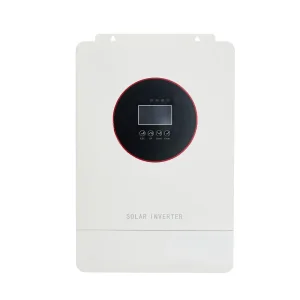
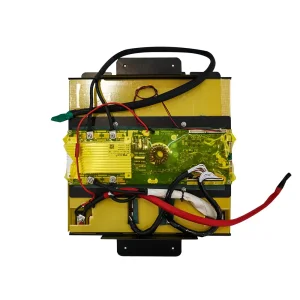
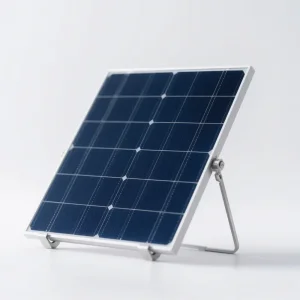
Adaptable power solutions optimized for microgrid integrations, backup generation, and robust local utility networks across the Sultanate.
As part of the ambitious Oman Vision 2040, the Sultanate of Oman is rapidly transforming its national energy infrastructure. Under the supervision of the Authority for Public Services Regulation (APSR), the nation is pivoting from a heavy reliance on domestic natural gas to adopting clean utility-scale and decentralized renewable generation. Commercial and Industrial (C&I) sectors contribute substantially to peak load demands. The intense solar radiation indices across the regional climate make Oman an ideal location for solar solar-hybrid systems. However, extreme temperatures, which often exceed 50°C in industrial zones such as Duqm, Sohar, and Rusayl, present a complex engineering challenge for modern energy storage.
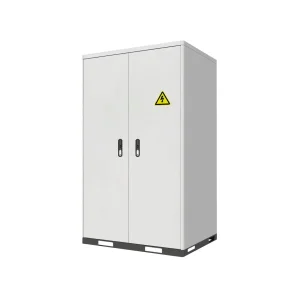
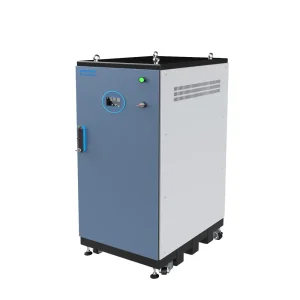
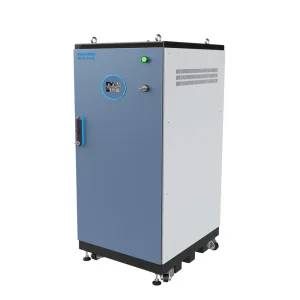
Deploying an Industrial and Commercial Energy Storage 100kW / 200kWh System in these settings provides local businesses with critical electrical stability and financial predictability. High summer ambient temperatures elevate air conditioning cooling loads to peak levels. This surge triggers punitive demand charges under Cost-Reflective Tariffs (CRT) applied to large commercial consumers. By implementing our high-performance Lithium Iron Phosphate (LiFePO4) storage chemistry, businesses can shift loads, peak shave, and run off-grid solar generators seamlessly. This ensures stable power quality even when connection points to the national grid experience thermal stress or voltage drops.
Oman’s electrical standards (OES) mandate stringent power quality control at coupling points. Commercial operations deploying solar PV installations require local BESS (Battery Energy Storage Systems) to manage active/reactive power generation. A 100kW ESS serves as a buffer, mitigating solar intermittency, avoiding power export limits, and preventing costly penalties.
Internationally, the market for 100kW-class energy storage is expanding rapidly. Driven by global decarbonization mandates and ESG policies, manufacturers and logistics centers are integrating decentralized storage units to secure emergency backup power and enable virtual power plant (VPP) aggregation. Modern C&I operations require more than simple emergency backup systems. They demand smart, IoT-enabled ecosystems capable of dynamic grid response, automated frequency regulation, and precise energy arbitrage.
Procurement managers at global enterprises demand reliability, transparency, and traceability. Key evaluation criteria include safety standards (such as UL9540A and IEC 62619), cell manufacturing consistency, and thermodynamic efficiency. Businesses require a balance of high power output and long cycles, minimizing Levelized Cost of Storage (LCOS). This is where our production standards and Wenzhou-based manufacturing ecosystem offer a competitive advantage.
Zhejiang Wenzhou New Energy Technology Co., Ltd. operates at the heart of Wenzhou, China's private industrial manufacturing capital. Spanning a modern 15,000+ square meter factory, our manufacturing capabilities are backed by advanced automation and a fully integrated local supply chain. The factory features CNAS-certified safety testing centers, advanced electromagnetic compatibility (EMC) testing labs, and multi-stage ISO 9001/14001/45001 production audits.
By utilizing automated cell sorting, ultrasonic wire-bonding, and laser-welded busbars, we eliminate manual assembly variations. Each 100kW ESS module undergoes comprehensive end-of-line (EOL) testing under simulated thermal and load stresses before shipment. We provide complete transparency through a blockchain-enabled product traceability system. This allows customers to verify raw material sources, testing metrics, and quality certificates via a QR code, ensuring high reliability for critical Omani C&I installations.
Deploying energy storage in Oman requires high-standard thermal management. High heat degrades standard lithium cells, which can trigger thermal runaway if cooling systems fail. Our engineered 100kW ESS features advanced liquid-cooling or intelligent forced-air HVAC systems that maintain uniform internal cell temperatures between 20°C and 30°C.
| Technical Parameter | Specification / Capability | Oman Local Benefit |
|---|---|---|
| Battery Chemistry | Premium Grade LiFePO4 (LFP) | High thermal safety, non-combustible, 6000+ cycle life |
| Nominal Output Power | 100kW / 125kVA | Optimized for medium industrial facilities and retail loads |
| Capacity Configuration | 150kWh to 230kWh (Modular Scalability) | Up to 2.3 hours of full-load backup during peak utility times |
| Enclosure Protection | IP55 / NEMA 3R Outdoor Cabinet | Resists fine sand penetration, dust storms, and coastal salt mist |
| Operating Temperature Range | -25°C to +55°C (Active Cooling tuned) | Prevents thermal derating during Oman's mid-day heat waves |
| EMS Communication Protocol | Modbus TCP, CAN, RS485 with Cloud IoT integration | Enables remote monitoring from central offices in Muscat |
Oman's mining sector relies heavily on high-power diesel generators in grid-isolated areas. High fuel transportation costs and maintenance overhead erode profits. Integrating a 100kW ESS with a local solar PV array forms an optimized microgrid. This setup reduces fuel consumption, absorbs generator voltage spikes from heavy machinery, and stabilizes overall site power.
Food security and crop preservation rely on continuous cold storage chain networks. Power interruptions in these warm regions can cause rapid stock spoilage. The 100kW ESS functions as an automatic transition backup power system. It bridges power grid interruptions and stores excess solar energy generated during high-sunlight hours, discharging it at night to power cooling pumps.
Commercial facilities with large roof spaces can convert solar generation into stable base-load power. Using a 100kW energy storage solution allows logistics companies to charge during low-cost morning periods, discharging during high peak demand windows. This strategy effectively minimizes peak demand charges on monthly utility bills.
From multi-inverters to high-voltage power walls, explore our extensive, high-durability energy products engineered for Oman’s commercial infrastructure.
Navigating the local regulations, physical conditions, and economic landscape in Oman can raise questions. Here is an expert guide compiled by our product engineering team.
Empower your commercial or industrial facility with our engineered 100kW Energy Storage System. Contact our engineers for custom sizing, feasibility studies, and detailed pricing.
 Turskov