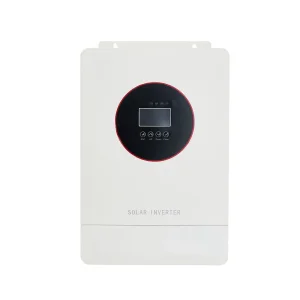
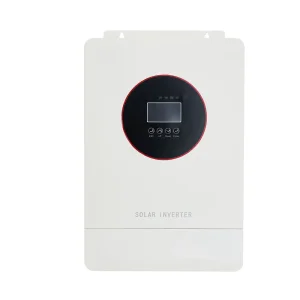
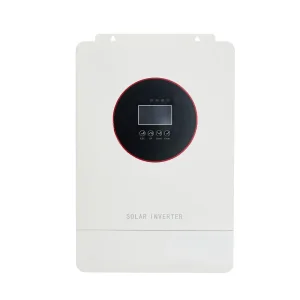
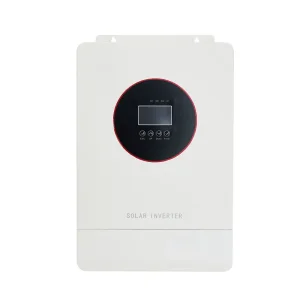
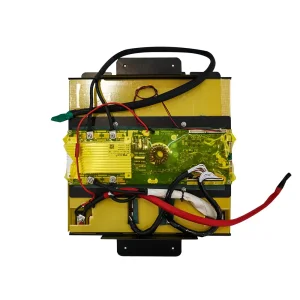
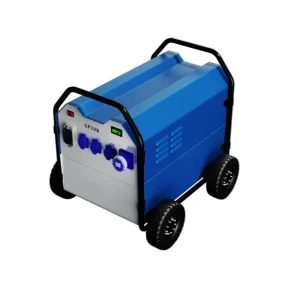
Custom-engineered power converters optimized for German grid codes (VDE-AR-N 4105) and demanding climate conditions near the Hamburg Port.
Hamburg, as one of Europe's largest logistic and port hubs, is currently undergoing a massive energy transformation. Under the mandate of the Hamburg Climate Plan, the city aims to reduce CO2 emissions by 70% by 2030 and achieve carbon neutrality by 2045. Meeting these targets requires extensive electrification of industrial processes, the expansion of municipal photovoltaic systems, and the deployment of massive shore-to-ship power infrastructures inside the Port of Hamburg. Crucial to this grid evolution are high-performance power inverters. As the interface between DC energy sources (such as solar PV and energy storage banks) and the AC utility grid, inverters play a vital role in voltage regulation, frequency stability, and power quality management.
Furthermore, Northern Germany's position as a hub for offshore wind integration and green hydrogen production requires highly specialized inverter topologies. These systems must support wide variations in input voltage, offer seamless grid-forming capabilities, and maintain continuous operation in environments exposed to corrosive sea spray and fluctuating marine temperatures. Industrial installations within the Port of Hamburg demand high-capacity power electronics that comply with stringent German VDE-AR-N 4110 medium-voltage grid codes, which dictate strict active/reactive power controls and low-voltage ride-through (LVRT) responses during grid disturbances.
The global inverter industry is experiencing rapid technological evolution. The shift from silicon-based IGBTs to wide-bandgap (WBG) semiconductors, such as Silicon Carbide (SiC) and Gallium Nitride (GaN), is significantly redefining system efficiency limits. Inverters utilizing SiC technology achieve up to 99% conversion efficiency while operating at higher switching frequencies. This translates to smaller magnetic components, reduced weight, and superior thermal performance. In urban areas like Hamburg, where space is premium, these ultra-compact, high-density inverters enable installers to maximize energy yield per square meter of rooftop or utility room.
Another major global trend is the integration of artificial intelligence (AI) and Internet of Things (IoT) protocols at the firmware level. Modern solar inverters are no longer passive power-conversion boxes; they are intelligent edge computing devices. By executing embedded machine learning algorithms, modern systems can perform real-time maximum power point tracking (MPPT) under rapid shading conditions, monitor internal component degradation via thermal imaging metrics, and predict battery degradation trends in coupled storage units. This prevents unexpected downtime, ensuring uninterrupted power for critical industrial facilities and medical infrastructure.
Partnering with global industry leaders to supply certified, tier-1 power electronics and energy storage solutions.
Zhejiang Wenzhou New Energy Technology Co., Ltd., headquartered in Wenzhou, China's hub of private economy, has been a pioneer in renewable energy solutions since its establishment in 2020. Spanning 15,000+ square meters, our facility houses CNAS-certified laboratories, EMC testing centers, and specialized R&D zones operating under ISO 9001/14001/45001 management systems, ensuring end-to-end quality control from raw materials to finished products.
As a global leader in solar power generation systems and portable energy solutions, we specialize in R&D and manufacturing of mobile generators, solar inverters, and hybrid energy storage products. With 36 patented technologies, including our 5th-gen hybrid inverter achieving 98.5% conversion efficiency, we export to 28+ countries and provide OEM/ODM services for Fortune 500 clients like Walmart and Home Depot. Our 200+ technical experts and 50,000-unit annual production capacity enable rapid customization for diverse energy needs.
We implement 7×24 multilingual customer support backed by a blockchain-enabled traceability system that resolves 90% of issues within 2 hours. Committed to sustainability, we are pursuing Net-Zero Factory certification with a roadmap to reduce global carbon emissions by 1 million tons by 2030. Through intelligent IoT-enabled energy ecosystems and cross-border partnerships, we empower businesses worldwide to transition toward greener operations seamlessly.
Corrosion-resistant hybrid inverters supporting heavy load peak-shaving, microgrid synchronization, and shore-to-ship clean power supply.
Fully automated SMT assembly lines, CNAS-certified component testing, and blockchain-verified tracing ensuring supply chain security.
Seamless power transfer walls (< 10ms backup speed) protecting residential systems against local grid instability and extreme weather events.
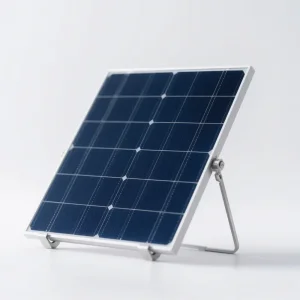
As modern life becomes increasingly dependent on electricity, power outages can cause significant inconvenience and financial loss for households and commercial enterprises. The solar off-grid power system offers a reliable solution by providing autonomous backup energy. This system uses high-efficiency solar panels to capture sunlight during the day, converting it into electricity that is stored in advanced lithium iron phosphate (LiFePO4) batteries. Even during absolute grid failures, the system's integrated high-frequency pure sine wave inverter delivers a steady energy supply to critical household and industrial devices.
Key Advantages & Technical Capabilities:
| System Capacity / Inverter Rating | Nominal AC Voltage | Max Efficiency | Transfer Time | IP Protection Class | Key Applications in Hamburg |
|---|---|---|---|---|---|
| 2.0 kW (Off-Grid Pure Sine Wave) | 230 VAC / 50 Hz | 94.0% | < 10 ms | IP20 (Indoor Utility Room) | Residential off-grid, mobile charging, remote cabins |
| 4.2 kW (MPPT Multi-in-One Hybrid) | 230 VAC / 50 Hz | 97.5% | < 10 ms | IP21 (Semi-protected spaces) | Urban residential backup, small enterprise offices |
| 6.2 kW (High PV Input MPPT) | 230 VAC / 50 Hz | 98.0% | < 8 ms | IP54 (Industrial enclosures) | Medium commercial PV systems, electric vehicle supply integration |
| 13.2 kW (High Capacity Multi-in-One) | 230/400 VAC (3-Phase) | 98.5% | < 5 ms | IP65 (Fully dust/waterproof) | Port warehouse facilities, cold-chain logistics backups |
Understand the engineering guidelines, grid protection parameters, and operating capabilities of our inverter portfolio in Hamburg.
Our grid-interactive and hybrid inverters feature programmable utility configuration profiles that support automatic grid disconnection under frequency and voltage anomalies, active power reduction when over-frequency is detected, and precise reactive power regulation (Q-on-Demand). For larger applications, our systems interface with local grid operators (DSOs) via standard Modbus RTU or TCP protocols to handle active power limits and remote control commands.
For marine-adjacent applications, we provide industrial units treated with specialized anti-corrosive coatings on internal heat sinks and PCB modules (conformal coating level C5-M). The chassis structures are constructed from marine-grade aluminum alloys and high-durability polymer gaskets, maintaining IP65/IP66 ingress protection ratings to resist airborne salt spray and moisture condensation.
Our multi-in-one hybrid inverters feature a built-in Automatic Transfer Switch (ATS) that redirects power sourcing in less than 10 milliseconds (often less than 5 ms for premium 3-phase modules). This transient delay is imperceptible to sensitive desktop computers, smart home hubs, server racks, and refrigeration electronics, preventing system reboots or data losses.
Yes. The inverter electronics are engineered to operate at full capacity from -25°C to +60°C. For battery cabinets (such as our Lithium Iron Phosphate Power Walls), integrated thermal management circuits and smart battery pre-heating systems activate during sub-zero operations, preserving cell charging speeds and preventing chemical degradation.
Absolutely. Leveraging Wenzhou’s robust electronics supply chains, we provide full custom design-to-production services. This includes modifications to internal chassis designs, proprietary firmware configurations for regional telemetry integrations, private labeling, and custom color options. Our production workflows conform to rigorous international certifications (TÜV, CE, RoHS, VDE).
We use a blockchain-enabled ERP system that indexes key metrics at each stage of production. From input QC testing on imported IC chips to SMT soldering, Solder Paste Inspection (SPI), Automated Optical Inspection (AOI), and final full-load dynamic burn-in tests in high-temperature rooms. This complete quality record ensures that each unit is fully traceable.
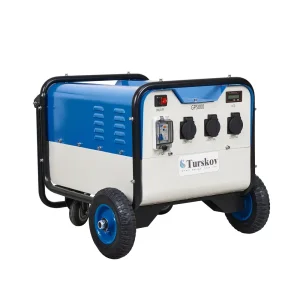
Explore our complete line of off-grid solar kits, industrial lithium energy storage systems, and mobile generators.
 Turskov