Engineered to deliver high conversion efficiency, robust durability, and intelligent energy management across residential, commercial, and emergency backup platforms.
Sqm Production Facility
Patented Tech Certifications
Inverter Conversion Efficiency
Global Export Destination Countries
Headquartered in Wenzhou, China's core manufacturing hub of private economy, Zhejiang Wenzhou New Energy Technology Co., Ltd. has established itself as an industry leader in renewable energy systems and portable energy solutions since 2020. Our expansive facility, spanning over 15,000 square meters, houses state-of-the-art CNAS-certified laboratories, dedicated EMC testing centers, and specialized R&D zones. All operations are strictly audited under ISO 9001, ISO 14001, and ISO 45001 international management systems, assuring standard-setting quality control from structural raw materials to final functional testing.
Equipped with 36 patent technologies, our structural R&D efforts have led to developments such as our 5th-generation hybrid inverter, achieving a groundbreaking 98.5% conversion efficiency. Our corporate scale, supported by over 200 technical experts and an annual capacity of 50,000 units, enables rapid product customization under OEM/ODM terms for global partners, including Fortune 500 corporations like Walmart and Home Depot. Additionally, a blockchain-enabled tracking system ensures that each unit is mapped through production, allowing our 7×24 multilingual technical support network to resolve 90% of field queries in under 2 hours.
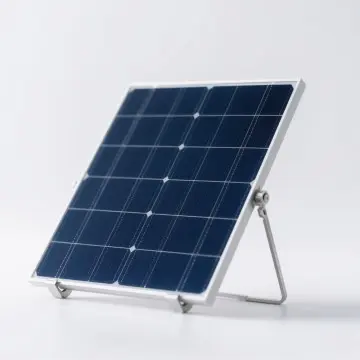
Navigating the macro trends driving the transition from unstable public grid systems to localized energy independence.
Commercial and Industrial (C&I) sectors across Europe, the Americas, and Southeast Asia are actively phasing out traditional diesel-powered generator arrays. The key driver is no longer just ecological sustainability, but Levelized Cost of Storage (LCOS) parity. High diesel prices, volatile logistics, and strict municipal carbon taxes have rendered backup diesel power uneconomical. Advanced off-grid solar infrastructure, integrated with high-capacity Lithium Iron Phosphate (LiFePO4) chemistries, provides a stable, zero-maintenance, and low-cost alternative capable of delivering uninterrupted service even under peak inductive load demands.
Modern off-grid solar technology has evolved from simple standalone backup power into complex, multi-source microgrids. Today's high-efficiency systems feature intelligent dynamic grid-forming inverters. Unlike conventional grid-following units, grid-forming hybrid inverters construct an autonomous voltage wave, serving as local reference grids. This capability allows mining complexes, agricultural processing plants, and telecommunication sites to dynamically integrate solar arrays, wind turbines, backup batteries, and load-shedding control circuits in real-time, eliminating voltage fluctuations and power quality problems.
With corporate Environmental, Social, and Governance (ESG) guidelines increasingly determining capital availability, global entities are required to systematically reduce Scope 1 and Scope 2 carbon emissions. As Zhejiang Wenzhou New Energy Technology Co., Ltd. progresses toward Net-Zero Factory Certification, our product architectures are designed to assist clients in establishing zero-carbon facilities. Implementing an off-grid energy architecture allows commercial buildings to permanently offset grid dependency, reducing energy costs while working toward carbon neutrality targets.
Engineered for high reliability, system safety, and clean efficiency under challenging environmental conditions.
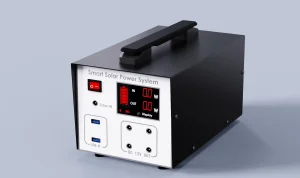
Combines power generation, high-density storage, dynamic inversion, and system protection mechanisms within a single pre-configured enclosure, significantly reducing on-site setup times, physical footprints, and system complexity.
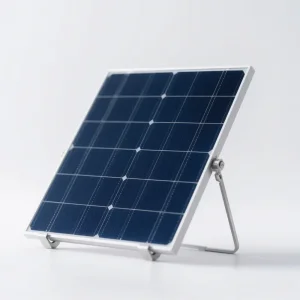
Designed to utilize clean solar resources, our systems reduce dependence on fossil fuels and public grid connections. This directly reduces operations' carbon footprints and aligns with international Net-Zero carbon targets.
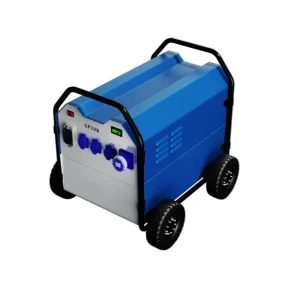
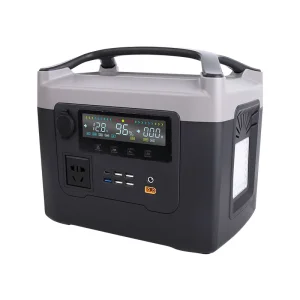
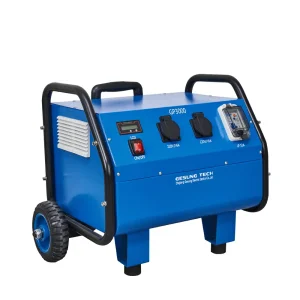
Features compact dimensions, integrated handles, and modular construction, optimized for fast deployment across remote outposts, disaster relief facilities, and outdoor workspaces.
Equipped with microcontrollers run by proprietary algorithms, our systems automatically adjust charging profiles according to state-of-health (SoH), temperature profiles, and real-time solar irradiance to maximize system efficiency.
Provides a long-term return on investment by reducing operating expenditures, minimizing grid-access connection charges, and avoiding utility peak demand charges.
Features a transfer switch response time of less than 10 milliseconds, delivering automatic backup power to essential appliances and preventing data loss or process interruptions during grid failures.
How our advanced off-grid solar technologies solve energy resilience challenges across global industries.
At the center of our technical roadmap is the Multi-In-One solar off-grid MPPT inverter series (available in 4.2kW, 6.2kW, and 13.2kW configurations). By integrating a high-performance Maximum Power Point Tracking (MPPT) controller, a pure sine wave inverter, and a high-voltage battery charger into a single system, we eliminate line losses between standalone components. Operating at 98.5% conversion efficiency, these systems prioritize load supply, routing excess solar power to battery storage or grid output based on user configurations.
Lead-acid batteries are increasingly being replaced by Lithium Iron Phosphate (LiFePO4) chemistry due to its thermal stability and long lifecycle. Our off-grid solutions, including the 30kWh, 45kWh, and 60kWh Power Walls, use LiFePO4 chemistry to deliver over 6,000 charge cycles at 80% depth of discharge. Managed by a smart Battery Management System (BMS), these configurations monitor individual cell voltages, internal temperatures, and state-of-charge (SoC) profiles, protecting the battery against thermal runaway, short circuits, and over-current events.
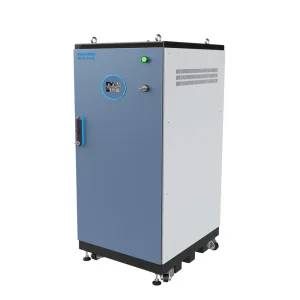
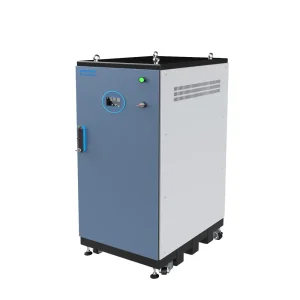
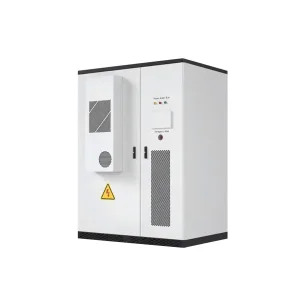
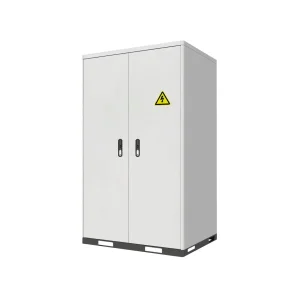
For large-scale operations, such as telecommunication hubs, cold storage warehouses, and manufacturing centers, we design custom systems ranging from 100kW to 215kW. These commercial energy storage units feature liquid or forced-air cooling, integrated fire suppression systems, and smart energy management software. They allow facilities to perform peak shaving and load shifting, storing power during off-peak times or peak solar production and releasing it when rates are highest, helping businesses lower operational costs.
Deep-dive explanations regarding off-grid solar technology, cell selection, system design, and customized global orders.
Lithium Iron Phosphate (LiFePO4) is the industry standard for stationary energy storage due to its safety profile and long operational life. Compared to alternative chemistries like NMC (Nickel Manganese Cobalt) or lead-acid batteries, LiFePO4 offers high thermal stability, zero maintenance, and does not pose a thermal runaway risk under normal conditions. Additionally, LiFePO4 systems deliver over 6,000 cycles at 80% Depth of Discharge (DoD), translating to an operational life of over 10 years, compared to just 2 to 3 years for lead-acid alternatives.
Conversion efficiency measures how much energy is retained when converting direct current (DC) from solar panels into alternating current (AC) for appliances. A 98.5% conversion efficiency minimizes thermal losses during conversion, ensuring more solar power is directed to loads or battery charging. Over a system's lifecycle, a 2% to 3% improvement in conversion efficiency can result in significant energy savings and prevent thermal stress on internal power electronics, extending the inverter's operational lifespan.
We provide full-spectrum OEM and ODM services to adapt to regional market standards and custom branding requirements. Our customization options include custom container configurations (IP54/IP65 ratings), specialized battery capacities (ranging from 3kWh up to megawatt-scale commercial setups), customized communications protocols (Modbus, CAN, RS485/RS232), and regional AC voltage and frequency configurations (110V/220V/380V at 50Hz/60Hz). We also provide custom enclosure aesthetics and private-label packaging for distributors.
Our blockchain traceability system logs the production history of key components, from raw lithium procurement and cell manufacturing to assembly, testing, and final shipment. In the event of a field issue, this digital record allows engineers to identify the manufacturing batch and component history, helping to resolve issues quickly. This level of traceability helps maintain high quality standards across our supply chain, which is essential for projects with strict quality and compliance standards.
Our products undergo testing to comply with international safety, environmental, and electromagnetic compatibility standards. Our manufacturing facilities are audited under ISO 9001, ISO 14001, and ISO 45001. For global shipping and installation, our battery packs and inverters hold key certifications including CE, RoHS, UN38.3 (for battery transport safety), IEC 62619 (safety requirements for industrial lithium batteries), and UL standards compliance. Our on-site CNAS and EMC testing laboratories ensure that each product batch meets these standards before dispatch.
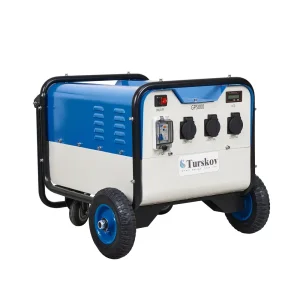
Discover our range of advanced backup power walls, mobile generators, and industrial energy storage systems designed for global distribution.
 Turskov