Direct supply options featuring industrial-grade conversions, MPPT logic boards, lithium iron phosphate architectures, and scalable commercial interfaces.
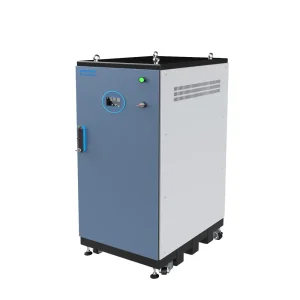
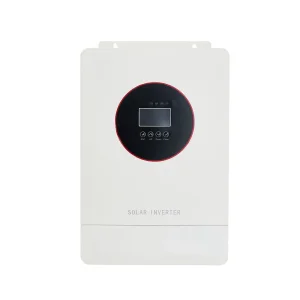
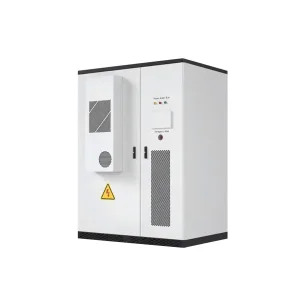
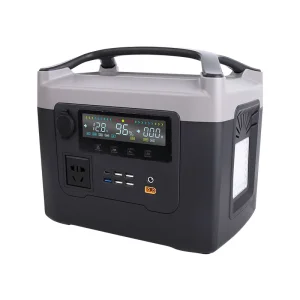
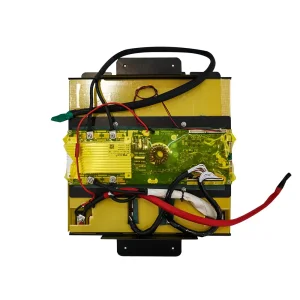
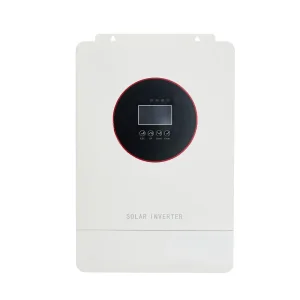
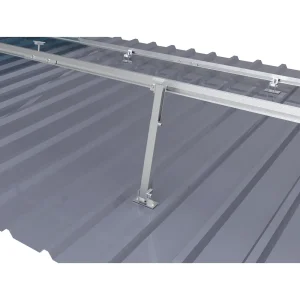
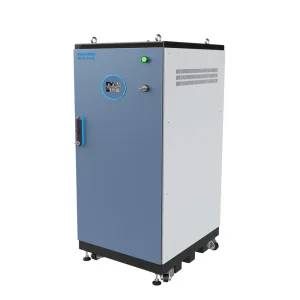
Headquartered in Wenzhou, China's dynamic hub of private enterprise, Zhejiang Wenzhou New Energy Technology Co., Ltd. has established itself as an innovative frontrunner in renewable energy technologies since 2020. Our expansive 15,000+ square meter manufacturing footprint is engineered for strict quality control and advanced testing. The facility incorporates ISO 9001, ISO 14001, and ISO 45001 management systems, alongside state-of-the-art CNAS-certified laboratories and EMC testing centers. This ensures that every element of our production cycle, from raw silicon/metal evaluation to finished module dynamic loading, complies with the highest international protocols.
As a key supplier of smart grid technologies and portable charging ecosystems, our specialized R&D infrastructure covers mobile storage systems, solar off-grid inverters, and utility-scale hybrid configurations. Backed by 36 national patents, Wenzhou New Energy's fifth-generation hybrid inverter architectures achieve an industry-leading 98.5% conversion efficiency. Our technology is deployed in over 28 countries, supporting critical energy infrastructure and providing high-capacity OEM/ODM manufacturing partnerships for Fortune 500 retailers like Walmart and Home Depot. Powered by 200+ technical solar engineers, our production facility maintains a steady output capacity of 50,000 units annually, facilitating rapid modifications to meet regional off-grid grid-tied compliance standards.
Leveraging blockchain integration, our supply chain ensures full component transparency, achieving a trace-resolution of 90% of operational support tickets within 2 hours. Driven by clean development mechanisms, we are actively advancing toward Net-Zero Factory certification. Our corporate environmental roadmap is targeted to mitigate global greenhouse gas emissions by 1 million tons of CO2 equivalent by 2030. Through intelligent internet-of-things (IoT) ecosystems and international cross-border frameworks, we enable companies worldwide to achieve clean energy transitions seamlessly.
Key technical capabilities of our integrated off-grid energy storage platforms, microinverters, and power walls.
Combines power generation control, MPPT tracking, battery management, and bidirectional inversion within a unified solid-state enclosure, minimizing parasitic losses and optimizing thermal management.
Engineered for clean solar harvesting, our grid-interactive logic limits reliance on carbon-heavy baseload grids, direct-charging localized battery cells with zero dynamic operation emissions.
Compact footprint utilizing high-power-density structural materials. Easy integration and installation parameters make our setups ideal for residential backup, field research, and mobile grids.
Uses dynamic charging curves configured for LFP chemistries. Built-in algorithms monitor temperature, state of charge (SoC), and state of health (SoH) to maximize battery longevity.
Highly efficient silicon carbide (SiC) semiconductors reduce operational heat loads. Higher conversion efficiency translates directly to shorter capital payback periods for industrial end-users.
Automated UPS-class transfer switches enable off-grid islanding within 10 milliseconds of grid failure, ensuring absolute runtime security for telecommunications and server arrays.
The global solar energy ecosystem is shifting from simple DC-AC conversion to advanced grid-interactive energy management systems. Inverter technologies are key to managing grid stability in areas with high solar adoption. Zhejiang Wenzhou New Energy Technology Co., Ltd. focuses its R&D on addressable topologies, smart grid compatibility, and next-generation power electronics.
Our transition from silicon-based IGBT systems to Silicon Carbide (SiC) and Gallium Nitride (GaN) switching components allows for higher switching frequencies, smaller passive cooling footprints, and less energy loss. This semiconductor evolution is central to our 5th-gen hybrid platforms, keeping conversion rates above 98% even during high peak thermal cycles.
Future grids require inverters that can actively support network recovery during dropouts. Our engineering team is developing grid-forming software algorithms that simulate grid inertia. These features stabilize local voltage and frequency, ensuring smooth off-grid microgrid operations and industrial islanding procedures.
By integrating neural network controls into our MPPT logic, our systems analyze weather data, grid tariffs, and historical usage trends in real time. This optimization balances battery discharge rates, solar inputs, and home consumption patterns to lower utility costs and prevent battery over-stressing.
We are updating our BMS software to support both lithium iron phosphate (LiFePO4) and emerging solid-state battery chemistries. This ensures our off-grid configurations remain compatible with future high-energy-density batteries, protecting long-term capital investments.
We are actively working to transition all manufacturing lines to certified Net-Zero status. Our goal is to reduce environmental impact across all stages, from sourcing raw copper to deploying smart circular packaging, preventing 1 million tons of CO2 emissions by 2030.
Integrating utility-scale solar arrays and battery networks requires robust protection systems, high-efficiency conversion nodes, and smart network interfaces. Our systems are designed to bridge the gap between volatile solar generation and stable energy distribution.
Our 215kW energy storage system mitigates demand-charge penalties by discharging stored solar energy during peak demand windows, lowering operational electricity costs.
For operations located far from utility networks, our multi-in-one MPPT inverters pair with power walls to create stable, self-sufficient off-grid power grids.
Our bi-directional inverters support vehicle-to-grid (V2G) applications, allowing EV fleets to serve as backup power sources during grid emergencies.
Our solutions feature robust dynamic protections, including DC arc-fault circuit interrupters (AFCI), reverse polarity protection, AC short-circuit isolation, and automated ground-fault circuit interrupters. These features prevent high-voltage electrical hazards, keeping commercial solar operations running safely and efficiently.
Chinese solar inverter manufacturing leads the industry due to integrated supply chains, automated production lines, and high-quality logistics hubs. Our production facility in Wenzhou uses advanced automation to deliver consistent quality at scale.
By utilizing robotic arms for surface mount technology (SMT) and automated optical inspection (AOI) systems, we eliminate assembly errors. Automated tooling ensures thermal interfaces are applied evenly, critical for long-term cooling efficiency in outdoor environments.
Our sourcing networks operate within a 150-kilometer radius of our factory, ensuring reliable access to high-grade semiconductors, heat sinks, and terminal blocks. This local concentration protects production from global supply line fluctuations. Additionally, our automated testing benches subject every inverter to simulated thermal extremes, full electrical load runs, and wet insulation tests before shipment, ensuring reliable operation straight out of the box.
Global procurement teams need suppliers that offer clear customization options, verified compliance certifications, and reliable support networks. We provide customized design, engineering, and manufacturing services to meet diverse regional requirements.
We customize enclosure ratings (IP65/NEMA 4X), input voltage ranges, and software interfaces to match target markets. Our systems also feature API options to connect with third-party monitoring platforms.
We trace component pathways via blockchain ledger records. This provides transparent sourcing verification, simplifying imports and meeting environmental regulations globally.
Our supply chain supports flexible delivery terms (FOB, CIF, DDP) and integrates with automated warehouse systems to streamline shipping schedules. From small test runs to large-scale retail shipments, our operations scale to keep energy projects running on time.
Grid integration requires strict compliance with national safety and operational standards. Our systems are tested and certified to meet the necessary grid codes and product safety requirements for major international markets.
Meets safety standards for distributed energy resource systems connecting with electrical grids in North America.
Complies with European grid connection requirements for low-voltage power generation installations.
Certified for connection to grid infrastructure in Australia and New Zealand, including active power output control.
To support overseas partners, we offer 24/7 technical assistance backed by service teams in Europe, North America, and Australia. We maintain local parts depots to speed up repairs and warranty work, reducing downtime for critical infrastructure systems.
Technical details, installation guidelines, and system management parameters for our inverter and energy storage products.
These systems combine energy capture, storage, and inversion in a single unit. Solar panels collect sunlight, converting it to DC current to charge the onboard lithium iron phosphate battery. The internal inverter then converts the DC power to clean sine wave AC power to charge electric vehicles or run household appliances. Smart control systems adjust charging outputs in real time based on battery temperatures and connected loads.
Lithium iron phosphate (LiFePO4) offers excellent thermal stability and long lifecycle performance, typical for home backup systems. These cells handle over 6,000 charge cycles before capacity degrades to 80%, providing a long service life with low risk of thermal runaway.
Yes, our hybrid inverters support off-grid, grid-tied, and grid-interactive setups. They include net-metering controls, allowing users to configure export limits or sell excess power back to the local utility grid.
Our hybrid inverters feature a high-speed static transfer switch that triggers in under 10 milliseconds. This rapid transition prevents connected electronics, computers, and medical equipment from resetting during power interruptions.
Yes, our power walls support parallel connections. You can chain up to 15 units together to scale energy capacity as needed, with the internal BMS balancing the charge across all modules.
Advanced backup solutions, portable battery banks, and high-capacity mobile power generators for commercial and off-grid use.
 Turskov