High-efficiency Tier-1 manufacturing configurations engineered for rapid global deployment and mission-critical reliability.
Empowering global markets with certified reliability, technological breakthroughs, and massive manufacturing capacity.
The global energy transition is no longer a distant projection; it is an active realignment. Volatile grid infrastructures, geopolitical pressure on traditional energy resources, and ambitious global net-zero mandates have accelerated the adoption of decentralized solar energy infrastructure. Among these technologies, the Solar Off-Grid Energy Storage System (ESS) stands out as the ultimate design format for energy autonomy. By detaching critical operations from vulnerable national grids, enterprises secure not just electricity, but operational resiliency.
Chinese manufacturers have established global dominance in this transition, driving vertical supply-chain integration from raw chemical processing to advanced power electronics assembly. As an industry-leading OEM/ODM partner, Zhejiang Wenzhou New Energy Technology Co., Ltd. has deployed multi-megawatt off-grid storage solutions that allow residential complexes, commercial networks, and industrial complexes to leverage maximum solar self-consumption while operating entirely off the grid.
"True energy sovereignty demands a complete operational loop: high-yield PV collection, high-safety lithium-iron-phosphate (LFP) storage, and high-efficiency inversion. China's industrial manufacturing ecosystem provides the only platform capable of scaling these three pillars simultaneously."
An optimized off-grid storage topology is defined by its components' capacity to communicate under variable environments. The foundation of modern off-grid architecture rests on high-density lithium-iron-phosphate (LiFePO4) cell chemistry, monitored by cloud-connected Battery Management Systems (BMS). Our 5th-generation hybrid system integrates dual-MPPT solar charge controllers with a heavy-duty bidirectional inverter, maintaining an industry-leading 98.5% conversion efficiency.
In off-grid microgrids, transient loads can induce high inrush currents, risking inverter shutdown. Modern systems combat this by executing dynamic grid-forming control, mimicking synchronous machines to support startup surges from inductive loads like pumps, industrial HVAC units, and heavy manufacturing machinery.
Deploying tailored power storage architectures across commercial, residential, and emergency utility verticals.
Protect homes against rolling blackouts and surging utility tariffs. Our wall-mounted and stackable off-grid systems power appliances seamlessly.
Engineered for high-demand business environments, manufacturing facilities, data centers, and agricultural microgrids requiring peak shaving and continuous clean power.
Rugged, vehicle-deployable mobile energy stations built for disaster response, military field bases, medical triage setups, and remote mining operations.
To assist global procurement managers in selecting precise hardware footprints, the table below outlines the core operating specs of our leading off-grid systems:
| System Model Class | Battery Type | Inversion Output | MPPT Inputs | Target Application |
|---|---|---|---|---|
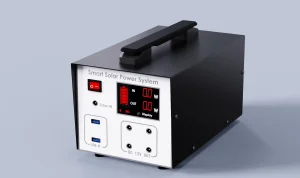
| GE12D-120W Portable | Premium LiFePO4 | 120W Pure Sine Wave | 1x DC Input (Solar/Car) | Camping, Lightweight Field Equipment |
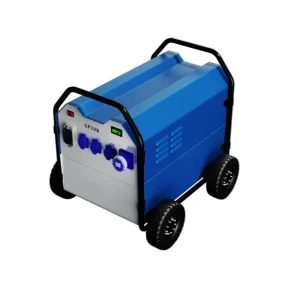
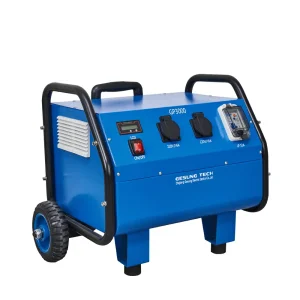
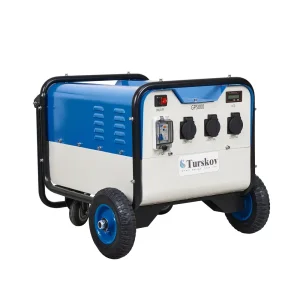
| GEN-3KW Mobile | LiFePO4 (Grade A) | 3.0 kW Continuous | Integrated 1.2kW MPPT | Home Backup, Remote Workshops, EV Emergency |
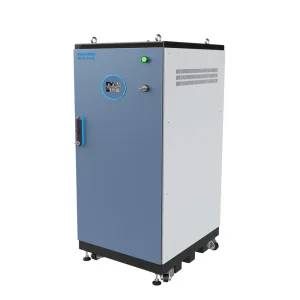
| Smart Controlled 5kW | LFP Battery Rack | 5.0 kW Continuous | Dual MPPT (2x 3.0kW) | Residential Grid Independence |
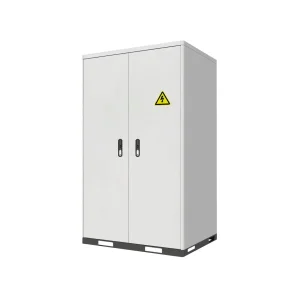
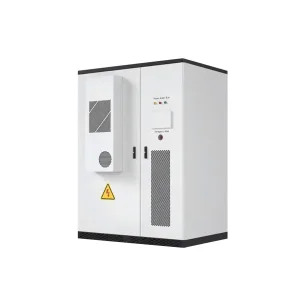
| Commercial 100kW | Industrial LFP Container | 100 kW 3-Phase | Multi-Channel High Voltage | Commercial Real Estate, Microgrids |
| Utility 215kW ESS | Liquid-Cooled LFP | 215 kW Continuous | Centralized Bus Architecture | Industrial Complexes, Peak Shaving |
For international EPCs, utility operators, and commercial distributors like Walmart and Home Depot, selecting a Chinese manufacturing partner requires rigorous audit standards. System failures in remote areas lead to high operational costs and brand damage. Therefore, our factory operations emphasize:
Our 15,000+ square meter factory handles high volume production, scaling up to an annual capacity of 50,000 units. Combined with our digital blockchain traceability system, every battery cell's chemistry and cycle history is verified, ensuring 100% accountability from raw materials to final packaging.
The future of off-grid solar energy storage systems lies in intelligent management software. AI-powered algorithms predict PV generation based on historical weather patterns, balancing dynamic commercial loads in real time to optimize battery cycles. This prevents unnecessary overcharging and deep discharge cycles, extending system life by up to 25%.
We are actively developing solid-state battery integrations for off-grid operations. Solid-state technology offers double the energy density and eliminates liquid electrolyte fire risks, allowing systems to operate reliably in extreme environments from arctic sub-zero sites to deserts exceeding 50°C.
Addressing the critical engineering and commercial concerns of global supply-chain directors and project managers.
Integrated configurations house the MPPT solar charge controller, battery management system (BMS), lithium-iron-phosphate battery cells, and the pure sine wave inverter in one pre-configured cabinet. This reduces on-site wiring by up to 80%, eliminates component communication issues, and guarantees optimized efficiency. The pre-engineered cabinet minimizes installation errors and commissioning time on site.
We utilize Tier-1 automotive-grade LiFePO4 (LFP) chemistry, which features a thermal runaway temperature of 600°C (significantly safer than NMC options). Our systems incorporate smart BMS architectures that monitor voltage, current, and temperature at the cell level. Active thermal management keeps temperature variance within 3°C, extending battery lifespan to over 6,000 cycles at 80% Depth of Discharge (DoD).
Our ODM services offer customizations including structural adjustments, customized input/output ports, specialized software protocols, custom cabinet branding, and integration with specific communication standards (CAN, RS485, Modbus, Wi-Fi/4G). We also co-develop specialized energy systems for heavy industrial environments, emergency response fleets, and marine operations.
High-capacity lithium systems are classified as Class 9 Dangerous Goods. We ensure all shipments are certified under UN38.3 protocols, accompanied by MSDS documentation, and packed in approved sea freight packaging. Our logistics department coordinates direct-to-port logistics from Wenzhou and Ningbo ports to ensure safe global transit.
Yes. Our commercial systems support parallel setups, allowing systems like the ODM 100kW and 215kW models to connect in parallel, scaling system capacity past 1.2MW. Our multi-unit control systems ensure balanced charge and discharge rates across all parallel cabinets.
Our systems feature a patented 5th-generation hybrid inverter that achieves a peak conversion efficiency of 98.5%. Our advanced MPPT controllers operate at 99.9% tracking efficiency, ensuring maximum solar capture under low-light or cloudy conditions.
The blockchain traceability system records all cell manufacturing parameters, testing cycles, and quality checks on a secure digital ledger. This allows buyers to trace battery history, verify sustainability metrics, and access accurate battery health data.
Commercial power walls, high-capacity inverters, and decentralized grid solutions direct from our manufacturing facility.
 Turskov