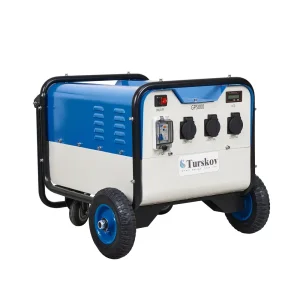
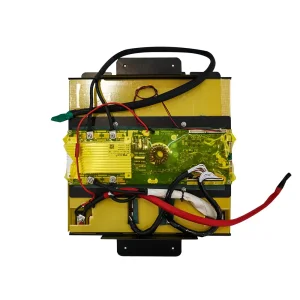
Wholesale Emergency-Use Power Storage Generator Suppliers & Supplier

High-Capacity Microgrid Integration & Solid-State Solar Hybrid Storage Solutions for Global Enterprise Markets

Advanced R&D Centers

Zhejiang Wenzhou New Energy Technology Co., Ltd., based in China's private economy hub of Wenzhou, houses CNAS-certified laboratories and EMC testing centers. Operating under ISO 9001/14001/45001 frameworks, we secure full lifecycle quality trace from raw materials to final shipment.

Proprietary Core Patents

With 36 registered patented technologies, our 5th-generation hybrid inverter boasts a 98.5% conversion efficiency. We deliver direct OEM/ODM configurations to Fortune 500 partners, backed by an annual production scaling to 50,000 units.

Zero-Carbon Roadmaps

Targeting Net-Zero factory status, we plan to offset 1 million metric tons of global carbon by 2030. Our real-time blockchain tracking and robust 7x24 global assistance ensure high uptime for industrial users across 28+ countries.

15,000+
Sqm Factory Zone
98.5%
Inverter Conversion Efficiency
28+
Export Destinations
36
Core Registered Patents

Wholesale Emergency-Use Power Storage Generators: A Technical Blueprint for Commercial & Industrial Resilience

In an era defined by grid instability, extreme weather events, and a rapid transition to electrified operations, businesses can no longer afford system downtime. Industrial and Commercial (C&I) organizations are turning to high-capacity emergency-use power storage generators to safeguard their infrastructure. This whitepaper explores the critical technology pathways, localization strategies, and supply chain mechanics that define modern backup power systems.

Executive Summary

Traditional diesel generators are failing to meet the strict carbon emission mandates and instant-on demands of high-tech manufacturing, medical zones, and data centers. Modern energy storage systems (ESS) utilizing Lithium Iron Phosphate (LiFePO4/LFP) chemistry integrated with intelligent Energy Management Systems (EMS) present a cleaner, faster, and more cost-effective alternative.

1. Technical Architecture & Efficiency Breakthroughs

Emergency-use storage generators must deliver instantaneous backup power (islanding mode transition in <10ms) to ensure load continuity. Our systems utilize advanced LiFePO4 battery modules paired with intelligent bidirectional PCS (Power Conversion System) components.

  • Functional Integration: Combining power generation control, high-capacity battery storage, and dynamic AC/DC inversion into a single structural unit reduces internal resistance losses and simplifies installation.
  • High-Efficiency Conversion: Our 5th-gen hybrid inverter topology achieves a peak efficiency of 98.5%, reducing heat waste and maximizing runtime during grid failures.
  • Intelligent BMS: Every cell is tracked via an internal Battery Management System, checking thermal behavior, voltage equalization, and State of Health (SoH) metrics to prevent thermal runaway.

2. Global Commercial & Industrial Energy Landscapes

Grid stress is a global phenomenon. In North America and Europe, older utility transmission lines coupled with rapid electrification (electric vehicles, smart heating) have increased the frequency of brownouts. For commercial facilities, data centers, and heavy manufacturing plants, power fluctuations translate directly to economic loss.

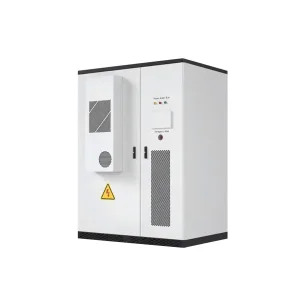
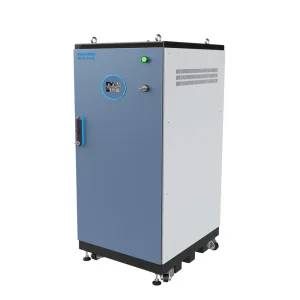
In Asia-Pacific and Latin America, developing grid infrastructures rely heavily on distributed microgrids. Deploying stationary and mobile 215kW energy storage solutions allows utility engineers to implement peak-shaving protocols during normal operations and secure emergency reserves during regional blackouts.

3. Localization Application Scenarios

Emergency storage generators must adapt to localized environmental and grid conditions:

  • Sub-Zero Arctic Environments: Equipped with active liquid thermal preheating systems, our battery enclosures maintain optimal internal temperatures, preserving discharge capacity even in temperatures as low as -30°C.
  • High-Humidity Tropical Coastal Settings: IP55/IP65 dual-chamber designs isolate delicate electronics from salt spray and moisture, preventing contact corrosion and keeping continuous utility backup online.
  • Urban Congestion zones: Mobile trailer systems with built-in acoustic baffles are deployed in dense residential or business districts where traditional combustion engines are banned due to noise and air quality rules.

Emergency-Use Storage Features

1. Instant Transition: Built-in Static Transfer Switches (STS) ensure transition times under 10ms, protecting critical servers.

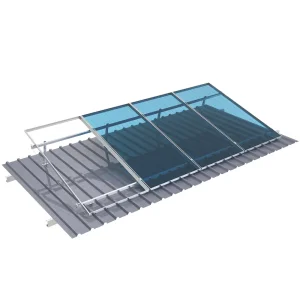
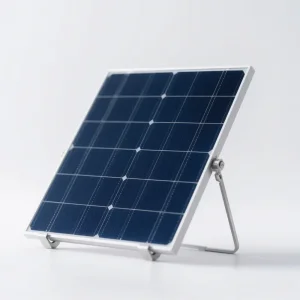
2. Eco-Friendly footprint: Pure solar solar panels integration reduces reliance on municipal grids and helps meet ESG milestones.

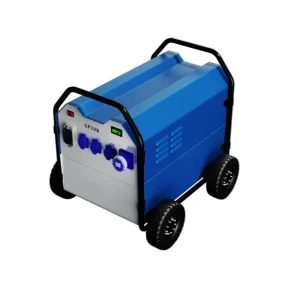
3. Mobile Versatility: Rugged off-grid trailers deliver high-voltage utility power to disaster-recovery zones.

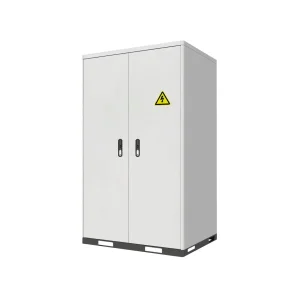
4. Modular Scalability: Connect multiple 100kW or 215kW units in parallel to scale with facility growth.

Supply Chain Indicators

Our direct access to Wenzhou's raw metal, chemical, and electrical clusters keeps components moving. We maintain raw materials inventory for up to 6 months of continuous production, neutralizing shipping disruptions.

Technical Roadmap & Future Outlook

Aligning manufacturing technology with next-generation electrochemical developments and cloud integration.

2024 - 2025
Ultra-High Power Density LFP & C-rate Optimization
Deploying 3.2V 314Ah high-capacity LFP cells into standard cabinets, increasing space efficiency by 20% while enhancing C-rate performance to meet surges from heavy machinery.
2026 - 2027
AI-Powered Virtual Power Plant (VPP) Integration
Upgrading system firmware with cloud-connected machine learning models. Generators automatically engage in grid ancillary services, peak shaving, and demand-response arbitrations when backup power isn't needed.
2028 - 2030
Solid-State Battery Industrialization & Integration
Phasing in solid-state lithium battery chemistries to eliminate flammable organic liquid electrolytes, increasing system lifespan past 15,000 cycles and raising volumetric energy density to over 400 Wh/L.

China Factory Supply Chain Resilience & Efficiency Advantages

Our manufacturing headquarters in Wenzhou leverages China's industrial infrastructure. By positioning our facility close to major raw material processors, specialized electronics manufacturers, and international shipping channels, we streamline the production cycle.

This regional cluster allows us to maintain direct control over key inputs. From battery grade lithium carbonate processing to precision structural sheet metal work and copper wiring, components are built to strict ISO tolerances. We bypass intermediate import stages, giving us a cost and lead-time advantage over Western assemblers.

End-to-End Quality Traceability

Utilizing a blockchain-backed manufacturing execution system (MES), every single battery cell, circuit breaker, and inverter module is assigned a unique cryptographic identifier. This ensures full tracking from raw chemical batches to final installation, supporting predictive maintenance and rapid parts replacement.

Compliance & Certifications

Our global engineering teams guarantee equipment compliance with key trade standards:

  • UL 9540A: Strict cell-level thermal runaway testing checks safe indoor and outdoor installation.
  • CE / EN 62477: Ensuring electrical safety and electromagnetic compliance across the EU.
  • UN 38.3: Certifying battery pack safety during international shipping.

Technical Q&A (FAQ)

Answering crucial technical questions for engineering leads, procurement officers, and project developers.

What is the difference between LiFePO4 (LFP) and standard lead-acid batteries in commercial backup systems?
LiFePO4 chemistry provides up to 6,000 charge/discharge cycles at 80% Depth of Discharge (DoD), compared to only 500-800 cycles for lead-acid systems. LFP is lighter, takes up less space, does not suffer from sulfation, and contains no toxic heavy metals. This results in a lower Levelized Cost of Storage (LCOS) over the system's lifetime.
How does the 98.5% inverter conversion efficiency impact our operational expenditures (OpEx)?
An inverter conversion efficiency of 98.5% means that only 1.5% of the stored energy is lost as heat during the DC-to-AC conversion process. This reduces system cooling costs, increases battery runtime during power outages, and minimizes power waste during peak shaving cycles.
Can these emergency generators integrate with existing grid-tied photovoltaic (PV) arrays?
Yes. Our 5th-generation hybrid PCS is designed for both AC-coupled and DC-coupled retrofits. The integrated control system coordinates with existing grid-tied solar inverters, enabling microgrid islanding. This allows the facility to run on PV generation while recharging the battery bank during grid outages.
How does the blockchain-enabled traceability system operate during post-sale support events?
Every component in our emergency systems is logged in a secure database with its test data and production history. In the event of a fault, our support team can scan the unit's cryptographic tag to identify component batches, view manufacturing metrics, and dispatch targeted replacement parts. This system helps resolve 90% of issues within a 2-hour window.
What certifications are provided to meet localized utility grid codes?
Our systems comply with major regional requirements, including UL 1741 (SA) and IEEE 1547 for grid interconnection in North America, CE and EN 50549 for European markets, and AS/NZS 4777 for Australia. These certifications ensure safe operation and compatibility with local grid networks.