Engineered for extreme reliability, grid independence, and industrial-grade commercial energy management.
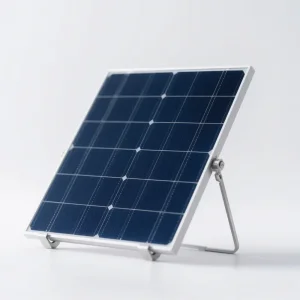
Powering global renewable energy transition with certified engineering excellence and scale.
Headquartered in Wenzhou, China's dynamic private economy hub, Zhejiang Wenzhou New Energy Technology Co., Ltd. has established itself as an authoritative voice and pioneer in the renewable energy domain since its inception in 2020. Our modern 15,000+ square meter facility integrates high-precision automated manufacturing equipment with advanced research labs, housing a CNAS-certified laboratory, EMC electromagnetic compatibility testing chambers, and specialized R&D zones. Operating under global quality baselines—including ISO 9001 (Quality Management), ISO 14001 (Environmental Standards), and ISO 45001 (Occupational Health and Safety Systems)—our plant ensures rigorous end-to-end trace control from raw silicon materials and grade-A lithium iron phosphate cells to completed multi-megawatt configurations.
Our continuous technological breakthroughs have yielded 36 domestic and global utility patents. Notably, our 5th-generation hybrid off-grid inverter achieves an industry-leading conversion rate of 98.5%. This technological superiority has forged deep OEM/ODM manufacturing partnerships with Fortune 500 giants like Walmart and Home Depot, while serving national engineering infrastructure developers across Europe, North America, and Southeast Asia. Our workforce of 200+ specialized technical engineers supports a manufacturing baseline of 50,000 off-grid power units annually, offering international stakeholders a verified pathway toward sustainable energy security.
Our quality assurance utilizes a blockchain-enabled parts traceability system that logs the exact electrochemical signature and mechanical run-times of critical components. This structural integrity database enables our 7×24 multilingual engineering network to diagnose and resolve 90% of field operations within 2 hours. Driven by international climate targets, our manufacturing roadmap actively pursues the Net-Zero Carbon Factory certification, establishing targeted optimizations to reduce carbon output by 1 million tons globally by 2030.
Decentralized logistics and domestic parts integration guarantee rapid deployment and minimal lead times.
Over 85% of critical structural hardware, sheet metal, high-frequency transformers, and auxiliary power supplies are sourced within a 50-kilometer radius of our Wenzhou facility, minimizing logistical delays and supply chain friction.
We maintain long-term bulk agreements with Tier-1 raw material and battery cell providers, ensuring consistent access to high-grade lithium iron phosphate (LiFePO4) chemistry even during global mineral shortages.
Automated manufacturing lines, computerized pick-and-place systems, and robotic welding stations reduce manufacturing tolerances, enhance build quality, and lower per-unit assembly costs.
As an established industrial base, China’s eastern coastal manufacturing corridor provides a significant competitive edge for off-grid power manufacturing. By leveraging localized supply chains, our factory ensures rapid procurement of copper wiring, protective steel cabinets, high-density PCBs, and structural aluminum frames. This vertical integration allows us to offer shorter lead times—often under 20 business days for standard industrial orders—compared to Western competitors who rely on fragmented supply routes.
Furthermore, our close proximity to major deepwater ports in Ningbo and Shanghai provides logistics optimization. Containerized ocean freight, intermodal rail lines, and air cargo routes enable seamless global shipping, reducing transit costs and ensuring predictable delivery timelines for critical international projects.
Tailored product development lifecycle translating operational requirements into field-ready systems.
Our engineers perform detailed load calculations, analyze solar resource data, and verify target application needs.
3D CAD layouts, thermal modeling, and simulation of battery charge curves are generated for buyer sign-off.
Pilot prototypes undergo physical testing in environmental chambers and high-temperature stress environments.
Automated manufacturing processes operate under real-time optical quality inspection and final load tests.
| System Capacity | Target Applications | Inverter Topology | Battery Chemistry | Optional Integrations |
|---|---|---|---|---|
| 3kW - 5kW Mobile Packs | Emergency response, outdoor utilities, remote telecommunication relays | High-frequency pure sine wave (220V/110V) | LiFePO4 (2,000+ Cycles) | Integrated solar frames, dustproof travel bags |
| 10kW - 30kW Residential | Off-grid homes, farm infrastructure, auxiliary backup power | Low-frequency split-phase hybrid configuration | Modular Wall-Mount LiFePO4 (6,000+ Cycles) | Smart home integration, solar tracking mounts |
| 45kW - 215kW Industrial | Data centers, large commercial facilities, agricultural microgrids | Three-phase grid-forming utility architectures | High-Voltage Liquid-Cooled Stacks | Dual fire suppression systems, AI Energy Management |
Certified safety standards and engineering support structures aligned with strict regional regulations.
Our off-grid solar equipment holds certifications including UL 1973 (battery safety), UL 9540A (thermal runaway prevention), CE, IEC 62109, and UN38.3 for global transport compliance.
Our standard hybrid systems comply with regional grid interconnection requirements (e.g., IEEE 1547, AS4777), ensuring compatibility with municipal grids when operating in hybrid backup modes.
We work closely with local distributor networks and engineering partners in the EU and NA, enabling localized spares storage and rapid on-site technical support.
Meeting localized compliance is critical for smooth custom clearance, installation verification, and municipal sign-off. As a partner-focused manufacturer, Zhejiang Wenzhou New Energy Technology Co., Ltd. supplies comprehensive certification packages for all wholesale orders. Our products undergo rigorous testing, from high-temperature operation to physical drop testing, ensuring they perform reliably in diverse environments.
Furthermore, our engineering teams are trained in regional construction codes. Whether adapting a modular home power wall to meet local fire codes or tailoring industrial inverters to match local three-phase requirements, our R&D department provides the necessary engineering support to ensure compliant deployments.
Real-world applications for our high-performance off-grid systems.
For homes in remote or grid-unstable regions, our solar power walls (available in 30kWh, 45kWh, and 60kWh configurations) capture daytime generation to power residential appliances through outages, ensuring zero system downtime.
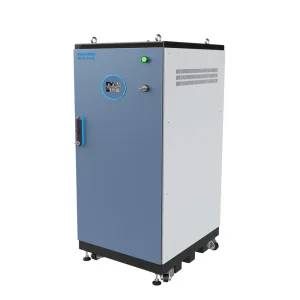
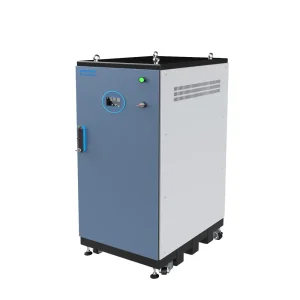
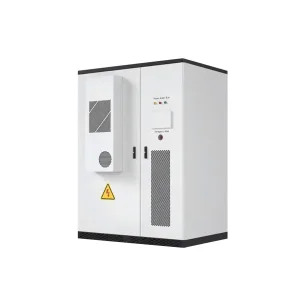
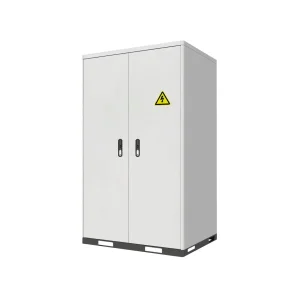
Remote cell towers and emergency communications networks rely on our modular cabinet systems. With MPPT integration and IP65 enclosures, these systems operate reliably in extreme heat, cold, and humidity.
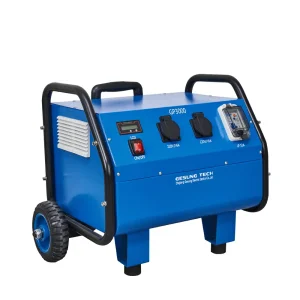
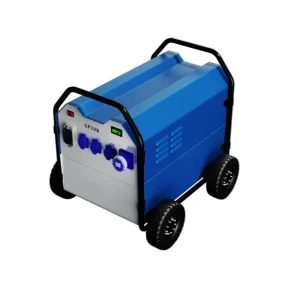
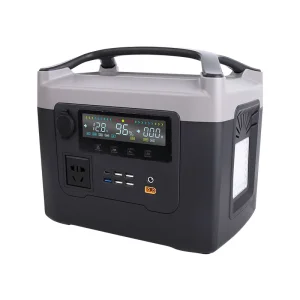
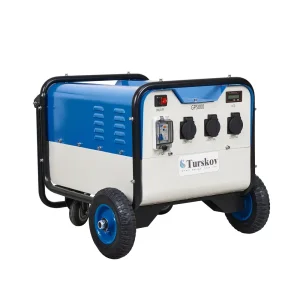
Our portable mobile energy generators (ranging from 600W to 10kW) supply critical emergency backup power. With rugged housing, off-road wheels, and multi-protocol smart outlets, they supply rapid power in disaster zones.
An overview of technological shifts and innovations driving clean energy deployment.
The off-grid solar sector is undergoing rapid technological development, driven by advancements in battery chemistries and smart control systems. A key trend is the transition from low-voltage (48V) home systems to high-voltage stackable battery architectures (400V - 800V). Higher voltages reduce resistive line losses, improve heat dissipation, and enable faster charging times, allowing systems to power high-draw industrial and commercial loads more efficiently.
Another major shift is the integration of AI-driven Energy Management Systems (EMS). Traditional systems rely on basic voltage thresholds to manage charging cycles. In contrast, modern, cloud-connected EMS use machine learning algorithms to analyze historical weather patterns, predict daily solar yield, and optimize battery usage profiles. This proactive energy scheduling extends battery lifespan and improves overall system reliability.
Furthermore, the development of bidirectional power routing (including Vehicle-to-Load / V2L and vehicle integration) is changing how off-grid systems interface with mobile power assets. Off-grid systems can now use EV batteries as supplementary energy storage, creating flexible microgrids that support both home resilience and clean transport.
Technical details, sizing criteria, and support information for global wholesale buyers.
Lithium Iron Phosphate (LiFePO4) is the preferred chemistry for stationary energy storage due to its high thermal stability, non-toxic composition, and long cycle life. Our LiFePO4 batteries maintain over 80% capacity after 6,000 charge-discharge cycles, outperforming lead-acid and conventional lithium-ion alternatives in both longevity and operating safety.
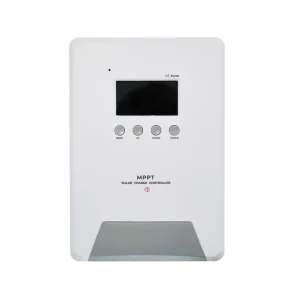
Our Maximum Power Point Tracking (MPPT) controllers continuously monitor solar panel output voltage and current to ensure the system extracts maximum available power, regardless of shading or temperature shifts. This increases solar generation efficiency by up to 30% compared to basic PWM controllers.
We provide full customization, including housing colors, branding, input/output voltage matching, specific battery capacity configurations, remote monitoring integrations, and regional safety certification packaging. Our R&D department handles every stage from initial CAD design to final production.
Standard systems operate from -20°C to 55°C. For extreme climates, we offer optional thermal management enclosures with integrated heating or active liquid cooling to maintain optimal battery cell performance.
Yes. Our residential and industrial power systems feature a modular design that allows multiple battery packs to be connected in parallel. This enables users to scale their energy storage capacity as budget and power requirements grow.
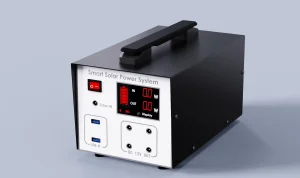
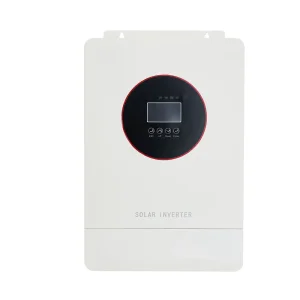
Explore our range of smart MPPT controllers, pure sine wave inverters, and portable power stations.
 Turskov